
Introduction to Your Operators Manual
This manual is a comprehensive guide for the operation and basic maintenance of your John Deere 3300 Combine, specifically for units within the serial number range of 003,001 to 004,500. It is a digitally enhanced reproduction of the original manufacturer-issued manual, designed to provide clear and accurate information.
The purpose of this manual is to equip operators with the necessary knowledge for safe and efficient use, understanding of controls, routine adjustments, and essential maintenance procedures to ensure the longevity and optimal performance of the combine.
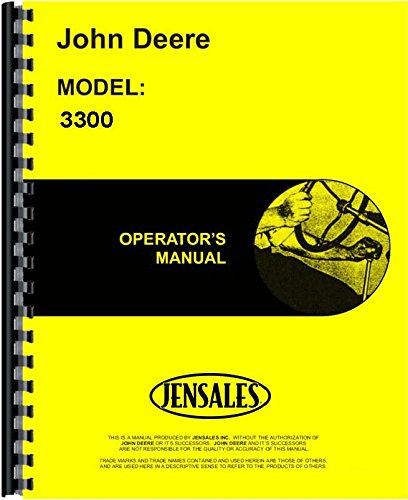
Image: Cover of the John Deere 3300 Combine Operators Manual. This image displays the front cover of the manual, indicating its title and purpose.
Understanding Manual Types
It is important to distinguish between different types of manuals available for your equipment:
- Service Manual (SVC): Provides detailed instructions for disassembling, repairing, and reassembling the tractor. It includes specifications, torque values, and other technical data for mechanics.
- Parts Manual (PTS): Contains exploded views of all parts, aiding in assembly, disassembly, and part identification for ordering.
- Operators Manual (OPT): This manual, the one you are reading, provides instructions for operating the equipment, including shift patterns, fluid capacities, and adjustment procedures. It is crucial for daily operation and routine maintenance.
Setup and Pre-Operation Checks
Before operating the John Deere 3300 Combine, perform the following essential checks and setup procedures to ensure safety and optimal performance:
- Fluid Levels: Verify engine oil, coolant, hydraulic fluid, and fuel levels are within recommended ranges. Refer to the "Capacities" section for specific volumes.
- Tire Pressure: Inspect all tires for proper inflation according to the specifications provided in this manual.
- Safety Guards: Ensure all safety shields and guards are in place and securely fastened.
- Lighting and Signals: Check that all lights, turn signals, and warning lights are functional.
- Operator's Station: Adjust the seat, steering wheel, and mirrors for comfortable and safe operation. Familiarize yourself with all controls before starting.
- Attachment Checks: If attachments are used, ensure they are correctly mounted and connected, and all safety pins are in place.
Operating Procedures
This section outlines the general operating instructions for the John Deere 3300 Combine. Always refer to the detailed sections within the manual for specific procedures.
Starting the Engine
- Ensure the transmission is in neutral and the parking brake is engaged.
- Turn the ignition key to the "ON" position and wait for system checks to complete.
- Turn the key to the "START" position. Release once the engine starts.
- Allow the engine to warm up at a low idle for a few minutes before engaging any implements or driving.
Driving and Shifting
The combine features specific shift patterns for various field and road conditions. Consult the detailed shift pattern diagrams in the manual for correct gear selection.
- Always depress the clutch fully when shifting gears.
- Select the appropriate gear for the terrain and load to prevent engine strain.
- When operating in the field, maintain a consistent speed suitable for crop conditions.
Harvesting Operations
Adjustments for header height, reel speed, cylinder speed, and concave clearance are critical for efficient harvesting. Refer to the manual's specific sections for detailed adjustment procedures based on crop type and conditions.
Maintenance and Adjustments
Regular maintenance is essential for the reliable operation and longevity of your John Deere 3300 Combine. This section provides an overview of key maintenance tasks and adjustment procedures.
Routine Maintenance Schedule
- Daily Checks: Inspect for loose fasteners, leaks, and general condition. Clean debris from radiators and screens.
- 50-Hour Service: Lubricate all grease points, check belt tensions, and inspect fluid levels.
- 250-Hour Service: Change engine oil and filter, inspect air filter, and check hydraulic system.
- Annual Service: Perform a comprehensive inspection, replace fuel filters, and check electrical systems.
Adjustment Procedures
This manual details various adjustment procedures, including:
- Brake adjustments for optimal stopping power.
- Clutch adjustments for smooth engagement and disengagement.
- Header and feeder house adjustments for different crop conditions.
- Threshing and separating system adjustments for grain quality.
Always consult the specific sections for detailed instructions and safety warnings before performing any adjustments.
Troubleshooting Common Issues
This section provides guidance on identifying and resolving common operational problems. For complex issues, consult a qualified service technician.
| Problem | Possible Cause | Solution |
|---|---|---|
| Engine Fails to Start | Low fuel, dead battery, faulty starter, clogged fuel filter. | Check fuel level, charge/replace battery, inspect starter connections, replace fuel filter. |
| Poor Threshing Performance | Incorrect cylinder speed, improper concave clearance, worn components. | Adjust cylinder speed and concave clearance according to crop conditions. Inspect for wear. |
| Hydraulic System Malfunction | Low hydraulic fluid, clogged filter, faulty pump, air in system. | Check fluid level, replace filter, bleed air from system. Consult service manual for pump issues. |
Specifications
Key specifications for the John Deere 3300 Combine and this manual are provided below. For a complete list of technical data, refer to the detailed sections within the manual.
- Manual ASIN: B01BQV6R26
- Publication Date: January 1, 2015
- Print Length: 138 pages
- Applicable Models: John Deere 3300 Combine (Serial Numbers 003,001 - 004,500)
- Manual Type: Operators Manual (OPT)
Warranty and Support
Information regarding product warranty for the John Deere 3300 Combine is not included in this operators manual. For details on warranty coverage, please refer to the original purchase documentation or contact an authorized John Deere dealer.
For technical support, parts inquiries, or service assistance, please contact your local authorized John Deere dealership. They can provide expert guidance and access to genuine John Deere parts and service.


