Introduction
The ZOOZ ZSE40 4-in-1 Sensor is a versatile Z-Wave Plus device designed to enhance your smart home system. It integrates four key functions into a single compact unit: motion detection, ambient light sensing, temperature monitoring, and humidity measurement. This sensor provides real-time data to your compatible Z-Wave hub, enabling advanced automation scenarios and environmental monitoring.
This manual provides detailed instructions for the installation, operation, and maintenance of your ZSE40 sensor.

Image: The ZOOZ ZSE40 4-in-1 Sensor alongside its product packaging.
Key Features
- Motion Detection: Detects movement within its field of view for security or automation.
- Ambient Light Sensor: Measures light levels to trigger lighting scenes or adjust blinds.
- Temperature Monitoring: Provides accurate temperature readings for climate control.
- Humidity Measurement: Monitors humidity levels for environmental comfort and control.
- Z-Wave Plus Certified: Ensures broad compatibility with Z-Wave hubs.
- Tamper Alerts: Notifies you if the sensor is disturbed or removed from its mounting.
- AES 128-bit Signal Encryption: Enhances security of communication.

Image: Visual representation of the ZSE40's key features including quick motion reports, low profile design, tamper alerts, and AES 128-bit signal encryption.
Setup and Installation
1. Powering the Sensor
The ZSE40 sensor is battery-powered. To install the battery:
- Gently twist the back cover of the sensor counter-clockwise to open it.
- Insert the CR123A battery (not included) into the battery compartment, ensuring correct polarity (+/-).
- Replace the back cover by aligning the marks and twisting clockwise until it clicks into place.
2. Pairing with a Z-Wave Hub
The ZSE40 sensor must be paired with a compatible Z-Wave hub (e.g., Hubitat, HomeSeer, Home Assistant, SmartThings Hub) to function within your smart home system.
- Put your Z-Wave hub into inclusion (pairing) mode. Refer to your hub's instruction manual for specific steps.
- Bring the ZSE40 sensor close to your Z-Wave hub.
- Press the Z-Wave button on the sensor (usually located inside the battery compartment or on the side) three times quickly. The LED indicator on the sensor will flash to confirm inclusion mode.
- Once successfully paired, the LED will stop flashing and remain solid for a moment, or your hub will confirm the device has been added.
- If pairing fails, repeat the process. You may need to exclude the sensor first if it was previously paired or if the inclusion failed multiple times.
Note: This sensor is not supported by Wink, Nexia, Piper, Vivint, ADT Pulse, 2GIG, Qolsys, or any other smart home alarm panel. Your voice control speaker is NOT a Z-Wave hub.

Image: A smartphone displaying the SmartThings application interface, showing the ZOOZ sensor's integration and data.
3. Mounting the Sensor
The ZSE40 sensor offers flexible mounting options to suit various environments:
- Wall Mount: Use the included bracket and screws to attach the sensor to a wall.
- Corner Mount: The bracket can be adapted for corner installation, providing a wider field of view for motion detection.
- Ceiling Mount: Mount the sensor on the ceiling for overhead motion detection.
- Alternatively, the sensor can be placed on a flat surface without mounting.
Ensure the sensor is placed in a location where it can effectively monitor the desired area for motion, and where temperature/humidity readings are representative of the space.
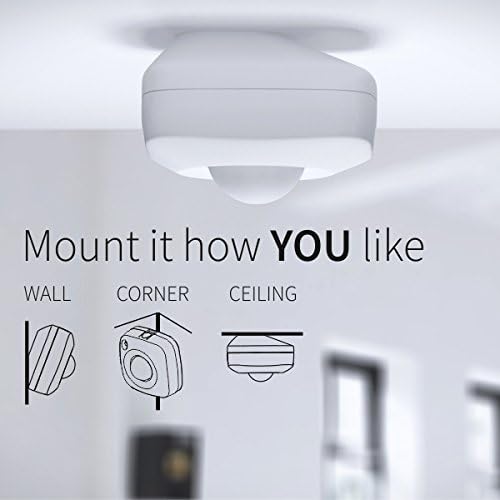
Image: Illustrations demonstrating how the ZSE40 sensor can be mounted on a wall, in a corner, or on the ceiling.
Operating the Sensor
Once paired with your Z-Wave hub, the ZSE40 sensor will automatically begin reporting data for its four functions. You can access and utilize this data through your hub's interface or associated smart home applications.
- Motion Detection: The sensor will report motion events to your hub. This can be used to trigger lights, security alerts, or other automations.
- Light Sensor: The sensor measures ambient light in Lux. This data can be used to adjust lighting levels, control blinds, or optimize energy usage.
- Temperature Sensor: Provides real-time temperature readings. Useful for climate control, triggering HVAC systems, or monitoring room conditions.
- Humidity Sensor: Reports relative humidity levels. Can be used to activate humidifiers or dehumidifiers to maintain optimal indoor air quality.
Many Z-Wave hubs allow you to customize the reporting intervals and sensitivity settings for each sensor type. Refer to your hub's documentation for advanced configuration options.

Image: Illustrative examples of how the ZSE40 sensor can automate home functions, such as turning on floor heating when temperature drops or activating a fan when humidity rises.

Image: A smartphone screen showing the ZOOZ 4-in-1 sensor's readings for motion, humidity, light, and battery status within a smart home application.
Maintenance
Battery Replacement
The sensor is powered by a CR123A battery. When the battery level is low, your Z-Wave hub will typically report a low battery warning. To replace the battery:
- Twist the back cover counter-clockwise to open the sensor.
- Remove the old battery.
- Insert a new CR123A battery, observing correct polarity.
- Replace the back cover by twisting clockwise until it locks.
After replacing the battery, it may take some time for your hub to update the battery status. You can often force an update by manually waking the device (e.g., by pressing the Z-Wave button once).
Cleaning
To clean the sensor, gently wipe the exterior with a soft, dry cloth. Do not use abrasive cleaners, solvents, or immerse the device in water.
Troubleshooting
- Sensor not pairing with hub:
- Ensure your hub is in inclusion mode.
- Bring the sensor closer to the hub during pairing.
- Try excluding the sensor first (even if it was never paired) and then re-attempt inclusion.
- Verify battery is correctly installed and charged.
- Sensor not reporting data:
- Check battery level.
- Ensure the sensor is within range of your Z-Wave hub or a Z-Wave repeater.
- Wake up the sensor manually by pressing its Z-Wave button once.
- Check your hub's device settings for reporting intervals.
- Inaccurate temperature/humidity readings:
- Ensure the sensor is not placed near heat sources, vents, or in direct sunlight.
- Allow time for the sensor to acclimate to its environment.
- Motion detection issues:
- Verify the sensor's placement covers the desired area.
- Adjust PIR sensitivity settings in your hub's interface if available.
- Ensure there are no obstructions blocking the sensor's view.
Specifications
| Feature | Detail |
|---|---|
| Model Number | ZSE40 |
| Power Source | Battery Powered (CR123A) |
| Z-Wave Frequency | 908.42 MHz (US) |
| Operating Temperature | 32°F - 104°F (0°C - 40°C) |
| Product Dimensions | 2.25"D x 2.25"W x 1"H |
| Item Weight | 0.32 ounces (9.07 g) |
| Maximum Range | 30 Meters (Z-Wave range, line of sight) |
| Compatible Hubs | Hubitat, HomeSeer, Home Assistant, SmartThings Hub |
Warranty and Support
ZOOZ provides lifetime tech support for its products. If you encounter any issues or have questions regarding your ZSE40 sensor, please contact ZOOZ customer support.
For the most up-to-date warranty information and support resources, please visit the official ZOOZ website or refer to the contact details provided with your product.
Contact Information:
- Web: www.getzooz.com
- Email: ask@getzooz.com


