
Introduction
This manual provides detailed service and repair procedures for Harley-Davidson FLH and FLT series motorcycles manufactured between 2006 and 2009. It is designed for both the professional mechanic and the do-it-yourself enthusiast, offering step-by-step instructions for maintenance, troubleshooting, and complete overhaul of various components. Adherence to the procedures outlined in this manual will ensure proper operation and longevity of your motorcycle.
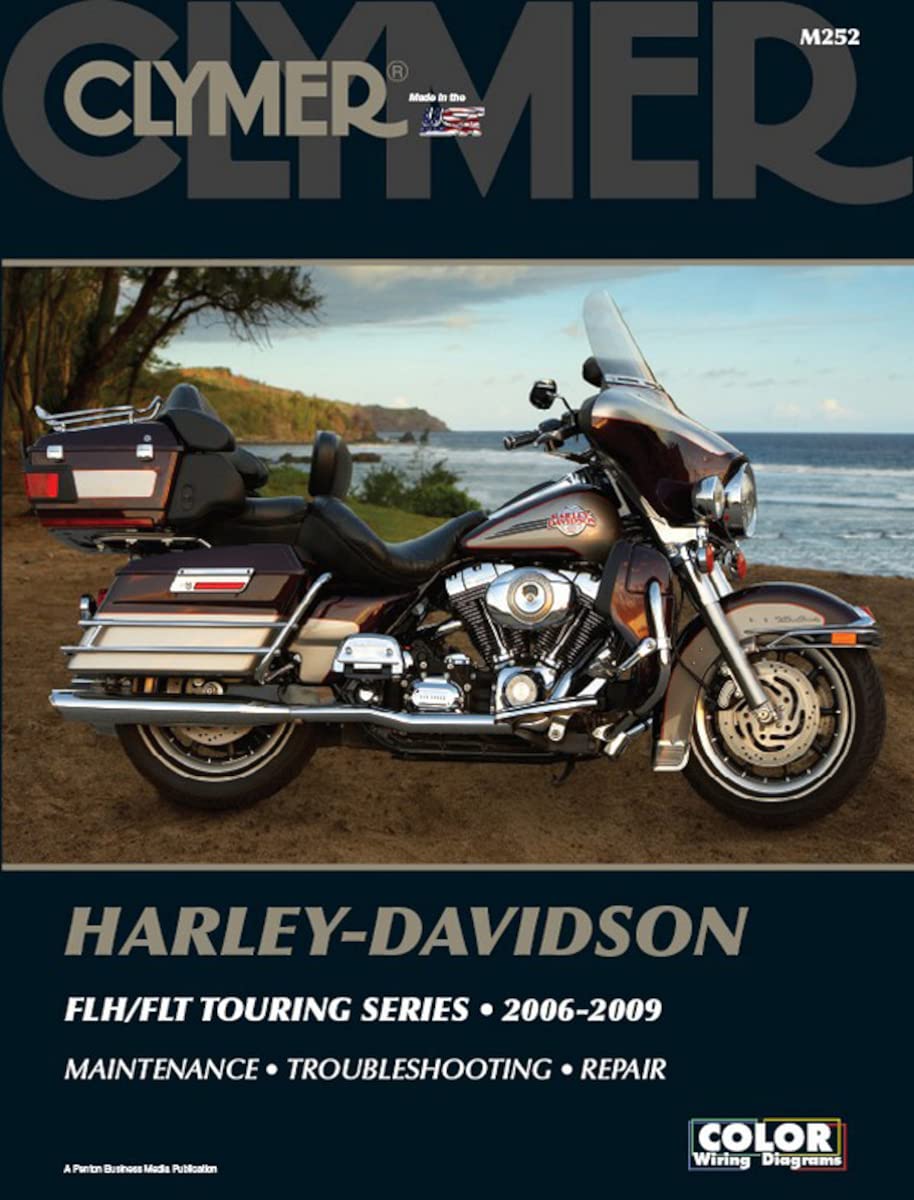
Image: Front cover of the Clymer M252 Harley-Davidson Repair Manual, featuring a detailed illustration of a motorcycle engine, indicating its focus on mechanical repair.
About This Manual
The Clymer M252 manual is organized into chapters, each covering a specific system or component of the motorcycle. Each chapter begins with a general information section, followed by detailed procedures. Illustrations, diagrams, and photographs are included to clarify instructions. It is recommended to read through the relevant sections completely before beginning any work.
- Model Coverage: Specifically covers Harley-Davidson FLH and FLT models from 2006 to 2009.
- Purpose: To provide comprehensive repair, maintenance, and troubleshooting information.
- Audience: Suitable for both experienced technicians and home mechanics.
Safety Precautions
Always prioritize safety when performing any maintenance or repair work on your motorcycle. Failure to follow proper safety procedures can result in serious injury or damage to the vehicle. This manual provides general safety guidelines, but it is the responsibility of the user to exercise caution and use appropriate protective equipment.
- Wear appropriate personal protective equipment (PPE) such as safety glasses, gloves, and sturdy footwear.
- Ensure the motorcycle is stable and securely supported before beginning any work.
- Disconnect the battery before working on electrical components.
- Work in a well-ventilated area, especially when dealing with fuels, solvents, or exhaust fumes.
- Allow hot components to cool before handling.
- Use the correct tools for each task to prevent damage to fasteners and components.
General Information and Specifications
This section provides an overview of the motorcycle's systems, model identification, and general specifications. It is crucial to correctly identify your specific model and year to ensure that the procedures and specifications referenced in this manual are applicable.
Model Identification
Refer to your motorcycle's Vehicle Identification Number (VIN) and engine serial number for precise model and year identification. The VIN is typically located on the steering head or frame.
General Specifications
Detailed specifications for engine torque values, fluid capacities, and component dimensions are provided within the relevant chapters of this manual. Always consult these specific sections before performing adjustments or replacements.
Maintenance
Regular maintenance is essential for the reliable operation and longevity of your Harley-Davidson motorcycle. This section outlines routine service procedures and recommended intervals.
Routine Service Schedule
- Engine Oil and Filter: Check level regularly, replace at recommended intervals.
- Primary Chain and Transmission Fluid: Inspect and replace as specified.
- Spark Plugs: Inspect, clean, and replace.
- Air Filter: Inspect and clean/replace.
- Brake System: Check fluid levels, inspect pads and discs.
- Tires: Check pressure and tread wear.
- Cables and Controls: Lubricate and adjust.
Refer to the specific maintenance chapter for detailed step-by-step instructions for each service item.
Engine Overhaul and Repair
This chapter covers the removal, disassembly, inspection, repair, and reassembly of the engine components. It includes procedures for cylinder heads, valves, pistons, crankshaft, and connecting rods.
- Engine removal and installation.
- Top end service (cylinder heads, valves).
- Bottom end service (crankshaft, connecting rods, bearings).
- Lubrication system inspection and repair.
Fuel and Exhaust Systems
Detailed instructions for servicing the fuel delivery system, including fuel tank, fuel pump, injectors (for EFI models), and carburetor (if applicable). The exhaust system removal and installation procedures are also covered.
- Fuel tank removal and cleaning.
- Fuel injection system diagnostics and component replacement.
- Carburetor cleaning, adjustment, and overhaul.
- Exhaust pipe and muffler removal/installation.
Electrical System
This section provides comprehensive information on the motorcycle's electrical components, including wiring diagrams, charging system, ignition system, lighting, and starting system. Troubleshooting electrical issues is also addressed.
- Battery testing and maintenance.
- Charging system (stator, regulator/rectifier) diagnostics.
- Ignition system component testing and replacement.
- Wiring harness inspection and repair.
Chassis and Suspension
Covers the frame, steering head, front forks, rear shocks, and swingarm. Procedures for inspection, adjustment, and replacement of these components are detailed.
- Steering head bearing inspection and adjustment.
- Front fork disassembly, inspection, and reassembly.
- Rear shock absorber removal and installation.
- Wheel and tire removal/installation.
Brake System
Instructions for servicing the front and rear brake systems, including brake calipers, master cylinders, brake lines, and ABS components (if equipped). Brake fluid bleeding procedures are also included.
- Brake pad inspection and replacement.
- Brake caliper overhaul.
- Brake fluid flushing and bleeding.
- Brake disc inspection and measurement.
Transmission and Clutch
This chapter provides procedures for the inspection, adjustment, and repair of the clutch assembly, primary drive, and transmission components. This includes clutch cable adjustment, primary chain tension, and transmission gear inspection.
- Clutch adjustment and cable replacement.
- Primary drive inspection and service.
- Transmission removal, disassembly, and reassembly.
Troubleshooting
This section assists in diagnosing common problems that may arise with your motorcycle. It provides symptom-based charts and diagnostic steps to help identify the root cause of issues related to the engine, electrical system, fuel system, and chassis.
Example Troubleshooting Table (Refer to manual for full details):
| Symptom | Possible Cause | Action |
|---|---|---|
| Engine Fails to Start | Dead battery, no fuel, faulty spark plugs | Check battery charge, verify fuel level, inspect spark plugs |
| Brakes Feel Spongy | Air in system, worn pads, low fluid | Bleed brakes, inspect pads, check fluid level |
For comprehensive troubleshooting, consult the dedicated chapter in the manual which provides detailed flowcharts and diagnostic procedures.
Warranty and Support
This Clymer repair manual is an independent publication designed to assist with the maintenance and repair of your Harley-Davidson motorcycle. It is not affiliated with Harley-Davidson Motor Company, and the information contained within does not constitute or imply any warranty from the manufacturer of the motorcycle. For specific warranty information regarding your motorcycle, please refer to the original owner's manual or contact an authorized Harley-Davidson dealer.
Clymer manuals are known for their accuracy and comprehensive nature. For support regarding the content of this manual, please refer to the publisher's contact information typically found on the manual's copyright page or their official website.


