
Introduction
This service manual provides detailed instructions for the service, repair, and maintenance of the 2013 Polaris Ranger 400, 500 EFI, and Crew 500 EFI models. It is designed for qualified technicians and individuals with a thorough understanding of vehicle mechanics. Adherence to these procedures ensures proper function and longevity of your Polaris Ranger.
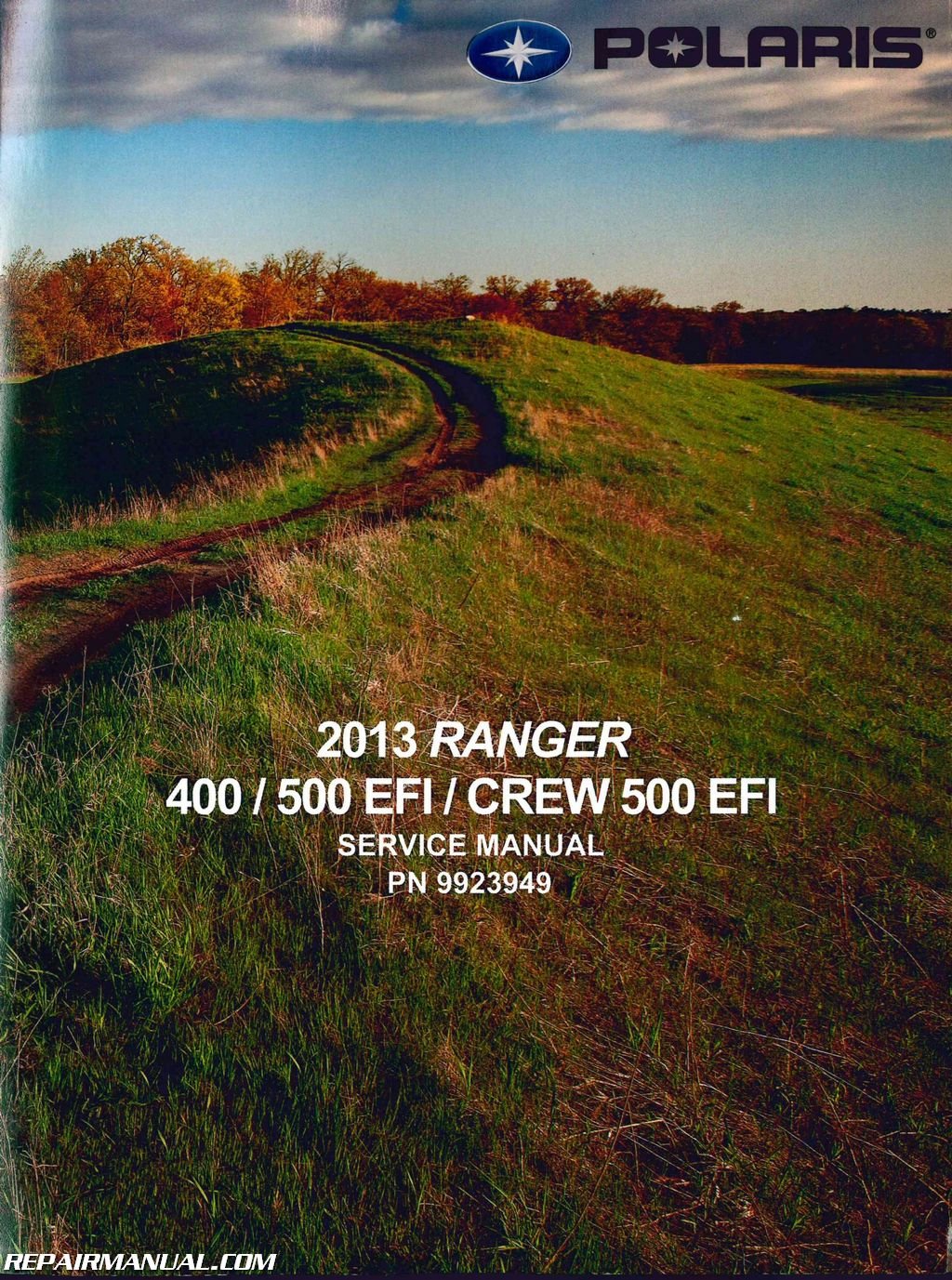
This image displays the cover of the 2013 Polaris Ranger 400, 500 EFI, and Crew 500 EFI Service Manual, indicating its comprehensive content for maintenance and repair.
General Information
This section covers general information pertinent to the Polaris Ranger models. It includes an overview of the AACS/Hub Module and important guidelines for the vehicle's break-in period.
- AACS/Hub Module - Overview: Understand the function and basic operation of the AACS/Hub module.
- Break-In Period: Follow recommended procedures during the initial operating hours to ensure optimal performance and durability of the engine and drivetrain components.
Setup
Before initial operation, ensure all pre-delivery inspections are completed. Verify fluid levels, tire pressures, and the secure fastening of all critical components. Refer to the General Information section for specific break-in procedures.
Operating
Always operate the Polaris Ranger safely and responsibly. Familiarize yourself with all controls and safety features before driving. Consult the owner's manual for detailed operating instructions and safety warnings.
Maintenance
Regular maintenance is crucial for the performance and longevity of your Polaris Ranger. This section details various maintenance procedures.
Engine and Fuel System Maintenance
- Valve Clearance Adjustment: Procedures for checking and adjusting valve clearances.
- Air Box Exploded View (Carb Model): Detailed diagram and component identification for carburetor-equipped models.
- Air Filter Service: Instructions for inspection, cleaning, and replacement of the air filter.
- Engine Air Intake Inspection: Guidelines for inspecting the engine's air intake system.
- PVT Air Intake Inspection: Inspection procedures for the PVT (Polaris Variable Transmission) air intake.
- Breather Filter Inspection: How to inspect and service the breather filter.
- Breather Hose: Inspection and maintenance of the breather hose.
- Cam Chain Sprocket Installation: Steps for installing the cam chain sprocket.
- Cam Chain Tensioner Installation: Procedures for installing the cam chain tensioner.
Battery System Maintenance
- Battery Charging: Proper methods for charging the vehicle battery.
- Battery Fluid Level: Checking and maintaining the battery fluid level (if applicable).
- Battery Installation: Correct installation procedures for the battery.
- Battery Maintenance: General maintenance tips for battery longevity.
- Battery Removal: Safe removal procedures for the battery.
- Battery Service: Comprehensive battery service guidelines.
- Battery Storage: Recommendations for storing the battery during periods of non-use.
- Battery Terminal Block: Inspection and maintenance of the battery terminal block.
Brake System Maintenance
- Brake Burnishing: Procedures for properly bedding in new brake pads.
- Brake Caliper Assembly, Front: Steps for assembling the front brake caliper.
- Brake Caliper Inspection, Front: How to inspect the front brake caliper for wear and damage.
- Brake Caliper Installation, Front: Correct installation of the front brake caliper.
- Brake Caliper Removal, Front: Procedures for removing the front brake caliper.
- Brake Caliper, Front/Rear: General information and service for front and rear calipers.
- Brake Disc, Front/Rear: Inspection and service of front and rear brake discs.
- Brake Hose and Fitting Inspection: Checking brake hoses and fittings for leaks or damage.
- Brake Pad and Disc Inspection: Comprehensive inspection of brake pads and discs.
- Brake Pad Assembly, Front: Steps for assembling front brake pads.
- Brake Pad Thickness, Front: Measuring and verifying front brake pad thickness.
- Brake Pads, Front/Rear: General information on front and rear brake pads.
- Brake Pads, Removal, Front: Procedures for removing front brake pads.
- Brake Pedal, Installation/Removal: Steps for installing and removing the brake pedal.
- Brake System Inspection: Overall inspection of the brake system.
- Brake System, Bleeding: Procedures for bleeding the brake system to remove air.
- Brake System, Exploded View: Detailed diagram of the brake system components.
- Brake System, Operation: Understanding how the brake system functions.
Body, Steering, and Suspension Maintenance
- Ball Joint, Replacement: Procedures for replacing ball joints.
- Body Removal: Steps for safely removing body panels.
- Cab Frame, Exploded View / Assembly: Diagrams and instructions for the cab frame.
Drivetrain Maintenance (Clutching, Final Drive, Transmission)
- Clutching: Maintenance and inspection of clutch components.
- Final Drive: Service procedures for the final drive system.
- Transmission: Maintenance and inspection of the transmission.
Electrical System
This section covers components and procedures related to the electrical system.
- All Wheel Drive (AWD) Coil: Inspection and testing of the AWD coil.
- Authorization Key: Information regarding the authorization key system.
- Authorization, Reflash: Procedures for re-flashing authorization data.
Troubleshooting
This section provides guidance for diagnosing and resolving common issues.
- AWD Diagnostics: Steps for diagnosing issues with the All-Wheel Drive system.
- AWD, Diagnosis: Detailed diagnostic procedures for AWD malfunctions.
- AWD, Operation: Understanding normal AWD operation to identify anomalies.
- Brake System, Troubleshooting: Common brake system problems and their solutions.
Specifications
Key specifications for the 2013 Polaris Ranger models covered by this manual.
| Specification | Detail |
|---|---|
| ASIN | B0184ZYPQM |
| Publisher | by Publisher |
| Publication Date | January 1, 2004 |
| Language | English |
Warranty and Support
For specific warranty information, please refer to the documentation provided with your Polaris Ranger at the time of purchase. For additional support or inquiries, contact an authorized Polaris dealer or visit the official Polaris website.


