
1. Introduction
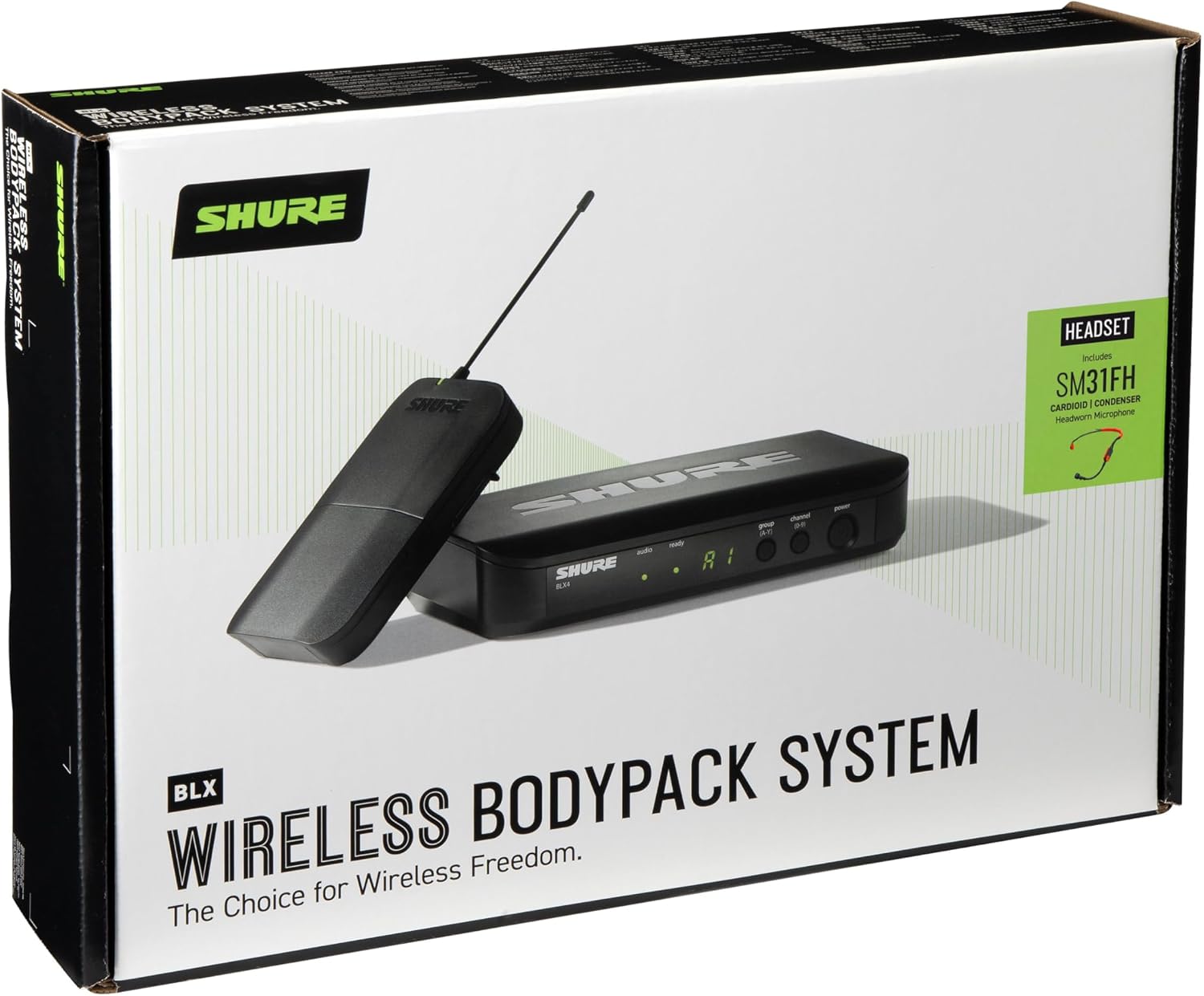
The Shure BLX14/SM31 Wireless Microphone System is engineered for clear, reliable audio performance, particularly suited for fitness and aerobics instructors. This system combines the robust BLX4 single-channel receiver with the comfortable and durable SM31FH fitness headset condenser microphone and BLX1 bodypack transmitter. Enjoy wireless freedom with easy setup and up to 14 hours of continuous use.
2. What's in the Box
Your Shure BLX14/SM31 Wireless Microphone System package includes the following components:
- BLX4 single-channel receiver
- Power supply
- BLX1 wireless bodypack transmitter
- Belt clip
- SM31FH fitness headset condenser mic
- Clothing clip
- Windscreen
- 2x AA batteries
- User guide
3. Product Components Overview
BLX4 Single Channel Receiver
The BLX4 receiver is the central unit for your wireless system, featuring a user-friendly interface for channel selection and monitoring.


BLX1 Bodypack Transmitter
The BLX1 bodypack transmitter is compact and durable, designed to be worn comfortably. It connects to the SM31FH headset microphone.


SM31FH Fitness Headset Condenser Microphone
The SM31FH is a durable, moisture-resistant headset microphone designed for active use in fitness and aerobics environments.

4. Setup
4.1. Wireless Frequency Band Selection
Before setting up, ensure the selected wireless frequency band (H9 Band: 512-542 MHz for this model) is suitable for your area. Refer to the Shure website's Wireless Frequency Finder for detailed regional information.

4.2. Receiver Setup
Follow these steps to set up your BLX4 receiver:
- Placement: Position the receiver in a location that maintains a clear line of sight to the transmitter, minimizing obstructions.
- Power Connection: Securely connect the included power supply to the receiver's power input.
- Audio Output: Connect the receiver to your sound system (mixer or amplifier) using either the XLR output (Mic Out) or the 1/4" output (Instrument Out).
- Power On: Turn on the receiver by pressing the power button.
- Group Scan: Press the 'group' button on the receiver to perform an automatic scan for the best available group and channel. The receiver will display the selected group and channel. Ensure all transmitters are off during this scan.
4.3. Transmitter Setup
Prepare your BLX1 bodypack transmitter and SM31FH headset microphone:
- Install Batteries: Open the battery compartment of the BLX1 bodypack transmitter and insert two AA batteries, ensuring correct polarity.
- Connect Microphone: Plug the SM31FH headset microphone into the TA4F (TGQ) connector on the BLX1 bodypack transmitter.
- Power On: Turn on the transmitter.
- Match Group and Channel: Set the group and channel on the transmitter to match the settings displayed on the receiver. Use the 'group' and 'channel' buttons within the battery compartment to cycle through options until they align with the receiver.
5. Operation
5.1. Performing a Soundcheck
After initial setup, perform a soundcheck to ensure optimal audio levels and clear transmission:
- Activate System: Ensure both the receiver and transmitter are powered on. The 'ready' LED on the receiver should be illuminated.
- Test Audio: Speak or sing into the SM31FH headset microphone at typical performance levels. Observe the 'audio' LED on the receiver.
- Adjust Gain: If the 'audio' LED is consistently red, indicating excessive sound levels (overload), adjust the gain setting on the BLX1 bodypack transmitter. For the bodypack, rotate the gain dial to decrease the setting. For handheld transmitters (if applicable), press and hold the 'channel' button for 5 seconds until a dot appears, then adjust. Aim for the 'audio' LED to be green most of the time, with occasional red flashes during peak audio.
5.2. General Operation Tips
- Battery Life: The BLX transmitters provide up to 14 hours of power from a single pair of AA batteries.
- Operating Range: The system operates up to a range of 300 feet (100m) under optimal conditions. Maintain line of sight between the transmitter and receiver for best performance.
- System Expansion: You can run up to 12 channels per frequency band, allowing for multiple wireless systems in one location.
6. Maintenance
To ensure the longevity and optimal performance of your Shure BLX14/SM31 Wireless Microphone System, follow these maintenance guidelines:
- Cleaning: Regularly wipe down the receiver, transmitter, and headset microphone with a soft, dry cloth. Avoid using harsh chemicals or abrasive materials.
- Battery Care: Remove batteries from the transmitter if the system will not be used for an extended period to prevent leakage. Use high-quality AA batteries for best performance.
- Storage: Store the system in a cool, dry place away from extreme temperatures and humidity. The included carrying case is ideal for protection during transport and storage.
- Headset Hygiene: For the SM31FH headset, regularly clean the microphone windscreen and replace it if it becomes worn or damaged.
7. Troubleshooting
If you encounter issues with your Shure BLX14/SM31 Wireless Microphone System, consider the following common troubleshooting steps:
- No Audio/Intermittent Audio:
- Check all cable connections (power, audio output, microphone to transmitter).
- Ensure both the receiver and transmitter are powered on and the 'ready' LED on the receiver is lit.
- Verify that the transmitter and receiver are set to the same group and channel.
- Replace batteries in the transmitter if they are low or depleted.
- Ensure there is a clear line of sight between the transmitter and receiver, free from obstructions.
- Poor Sound Quality/Interference:
- Perform a new group scan on the receiver to find a clearer frequency.
- Adjust the transmitter gain to prevent audio overload (red 'audio' LED).
- Move the receiver away from potential sources of interference (e.g., Wi-Fi routers, other wireless devices, large metal objects).
- Ensure the SM31FH microphone is positioned correctly near the mouth.
8. Specifications
| Feature | Specification |
|---|---|
| Model Name | BLX14/SM31 Wireless Cardioid Fitness Headset Microphone System |
| Brand | Shure |
| Item Model Number | BLX14/SM31-H9 |
| Wireless Frequency Band | H9 Band (512-542 MHz) |
| Microphone Form Factor | Headset (SM31FH) |
| Polar Pattern | Unidirectional (Cardioid) |
| Connectivity Technology | Wireless |
| Power Source | Corded Electric (Receiver), Battery Powered (Transmitter) |
| Battery Type | 2 AA batteries required (included) |
| Battery Life | Up to 14 hours |
| Operating Range | Up to 300 feet (100m) |
| Number of Channels | 1 (single channel receiver) |
| Max Systems per Frequency Band | Up to 12 (region and environment dependent) |
| Frequency Response | 20 KHz |
| Signal-to-Noise Ratio | 76 dB |
| Impedance | 150 Ohms |
| Item Weight | 2.8 Pounds |
| Product Dimensions (L x W x H) | 13.5 x 12 x 4 inches |
| Material | Stainless Steel |
| Date First Available | October 6, 2015 |
9. Warranty & Support
The Shure BLX14/SM31 Wireless Microphone System includes a 2-YEAR WARRANTY, providing peace of mind for your investment.
For additional support, detailed product information, or to access the Shure Wireless Frequency Finder, please visit the official Shure website. You can also contact Shure customer service for technical assistance.


