
Dwyer 605-6
Dwyer 605-6 Magnehelic Dfr Pressure Transmitter Instruction Manual
Model: 605-6 | Brand: Dwyer
1. Introduction
This manual provides essential information for the safe and effective operation, installation, and maintenance of the Dwyer Model 605-6 Magnehelic Dfr Pressure Transmitter. This device is designed for precise measurement and transmission of differential pressure in various industrial and laboratory applications. Please read this manual thoroughly before installation and operation.
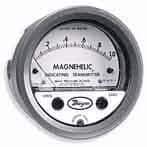
Figure 1: Front view of the Dwyer 605-6 Magnehelic Dfr Pressure Transmitter. This image displays the circular gauge face with measurement markings, indicating the differential pressure. The "MAGNEHELIC" brand name is visible, along with the Dwyer logo at the bottom of the dial.
2. Safety Information
Adherence to safety precautions is crucial for preventing injury and damage to the equipment. Always follow local and national electrical codes and safety regulations.
- Ensure power is disconnected before performing any installation, wiring, or maintenance procedures.
- Only qualified personnel should install, operate, and service this device.
- Do not exceed the specified pressure or temperature ratings of the transmitter.
- Protect the device from physical shock, excessive vibration, and corrosive environments.
- Verify proper grounding to prevent electrical hazards.
- Use appropriate personal protective equipment (PPE) when handling the device or working in its vicinity.
3. Setup and Installation
Proper installation is critical for accurate performance and longevity of the pressure transmitter.
3.1 Mounting
- Mount the transmitter in a location free from excessive vibration, direct sunlight, and extreme temperatures.
- Ensure the mounting surface is stable and capable of supporting the device's weight.
- Orient the transmitter according to the manufacturer's recommendations for optimal performance, typically vertically for Magnehelic gauges.
3.2 Pressure Connections
- Connect the high-pressure source to the "HIGH" port and the low-pressure source to the "LOW" port.
- Use appropriate tubing and fittings that can withstand the expected pressure and media.
- Ensure all connections are leak-free.
3.3 Electrical Wiring
- Refer to the wiring diagram provided with the product for specific connections.
- Connect the power supply according to the specified voltage and current requirements.
- Ensure proper grounding to prevent electrical interference and ensure safety.
- Connect the output signal wires to your control system or data acquisition device.
4. Operating Instructions
Once installed and wired, the Dwyer 605-6 transmitter is ready for operation.
- Power On: Apply power to the transmitter. Allow a brief warm-up period for stable readings.
- Zero Adjustment (if applicable): If the transmitter has a zero adjustment screw, ensure the pressure ports are open to atmosphere (or equal pressure) and adjust the pointer to zero.
- Pressure Application: Apply the differential pressure to be measured. The gauge will indicate the pressure, and the transmitter will output a corresponding signal.
- Monitoring Output: Monitor the electrical output signal (e.g., 4-20 mA, 0-10 V) on your connected control system or multimeter to verify proper operation and signal integrity.
5. Maintenance
Regular maintenance ensures the accuracy and extends the lifespan of your Dwyer 605-6 transmitter.
- Cleaning: Keep the exterior of the transmitter clean. Use a soft, damp cloth. Do not use abrasive cleaners or solvents.
- Calibration: Periodically verify the calibration of the transmitter against a known standard. Recalibrate if necessary according to industry standards or application requirements.
- Pressure Line Inspection: Regularly inspect pressure lines and connections for leaks, kinks, or damage. Replace any compromised components.
- Environmental Check: Ensure the operating environment remains within the specified temperature and humidity ranges.
6. Troubleshooting
This section provides solutions to common issues encountered with the Dwyer 605-6 transmitter.
| Problem | Possible Cause | Solution |
|---|---|---|
| No output signal or incorrect reading | Incorrect wiring, no power, clogged pressure lines, sensor damage, incorrect calibration. | Check wiring connections and power supply. Inspect pressure lines for blockages. Verify sensor integrity. Perform calibration. |
| Fluctuating readings | Unstable pressure source, vibration, electrical interference, loose connections. | Stabilize pressure source. Isolate from vibration. Check for proper grounding and shielding. Secure all connections. |
| Gauge pointer not returning to zero | Zero drift, mechanical issue, residual pressure. | Perform zero adjustment. Check for any physical obstructions. Ensure pressure is fully relieved. |
If troubleshooting steps do not resolve the issue, contact technical support.
7. Specifications
Key technical specifications for the Dwyer 605-6 Magnehelic Dfr Pressure Transmitter.
- Model Number: 605-6
- Pressure Range: 0 to 6.0 inWC (Inches of Water Column)
- Type: Magnehelic Differential Pressure Transmitter
- Manufacturer: COLE-PARMER
- Package Dimensions: 8 x 6.75 x 4 inches
- Weight: 2.25 Pounds
- ASIN: B00YGIPA02
- Date First Available: May 29, 2015
- Note: Specific electrical output ranges (e.g., 4-20mA, 0-10V) and accuracy details should be confirmed with the product's specific datasheet.
8. Warranty and Support
For warranty information, technical support, or service inquiries, please contact the manufacturer or your authorized distributor.
Manufacturer: COLE-PARMER
Refer to the original purchase documentation for specific warranty terms and conditions. Do not attempt to repair the device yourself, as this may void the warranty.
Related documents605-6


Ask a question about this manual
Ask about setup, troubleshooting, compatibility, parts, safety, or missing instructions. Manuals+ will review the question and use this page’s manual context to help answer it.