
Introduction
The TP-Link EAP110 is a N300 Ceiling Mount Wireless Access Point designed for high-density business environments such as schools, hotels, and enterprises. It features an easy mounting design, Power over Ethernet (PoE) support, and centralized management capabilities through the EAP Controller software. This manual provides essential information for the setup, operation, and maintenance of your EAP110 device.
Key Features:
- EAP Controller Software: Enables administrators to easily manage hundreds of EAPs from a single location.
- Passive PoE Support: Allows for convenient installation up to 100 meters using a single Ethernet cable for both power and data.
- Ceiling Mounting Design: Features a chassis that facilitates easy deployment on a wall or ceiling for optimal coverage.
- Captive Portal: Provides a secure and convenient method of authentication for Wi-Fi guests.
- Multi-SSID: Divides multiple wireless networks for different users, enhancing network segmentation and security.
- Enterprise-Class Wi-Fi Security: Incorporates robust security features to protect against network threats.
What's in the Box
Verify that your package contains all the following items:
- TP-Link N300 Ceiling Mount Wireless Access Point (EAP110)
- Passive PoE Adapter
- Power Cord
- Mounting Kit
- Installation Guide

Image: TP-Link EAP110 product packaging, showing the device and key features on the box.
Setup and Installation
This section guides you through the physical installation and initial software setup of your EAP110 Access Point.
Physical Installation:
- Choose a Mounting Location: Select a central location on a ceiling or wall for optimal wireless coverage. Ensure the location is within 100 meters of a power source for the Passive PoE adapter.
- Mount the Device: Use the provided mounting kit to securely attach the EAP110 to your chosen surface. The device is designed for easy deployment.
- Connect Ethernet and Power: Connect an Ethernet cable from your network to the Passive PoE adapter's LAN port. Then, connect another Ethernet cable from the PoE adapter's PoE port to the EAP110's Ethernet port. Finally, connect the power cord to the PoE adapter and a power outlet.
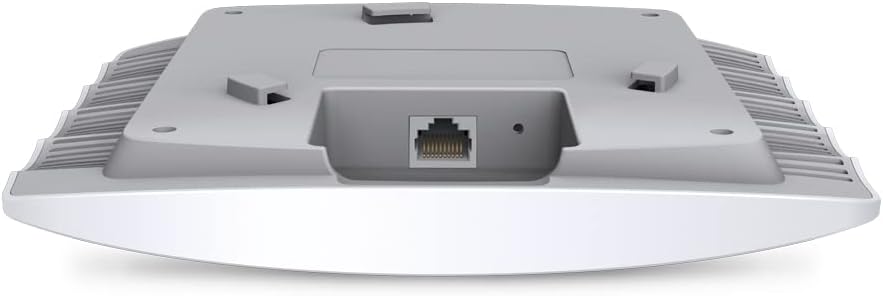
Image: Bottom view of the EAP110, highlighting the Ethernet port for network and PoE connection.
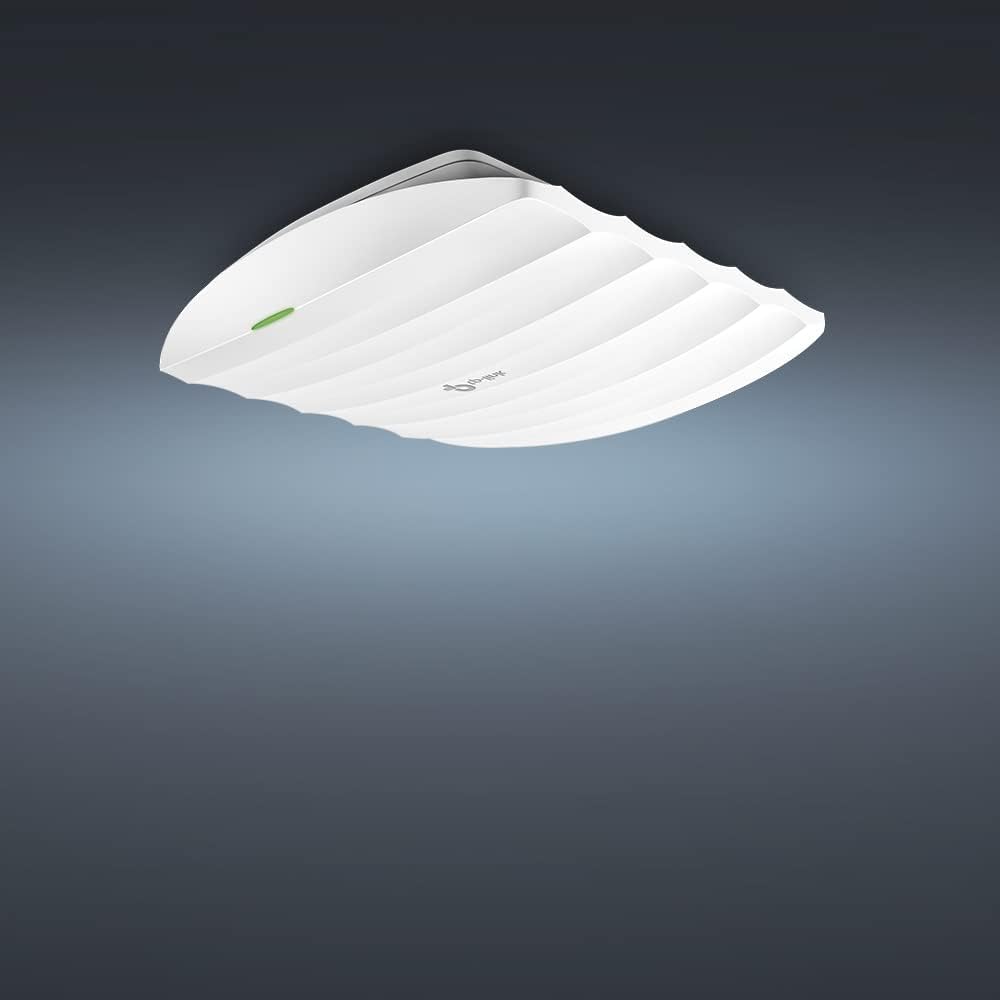
Image: The EAP110 device mounted on a ceiling, demonstrating its discreet installation.
EAP Controller Software Setup:
The EAP Controller software is essential for managing your EAP110. Follow these steps to download, install, and configure the software.
Video: A detailed guide on how to download, install, and set up the TP-Link EAP Controller software for managing your EAP110 Access Point.
- Download the Software: Visit the TP-Link support website for the EAP110 model. Navigate to the 'Download Center' and locate the 'EAP Controller' tab to download the latest software version.
- Prepare for Installation: Before running the installer, temporarily deactivate any antivirus software or firewall on your computer. This prevents potential interference with the installation process.
- Run the Installer: Double-click the downloaded EAP Controller installation package to launch the installation wizard. Follow the on-screen prompts. You may choose a custom installation path if desired.
- Launch and Initialize: After installation, double-click the 'EAP Controller' icon on your desktop. Allow the controller to initialize.
- Address Security Certificate Warning: Your browser may display a security certificate warning. Select the option to 'Continue to this webpage' to proceed.
- Initial Configuration:
- Region Selection: On the first page of the setup wizard, select your geographical region.
- Wireless Settings: Establish a unified SSID (network name) and password for your wireless network. This will apply to all EAPs managed by this controller.
- Administrator Account: Create an administrator username and password. Provide a valid email address for password recovery purposes.
- Complete Setup: Review the summary of your settings and click 'Finish' to complete the initial setup. You can now log into the EAP Controller using your newly created administrator credentials.
Operating the EAP110
Once installed and configured, the EAP110 operates as a wireless access point providing Wi-Fi connectivity. Management is primarily done through the EAP Controller software.
Centralized Management:
The EAP Controller software allows you to manage multiple EAP devices from a single interface. This includes:
- Monitoring network status and client connections.
- Configuring wireless settings, including SSIDs, security protocols, and radio settings.
- Implementing Captive Portal for guest authentication.
- Managing firmware updates for all connected EAPs.
- Setting up Multi-SSID networks for different user groups or purposes.
Passive PoE Functionality:
The EAP110 supports Passive PoE, which simplifies deployment by allowing power and data to be transmitted over a single Ethernet cable. Ensure you use the provided Passive PoE adapter or a compatible Passive PoE switch.
Maintenance
Regular maintenance ensures optimal performance and security for your EAP110.
- Firmware Updates: Periodically check the TP-Link support website for new firmware versions. Updating the firmware can provide performance improvements, new features, and security enhancements.
- Regular Monitoring: Use the EAP Controller software to monitor network traffic, client connections, and device health.
- Physical Cleaning: Keep the device free from dust and obstructions to ensure proper ventilation.
- Backup Configuration: Regularly back up your EAP Controller configuration settings to prevent data loss.
Troubleshooting
If you encounter issues with your EAP110, consider the following troubleshooting steps:
- No Power: Ensure the Passive PoE adapter is correctly connected to a power source and the EAP110. Check all cable connections.
- No Wireless Signal: Verify that the EAP110 is powered on and its indicator light is active. Check the EAP Controller software to ensure the wireless network is enabled and broadcasting.
- Cannot Access EAP Controller: Confirm that your computer's network settings are correct and that no firewall or antivirus software is blocking access. Ensure the EAP Controller service is running.
- Poor Performance: Check for potential sources of interference (e.g., other wireless devices, microwaves). Consider adjusting the EAP's channel or power settings via the controller.
- Forgotten Administrator Password: Use the password recovery option within the EAP Controller login interface, which will send recovery instructions to the email address provided during setup.
Specifications
| Model | EAP110 |
| Wireless Type | 802.11n |
| Frequency Band Class | Single-Band |
| Connectivity Technology | Wireless |
| Antenna Type | Internal |
| Item Weight | 8.8 ounces |
| Product Dimensions (LxWxH) | 12.01 x 9.13 x 2.95 inches |
| Operating System (for Controller) | Windows 7, Mac OS |
| Recommended Uses | Indoor/Outdoor |
Warranty and Support
For warranty information, technical support, and additional resources, please visit the official TP-Link website or contact their customer service. Keep your purchase receipt for warranty claims.


