
1. Introduction and Important Safeguards
Welcome to the T-fal family! This instruction manual provides essential information for the safe and efficient use of your new T-fal 7.6L Aluminum Pressure Cooker, Model 92180PC. Please read this manual thoroughly before first use and keep it for future reference. Proper use and maintenance will ensure years of reliable service.
Important Safety Information
- Read All Instructions: Before operating the pressure cooker, carefully read all instructions to prevent personal injury or property damage.
- Children: Close supervision is necessary when the pressure cooker is used near children. Do not allow children to operate this appliance.
- Hot Surfaces: Do not touch hot surfaces. Use handles or knobs. Always use oven mitts or pot holders when handling a hot pressure cooker.
- Pressurized Contents: Extreme caution must be used when moving a pressure cooker containing hot liquids.
- Proper Closing: Ensure the cooker is properly closed before applying heat. Improper closing can lead to steam leakage and potential injury.
- Ventilation: Never force the pressure cooker open. Ensure the internal pressure is completely released before attempting to open the lid.
- Food Types: Do not use the pressure cooker for deep frying with oil. Certain foods, such as applesauce, cranberries, pearl barley, oatmeal, split peas, noodles, macaroni, rhubarb, or spaghetti, can foam, froth, and sputter, and might clog the pressure release device. These foods should not be cooked in a pressure cooker.
- Maintenance: Regularly check that the pressure release devices are not obstructed.
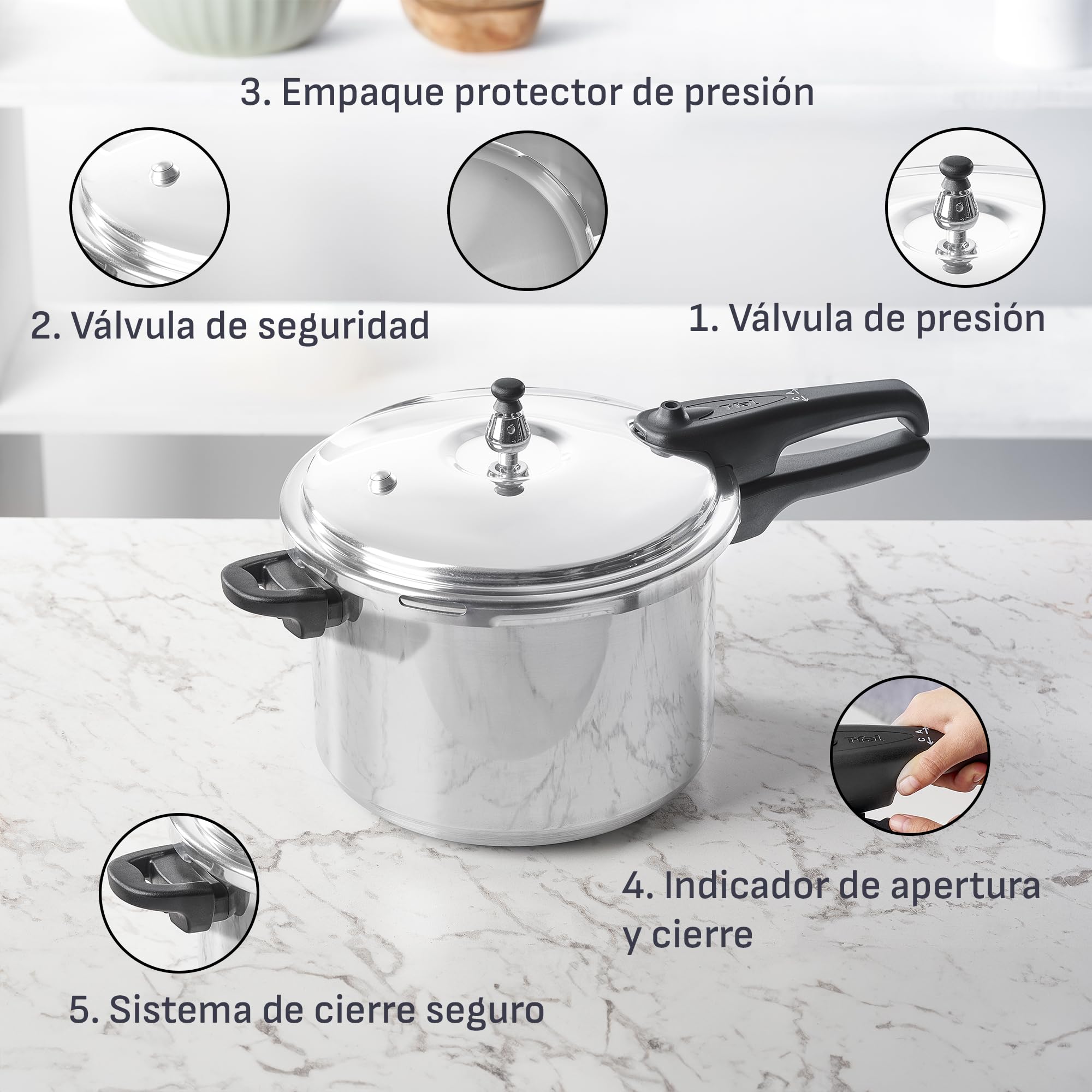
Your T-fal pressure cooker is equipped with five safety systems to ensure secure operation:
- Secure Closing Indicator
- Operating Valve
- Anti-Clogging Filter
- Safety Valve
- Gasket
2. Product Components
Familiarize yourself with the main parts of your T-fal pressure cooker:
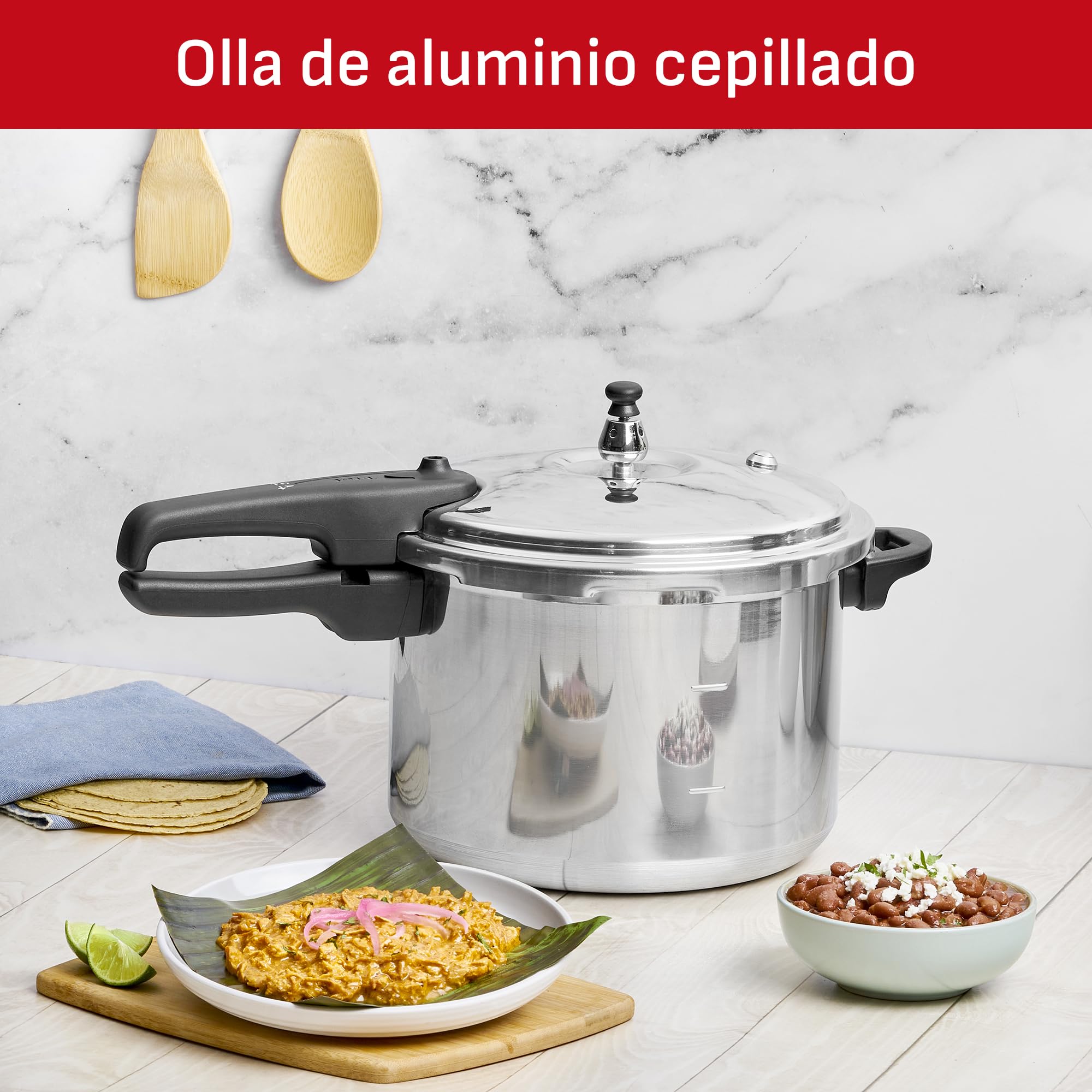
- Pot Body: The main aluminum vessel.
- Lid: Features the pressure valve, safety valve, and secure closing mechanism.
- Operating Valve: Regulates pressure during cooking.
- Safety Valve: Secondary pressure release mechanism.
- Gasket: Creates an airtight seal between the lid and the pot.
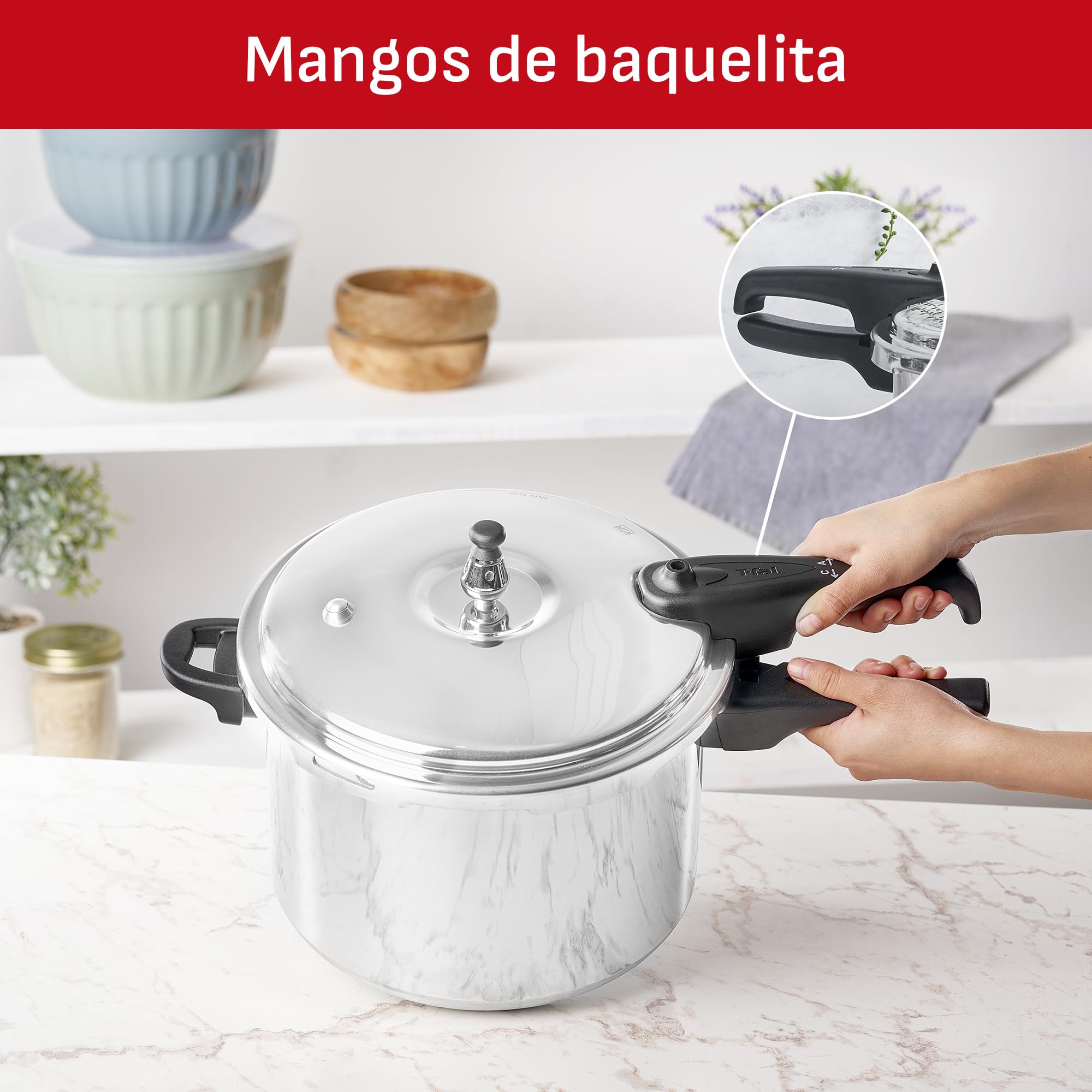
- Handles: Ergonomically designed for safe handling.
3. Setup and First Use
3.1 Initial Cleaning
- Before using your pressure cooker for the first time, wash the pot body, lid, and gasket with warm, soapy water.
- Rinse all parts thoroughly and dry them completely.
- The pot body is dishwasher safe. The lid, however, must be hand washed to protect its intricate components.
3.2 Gasket Installation
Ensure the rubber gasket is correctly seated inside the lid rim. A properly installed gasket is crucial for creating a tight seal during pressure cooking.
3.3 Water Test (Recommended)
Performing a water test helps you understand how your pressure cooker operates and confirms all parts are functioning correctly.
- Add 2-3 cups of water to the pressure cooker pot.
- Place the lid on the pot, aligning the arrows or indicators, and close it securely until you hear a click or feel it lock into place.
- Place the cooker on a heat source set to medium-high.
- Observe as steam begins to escape from the operating valve, and the pressure indicator rises.
- Once pressure is reached, reduce heat to maintain a steady steam release.
- After 5-10 minutes, remove the cooker from heat and allow pressure to release naturally, or use a quick release method if specified in the operating section.
- Once the pressure indicator drops completely, open the lid safely.
4. Operating Instructions
4.1 Preparing for Cooking
- Add your ingredients and the required amount of liquid to the pot. Do not fill the cooker more than two-thirds full for most foods, and no more than half full for foods that expand (e.g., beans, grains).
- Ensure the operating valve and safety valve are clear of any food particles.
- Place the lid on the pot, aligning the lid and pot handles, and rotate until it locks securely. The secure closing indicator should confirm proper closure.
4.2 Heat Sources
Your T-fal pressure cooker is compatible with all heat sources except induction cooktops. This includes gas, electric, and ceramic stoves.
4.3 Achieving and Maintaining Pressure
- Place the closed pressure cooker on a heat source set to high.
- After a few minutes, steam will begin to escape from the operating valve, and the pressure indicator will rise. This indicates that pressure is building inside.
- Once a steady stream of steam is released, reduce the heat to the lowest setting that maintains the pressure. The operating valve will gently rock or hiss.
- Begin timing your recipe from this point.

4.4 Pressure Release Methods
There are two primary ways to release pressure:
- Natural Release: Remove the pressure cooker from the heat source and allow it to cool down naturally. The pressure indicator will drop on its own as the internal pressure decreases. This method is ideal for foods that benefit from a longer cooking time or that might foam.
- Quick Release: For faster pressure release, carefully place the pressure cooker under cold running water, avoiding the operating valve, until the pressure indicator drops. Alternatively, for some models, you may be able to manually release steam through the operating valve (refer to specific lid instructions if applicable). Use extreme caution with this method due to hot steam.
4.5 Opening the Lid
Only open the lid once the pressure indicator has fully dropped and no steam is escaping. Forcing the lid open while pressurized can cause serious injury.
5. Care and Maintenance
5.1 Cleaning
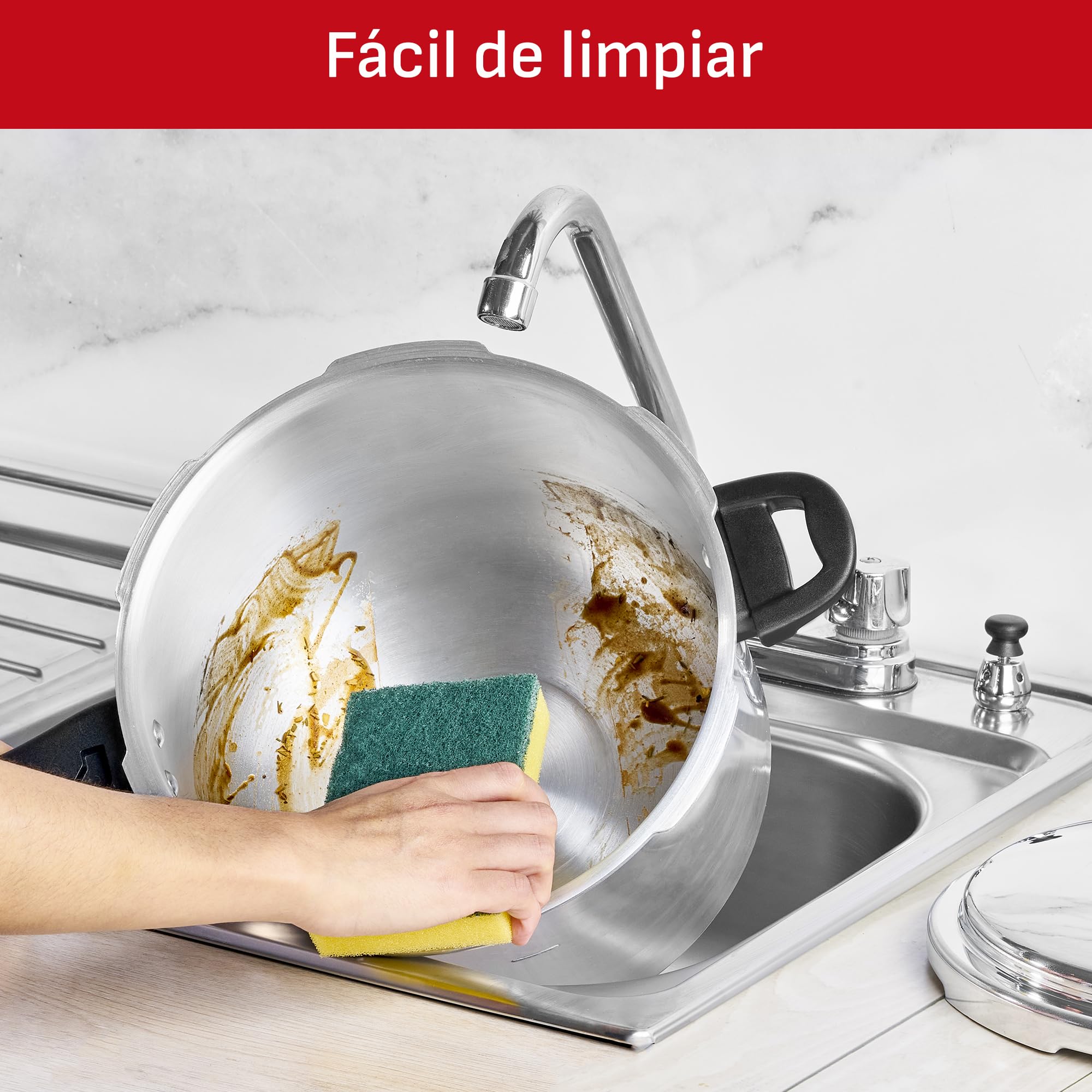
Proper cleaning after each use extends the life of your pressure cooker.
- Pot Body: The aluminum pot body is dishwasher safe. For hand washing, use warm, soapy water and a non-abrasive sponge.
- Lid: The lid must be hand washed. Do not immerse the lid in water. Wipe it clean with a damp cloth and mild detergent. Ensure the operating valve and safety valve areas are free from food debris.
- Gasket: Remove the gasket from the lid and wash it separately with warm, soapy water. Rinse thoroughly and allow it to dry completely before reinserting. Inspect the gasket regularly for cracks or damage and replace if necessary.
- Valves: Periodically check the operating valve and safety valve for any blockages. Clean them gently with a small brush if needed.
5.2 Storage
Store your pressure cooker in a dry place. It is recommended to store the lid inverted on the pot to allow air circulation and prevent the gasket from compressing permanently.
6. Troubleshooting Guide
If you encounter issues with your T-fal pressure cooker, refer to the following common problems and solutions:
| Problem | Possible Cause | Solution |
|---|---|---|
| Pressure not building or steam leaking from lid edge. | Lid not properly closed; gasket improperly seated, worn, or dirty; insufficient liquid; operating valve or safety valve clogged. | Ensure lid is securely locked. Check gasket for proper placement, cleanliness, and damage. Add more liquid if necessary. Clean valves. |
| Difficulty opening the lid after cooking. | Internal pressure has not fully released. | Do not force the lid. Allow more time for natural pressure release or use the quick release method (if applicable) until the pressure indicator drops completely. |
| Food is undercooked. | Insufficient cooking time; pressure not maintained consistently. | Increase cooking time for future recipes. Ensure heat is adjusted to maintain steady pressure throughout the cooking cycle. |
| Food is overcooked. | Excessive cooking time. | Reduce cooking time for future recipes. |
7. Product Specifications
- Brand: Tefal
- Model Number: 92180PC
- Capacity: 7.6 Liters
- Material: Aluminum
- Color: Silver
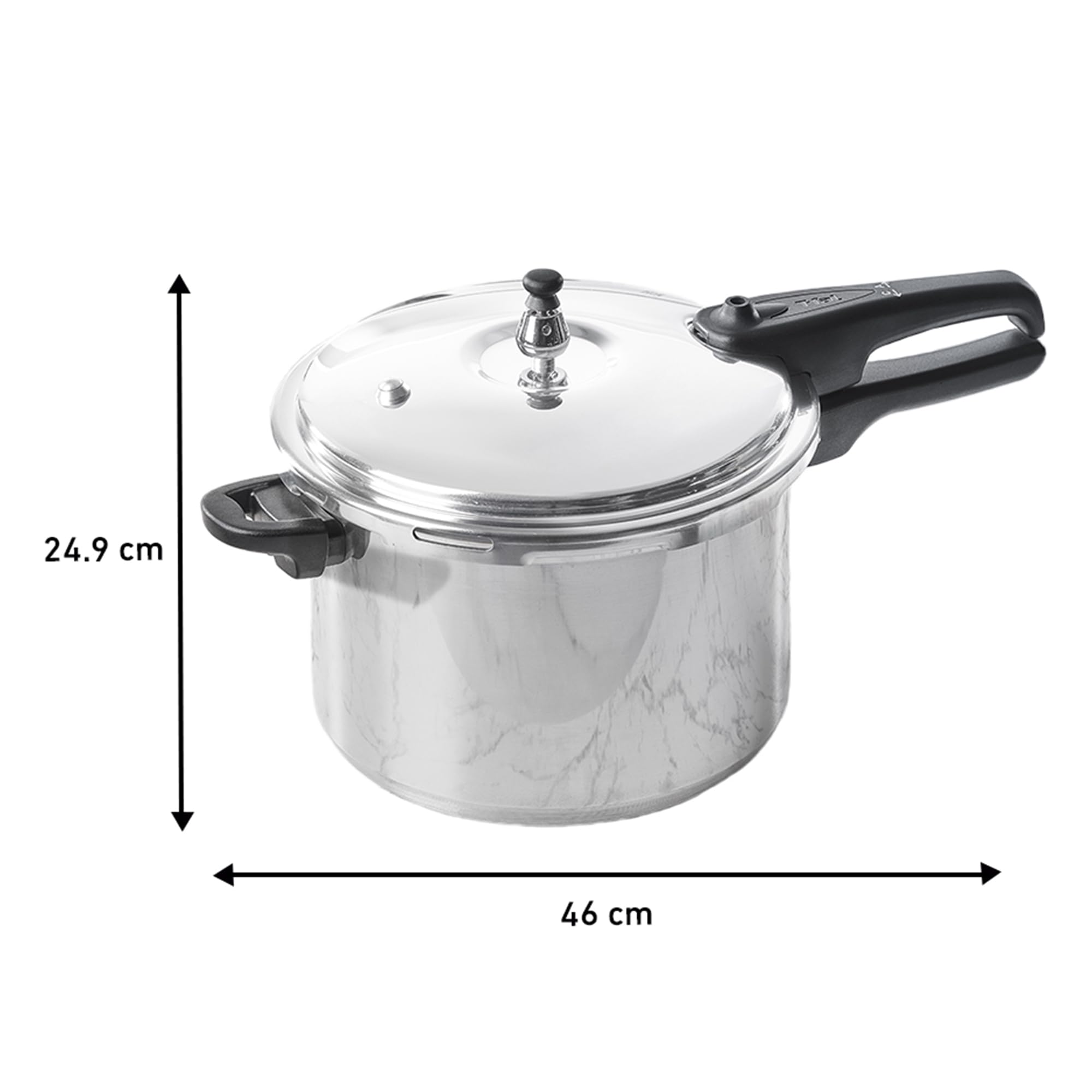
- Approximate Dimensions (Height x Width): 24.9 cm x 46 cm
- Weight: 2.9 Kilograms
- Heat Source Compatibility: Gas, Electric, Ceramic (Not compatible with Induction)
8. Warranty and Customer Support
For information regarding the warranty period and terms for your T-fal pressure cooker, please refer to the warranty card included with your purchase or visit the official Tefal website. Keep your proof of purchase for any warranty claims.
If you require technical assistance, have questions about product operation, or need to order replacement parts, please contact T-fal customer support. Contact details can typically be found on the official T-fal website or in the packaging materials.
Online Resources: For additional tips, recipes, and product information, visit the official Tefal website.


