
Tribord Zeruko-Pw-06
Tribord Zeruko-Pw-06 Adult Kite User Manual
Model: Zeruko-Pw-06
1. Introduction
This manual provides essential information for the safe and effective use of your Tribord Zeruko-Pw-06 Adult Kite. Please read this manual thoroughly before attempting to set up or operate the kite. Retain this manual for future reference.
The Tribord Zeruko-Pw-06 is designed for discovering and enjoying kite flying. It features a small, manageable wing size, making it easy to steer and ideal for beginners. This kite has very light drag and no rigid frame.
2. Safety Information
WARNING: Failure to follow these safety instructions may result in injury or damage to property.
- Do not use the kite above water.
- Do not use the kite in stormy weather, strong winds, or during lightning.
- Always check weather conditions before flying. Recommended wind speed: 2 to 6 Beaufort (6 to 50 km/h).
- Fly in open areas, away from power lines, trees, buildings, and roads.
- Keep a safe distance from other people and animals.
- Children should only use this kite under direct adult supervision.
- Inspect the kite and lines for any damage before each use. Do not use if damaged.
3. Components
The Tribord Zeruko-Pw-06 kite typically includes the following components:
- Zeruko-Pw-06 Kite Canopy
- Flying Lines (attached or separate)
- Control Bar or Handles (if included)
- Storage Bag
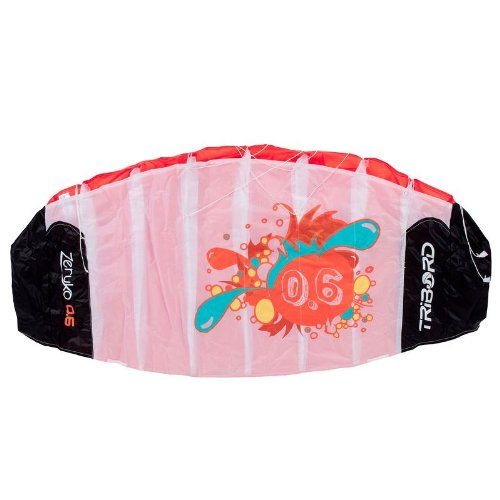
Figure 3.1: The Tribord Zeruko-Pw-06 Adult Kite. This image shows the kite laid flat, displaying its red and white main canopy with black sections at each end. A vibrant, multi-colored graphic is centered on the white part of the canopy. The kite's lines are visible, extending from the canopy.
4. Setup
- Choose a Suitable Location: Select an open, clear area free from obstacles like trees, power lines, buildings, and people. Ensure there is ample space downwind for the kite to fly.
- Unpack the Kite: Carefully remove the kite and lines from its storage bag.
- Lay Out the Kite: Lay the kite canopy flat on the ground with the leading edge facing into the wind.
- Untangle Lines: If the lines are separate, carefully unroll and untangle them. Attach the lines to the designated attachment points on the kite, ensuring they are not twisted. Refer to any diagrams on the kite itself for correct attachment.
- Prepare Control Bar/Handles: If using a control bar or handles, ensure the lines are correctly attached and untangled. Walk backwards into the wind, unwinding the lines as you go, until the lines are fully extended and taut.
- Pre-flight Check: Before launching, double-check all line connections and ensure the kite canopy is fully inflated by the wind.
5. Operating Instructions
5.1 Launching the Kite
- Stand with your back to the wind, holding the control bar/handles firmly.
- Have a helper hold the kite at the leading edge, or if alone, anchor the kite with sand/rocks.
- When ready, give a clear signal to your helper to release the kite, or gently pull the lines to lift the kite from the ground.
- As the kite catches the wind, gently pull the lines to guide it upwards.
5.2 Flying the Kite
- Steering: To steer the kite, pull on the left line to move it left, and the right line to move it right. Gentle, smooth movements are key.
- Maintaining Altitude: Adjust your pull on the lines to keep the kite in the air. If the kite starts to drop, a gentle pull can often lift it.
- Wind Window: Understand the "wind window" – the area downwind where the kite can fly. The strongest pull is typically in the center of the window.
- Landing: To land the kite, gently guide it towards the edge of the wind window, allowing it to slowly descend to the ground. Avoid sudden movements that could cause it to crash.
5.3 Important Considerations
- Always be aware of your surroundings and potential hazards.
- Do not fly near airports or restricted airspace.
- If the wind becomes too strong, land the kite immediately.
6. Maintenance
- Cleaning: If the kite gets dirty, gently wipe it with a damp cloth and mild soap. Do not use harsh chemicals. Allow it to air dry completely before packing.
- Storage: Store the kite in its original bag in a cool, dry place away from direct sunlight and extreme temperatures. Ensure the kite and lines are completely dry before storage to prevent mildew.
- Inspection: Regularly inspect the kite fabric, stitching, and lines for any signs of wear, tear, or damage. Pay close attention to attachment points.
- Line Care: Keep lines untangled and free from knots. Replace lines if they show signs of fraying or weakening.
7. Troubleshooting
| Problem | Possible Cause | Solution |
|---|---|---|
| Kite won't launch or stay in air. | Insufficient wind; lines tangled; incorrect setup. | Check wind speed (must be 2-6 bf); untangle lines; re-check setup instructions. |
| Kite drifts sideways or spins. | Uneven line tension; damaged kite; turbulent wind. | Adjust line tension; inspect kite for damage; move to a less turbulent area. |
| Kite crashes frequently. | Too strong wind; improper steering; lack of experience. | Land the kite if wind is too strong; practice gentle steering; seek guidance from experienced flyers. |
8. Specifications
| Feature | Detail |
|---|---|
| Model | Zeruko-Pw-06 |
| Brand | Tribord |
| Age Range | Adult (recommended from age 8) |
| Recommended Wind Speed | 2 to 6 Beaufort (6 to 50 km/h) |
| Design | Small, manageable wing size, easy to steer, very light drag, no frame. |
| Item Weight | 300 g |
| ASIN | B00HYY5KPA |
9. Warranty and Support
For information regarding product warranty, returns, or customer support, please refer to the purchase documentation or contact Tribord customer service directly. Specific warranty terms may vary by region and retailer.
For further assistance, you may visit the official Tribord website or contact your point of purchase.
Ask a question about this manual
Ask about setup, troubleshooting, compatibility, parts, safety, or missing instructions. Manuals+ will review the question and use this page’s manual context to help answer it.