
1. Product Overview
The OBDLink LX Bluetooth 3.0 OBD2 Adapter is a high-speed automotive diagnostic device designed to transform your Windows PC, laptop, or Android phone into a powerful scan tool. It provides fast and accurate diagnostics for a wide range of vehicles.
This device is compatible with all 1996+ cars and light trucks sold in the United States (excluding hybrid or electric vehicles) and works with MotoScan compatible motorcycles.

Image: The compact OBDLink LX Bluetooth adapter.
2. Package Contents
- OBDLink LX Bluetooth Adapter
- Quick Start Guide
- Warranty Card
- Compliance insert
3. Setup and Installation
Follow these steps to set up your OBDLink LX adapter:
- Locate the OBD-II Port: The OBD-II port is typically located under the dashboard on the driver's side of your vehicle.
- Plug in the Adapter: Firmly insert the OBDLink LX adapter into your vehicle's OBD-II port. Ensure it is securely connected.
- Turn on Vehicle Ignition: Turn your vehicle's ignition to the "ON" position (do not start the engine). The adapter's Power LED should illuminate.
- Install Software/App:
- For Android devices: Download the official OBDLink app from the Google Play Store.
- For Windows PCs/Laptops: Install the OBDwiz software.
- The device is also compatible with third-party apps such as Torque and DashCommand (Android only).
- Pair via Bluetooth:
- Open your device's Bluetooth settings.
- Search for available devices and select "OBDLink LX".
- Follow any on-screen prompts to complete the pairing process.
- Launch Application: Open the OBDLink app or OBDwiz software. The application should automatically detect and connect to the adapter.

Image: OBDLink LX adapter plugged into a vehicle's OBD-II port.

Image: OBDLink LX is compatible with Android devices.

Image: OBDLink LX connected to a smartphone running the diagnostic app.
For detailed installation instructions, please refer to the Installation Manual (PDF).
4. Operating Instructions
Once connected, the OBDLink LX allows you to access various vehicle data and diagnostic functions:
- Read and Clear Diagnostic Trouble Codes (DTCs): Identify the cause of your vehicle's "Check Engine" light and clear codes after repairs.
- View Live Sensor Data: Monitor real-time parameters such as engine RPM, vehicle speed, engine temperature, fuel rate, and battery voltage.
- Performance Metrics: Track performance data like 0-60 mph times, quarter-mile times, and more (app dependent).
- Trip Logging: Record and review trip data, including fuel economy, distance traveled, and driving habits.

Image: Example of diagnostic trouble codes displayed on a smartphone.

Image: Live sensor data and monitor tests displayed on a smartphone.
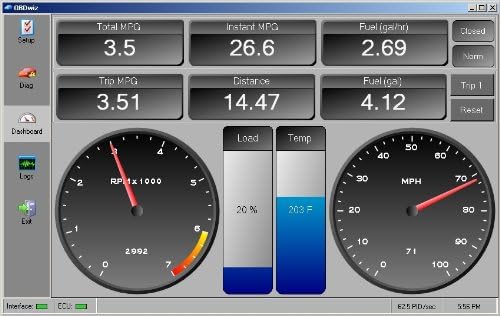
Image: OBDwiz software interface displaying various vehicle metrics on a computer.

Image: OBDwiz software running on a laptop, showing vehicle data.
Refer to your chosen diagnostic application's user guide for specific feature navigation and usage.
5. Maintenance
The OBDLink LX is designed for minimal maintenance. It features BatterySaver™ Technology, allowing it to be safely left plugged into your vehicle's OBD-II port without draining the car's battery.

Image: OBDLink LX highlighting BatterySaver Technology.
Keep the device clean and free from dust or debris. Store it in a cool, dry place when not in use for extended periods.
6. Troubleshooting
If you encounter issues with your OBDLink LX adapter, consider the following common troubleshooting steps:
- No Power: Ensure the adapter is firmly seated in the OBD-II port and the vehicle's ignition is in the "ON" position. Check your vehicle's fuse box for any blown fuses related to the OBD-II port.
- Connection Issues:
- Verify Bluetooth is enabled on your device.
- Ensure no other devices are actively connected to the OBDLink LX via Bluetooth.
- Try restarting your device and the diagnostic application.
- Unplug and re-plug the OBDLink LX from the vehicle.
- App Not Recognizing Adapter: Ensure you are using a compatible application (OBDLink app, OBDwiz, Torque, DashCommand, etc.) and that it is updated to the latest version.
- Incorrect Readings/Data: Confirm your vehicle is supported by the adapter and the application. Ensure the application's settings are correctly configured for your vehicle type.
For more comprehensive troubleshooting, please consult the Troubleshooting Guide (PDF).
7. Specifications
| Feature | Detail |
|---|---|
| Brand | OBDLink |
| Model | OBDLink LX (LX101) |
| Connectivity | Bluetooth 3.0 |
| Power Source | 12V DC (Vehicle Power) |
| Product Dimensions | 1.97"L x 1.77"W x 0.91"H |
| Item Weight | 1.1 ounces |
| Operating System Compatibility | Android and Windows (Not compatible with Apple iOS devices) |
| Language | English |
| Manufacturer Part Number | 427201 |
8. Warranty and Support
The OBDLink LX comes with a 3-Year Warranty. For full details regarding warranty coverage, please refer to the Warranty (PDF) document.
For product support, technical assistance, or any inquiries, please contact OBDLink's U.S. Based Support team. You can also visit the official OBDLink Store for more information and resources.


