
1. Important Safety Information
Please read all instructions carefully before using your Home Emma Pressure Cooker. Failure to follow these safety guidelines may result in serious injury or damage to the appliance.
- Read All Instructions: Familiarize yourself with the appliance and its operation before first use.
- Children: Close supervision is necessary when the pressure cooker is used near children. Do not allow children to operate this appliance.
- Hot Surfaces: The pressure cooker becomes very hot during use. Always use oven mitts or pot holders when handling.
- Overfilling: Do not fill the pressure cooker more than two-thirds full. For foods that expand (e.g., rice, dried vegetables), do not fill more than half full.
- Proper Closing: Ensure the lid is properly closed and locked before applying heat.
- Pressure Release: Never force the lid open. Ensure all internal pressure has been released before attempting to open the lid.
- Maintenance: Regularly check safety valves and gaskets for blockages or wear. Replace worn parts immediately.
- Heat Sources: Use only on appropriate stovetops, including induction. Do not use in an oven.
2. Product Overview and Components
The Home Emma Pressure Cooker is designed for efficient and safe cooking. It features durable stainless steel construction and multiple safety mechanisms.
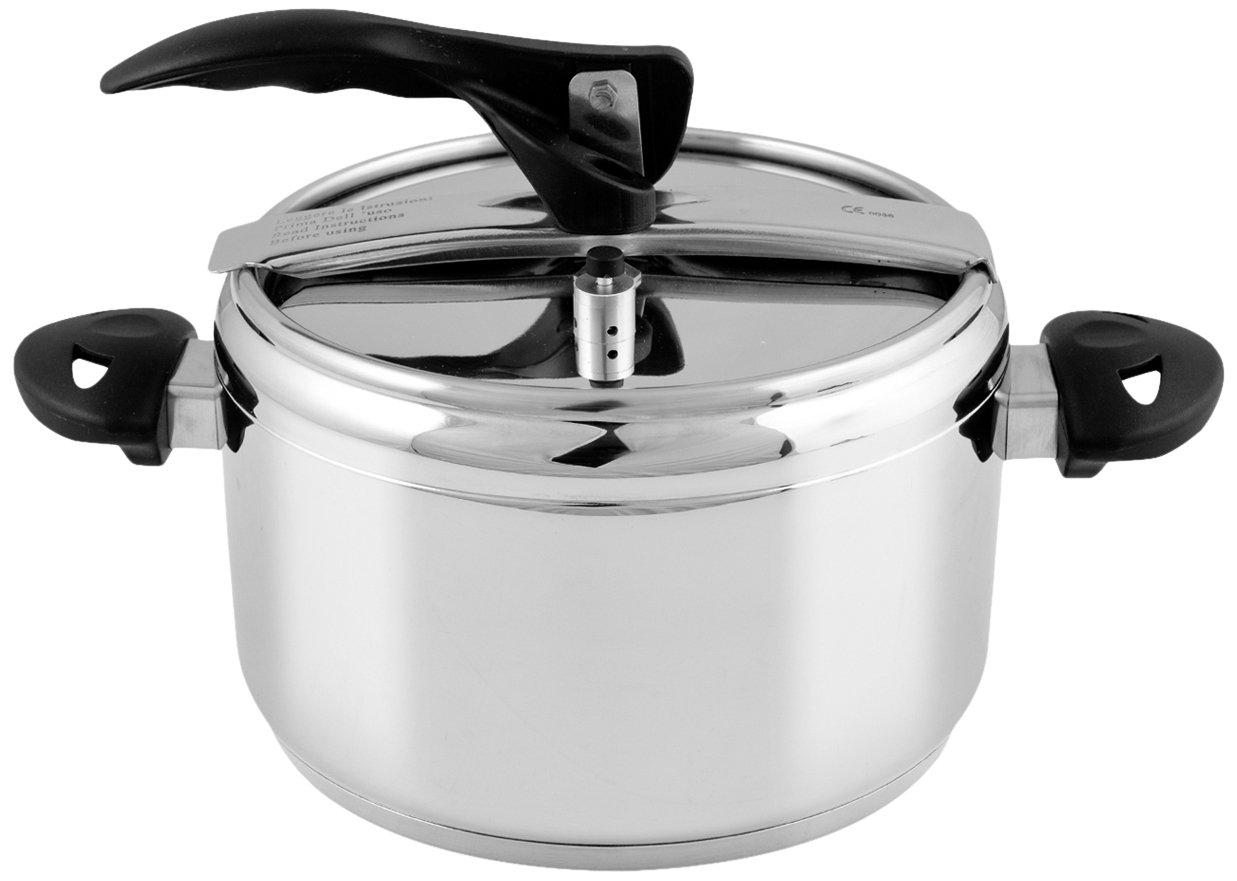
Image: The Home Emma 3.5 Liter Stainless Steel Pressure Cooker, showing its main body, lid with lever handle, and safety valves.
Key Components:
- Pressure Cooker Body: 3.5-liter capacity, stainless steel, triple induction-compatible base.
- Lid: Stainless steel lid with sealing gasket.
- Lever Handle: Ergonomic handle for secure lid closure and opening.
- Main Operating Valve: Regulates cooking pressure.
- Safety Valves (2 Metal, 1 Silicone): Additional safety features to release excess pressure if the main valve is blocked or malfunctions.
- Sealing Gasket: Ensures an airtight seal between the lid and the body.
3. Setup and First Use
Before using your pressure cooker for the first time, follow these steps:
- Unpack: Remove all packaging materials, labels, and protective films from the pressure cooker and its components.
- Wash Components: Wash the lid, body, and sealing gasket with warm, soapy water. Rinse thoroughly and dry completely.
- Inspect: Check that all safety valves are clear and free from obstructions. Ensure the sealing gasket is properly seated in the lid.
- Test Run (Optional but Recommended): Fill the cooker with 2-3 cups of water. Close the lid securely. Heat on high until pressure is reached and steam is released from the operating valve. Reduce heat and let it steam for 5 minutes. Turn off heat and allow pressure to release naturally or using a quick release method (refer to Operating Instructions). This helps to clean the interior and familiarize you with its operation.
4. Operating Instructions
4.1. Preparing for Cooking
- Add Ingredients: Place your food and the required amount of liquid into the pressure cooker. Ensure the liquid level is at least 1 cup (250ml) for proper pressure build-up. Do not exceed the maximum fill lines (2/3 full for most foods, 1/2 full for expanding foods).
- Check Gasket: Ensure the sealing gasket is clean and correctly positioned in the lid.
- Close Lid: Place the lid on the cooker body, aligning the arrows or markings. Rotate the lever handle until the lid is securely locked. You should feel or hear it click into place.
4.2. Cooking Under Pressure
- Apply Heat: Place the pressure cooker on a suitable burner over high heat.
- Reach Pressure: Wait for steam to steadily escape from the main operating valve. This indicates that full pressure has been reached.
- Reduce Heat: Once full pressure is reached, reduce the heat to the lowest setting that maintains a steady release of steam.
- Cook: Begin timing your recipe according to the required cooking time.
4.3. Releasing Pressure and Opening
There are two main methods for releasing pressure:
- Natural Release: Turn off the heat and allow the pressure cooker to cool down naturally. The pressure indicator will drop, and steam will stop escaping. This method is ideal for foods that benefit from continued cooking, like stews and roasts.
- Quick Release (Use with Caution): For foods that require precise cooking times or to stop cooking quickly, you can carefully release pressure. Consult your specific model's instructions for the exact quick release mechanism. Typically, this involves carefully manipulating the operating valve to release steam. Keep hands and face away from escaping steam.
Opening the Lid: Once all pressure has been released (the pressure indicator has dropped and no steam is escaping), unlock the lid by rotating the lever handle. Carefully lift the lid away from you to avoid any residual steam.
5. Maintenance and Cleaning
Proper maintenance ensures the longevity and safe operation of your pressure cooker.
- After Each Use: Wash the pressure cooker body and lid with warm, soapy water. Rinse thoroughly and dry immediately to prevent water spots.
- Sealing Gasket: Remove the sealing gasket from the lid after each use and wash it separately. Ensure it is clean and dry before reinserting. Replace the gasket if it becomes brittle, cracked, or loses its elasticity (typically every 1-2 years with regular use).
- Valves: Regularly check the main operating valve and safety valves for any food particles or blockages. Clean them with a small brush or toothpick if necessary. Ensure they move freely.
- Dishwasher Safe: The pressure cooker body and lid are dishwasher safe. However, hand washing is recommended for the sealing gasket and valves to prolong their lifespan.
- Storage: Store the pressure cooker with the lid inverted or slightly ajar to allow air circulation and prevent odors.
6. Troubleshooting
If you encounter issues with your pressure cooker, refer to the following table:
| Problem | Possible Cause | Solution |
|---|---|---|
| Pressure not building up | Lid not properly sealed; Insufficient liquid; Gasket worn or misplaced; Valve blocked. | Ensure lid is locked; Add more liquid; Check/replace gasket; Clean valves. |
| Steam leaking from lid edge | Gasket dirty, worn, or improperly seated; Lid not closed correctly. | Clean/replace gasket; Ensure gasket is seated correctly; Re-close lid securely. |
| Food undercooked | Insufficient cooking time; Heat too low. | Increase cooking time; Ensure heat is sufficient to maintain pressure. |
| Food overcooked | Too long cooking time; Pressure released too slowly. | Reduce cooking time; Use quick release method if appropriate. |
| Lid stuck after cooking | Residual pressure inside. | Do not force. Allow more time for natural pressure release or use quick release if safe. |
7. Specifications
| Feature | Detail |
|---|---|
| Brand | Home |
| Model Number | 661631 |
| Capacity | 3.5 Liters |
| Material | Stainless Steel, Silicone, Metal |
| Color | Silver |
| Dimensions (L x W x H) | 28.6 x 22.81 x 22 cm |
| Item Weight | 1.2 Kilograms |
| Special Feature | Induction Base |
| Dishwasher Safe | Yes (Body and Lid) |
| EAN | 08003512661631 |
8. Warranty and Support
For warranty information, please refer to the documentation provided at the time of purchase or contact your retailer. Keep your proof of purchase for any warranty claims.
For technical support or replacement parts, please contact the manufacturer or your point of purchase. Always provide the model number (661631) when seeking assistance.