
1. Introduction
Thank you for choosing the Prestige Deluxe Alpha Outer Lid Stainless Steel Pressure Cooker. This manual provides essential information for the safe and efficient operation, maintenance, and care of your new pressure cooker. Please read all instructions carefully before first use and retain this manual for future reference.
This 2-litre stainless steel pressure cooker is designed for efficient cooking, reducing cooking times significantly while preserving nutrients and flavors.
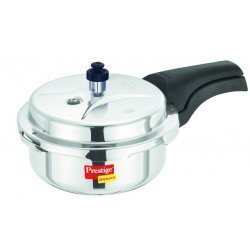
Image 1.1: Prestige Deluxe Alpha Outer Lid Stainless Steel Pressure Cooker. This image shows the 2-litre stainless steel pressure cooker with its outer lid securely in place, featuring a black handle and a pressure regulator on top.
2. Important Safety Information
Failure to follow these safety instructions may result in serious injury or damage to the product. Always exercise caution when operating a pressure cooker.
- Read all instructions thoroughly before using the pressure cooker.
- Do not fill the cooker more than two-thirds full. For foods that expand, such as rice or dried vegetables, do not fill more than half full.
- Never attempt to open the pressure cooker while it is under pressure. Ensure all pressure has been released before opening the lid.
- Keep children away from the pressure cooker during use.
- Regularly inspect the gasket (sealing ring) and safety valve for wear or damage. Replace if necessary.
- Ensure the vent tube is clear before each use.
- Use the pressure cooker only on appropriate heat sources as specified by the manufacturer.
- Do not use the pressure cooker for deep frying with oil.
- Always use oven mitts or pot holders when handling the hot pressure cooker.
3. Components
Familiarize yourself with the main parts of your Prestige Deluxe Alpha Pressure Cooker:
- Cooker Body: The main pot where food is cooked.
- Lid: The cover that seals the cooker body. This model features an outer lid design.
- Gasket (Sealing Ring): A rubber or silicone ring fitted inside the lid to create an airtight seal.
- Pressure Regulator (Weight Valve): A weight placed on the vent tube to maintain and release pressure.
- Safety Valve: A safety device designed to release excess pressure if the vent tube becomes blocked.
- Handles: For safe handling and carrying of the cooker.
- Vent Tube: The small tube on the lid through which steam escapes before the pressure regulator is placed.
4. Setup and First Use
- Unpack: Carefully remove all packaging materials and labels from the pressure cooker.
- Wash: Wash the cooker body, lid, gasket, and pressure regulator thoroughly with warm soapy water. Rinse well and dry completely.
- Inspect: Check all parts for any signs of damage or manufacturing defects. Ensure the vent tube is clear and the safety valve is intact.
- Insert Gasket: Place the gasket securely into the groove on the underside of the lid. Ensure it is seated correctly and evenly.
- Test Run (Optional but Recommended): For the first use, it is recommended to perform a test run. Add 2-3 cups of water to the cooker, close the lid, and bring it to pressure. Allow it to release pressure naturally, then open and inspect. This helps to ensure all components are functioning correctly.
5. Operating Instructions
5.1. Filling the Cooker
- Add food and the required amount of liquid (water, broth, etc.) to the cooker body.
- Ensure the liquid level is at least 1/2 cup (120ml) to generate sufficient steam.
- Do not exceed the maximum fill line (usually two-thirds full) marked inside the cooker. For foods that expand, do not fill more than half full.
5.2. Closing the Lid
- Place the lid onto the cooker body, aligning the lid handle with the body handle.
- Press down firmly and rotate the lid handle until it locks securely into place. Ensure the gasket is properly seated and no steam can escape from the rim.
5.3. Heating and Building Pressure
- Place the pressure cooker on a suitable heat source (gas, electric, induction).
- Set the heat to high. Steam will begin to escape from the vent tube.
- Once a steady stream of steam is visible, carefully place the pressure regulator (weight valve) onto the vent tube.
- The cooker will now build pressure. The pressure regulator will begin to whistle or rock gently, indicating that full pressure has been reached.
5.4. Cooking
- Once full pressure is reached, reduce the heat to the lowest setting that maintains a steady whistle or gentle rocking of the pressure regulator.
- Begin timing your recipe from this point.
5.5. Releasing Pressure
There are two primary methods for releasing pressure:
- Natural Release: After cooking, turn off the heat and allow the cooker to cool down naturally. The pressure will gradually decrease, and the pressure regulator will stop whistling. This method is ideal for foods that benefit from continued cooking, such as stews and grains.
- Cold Water Release (for Outer Lid Cookers): For faster pressure release, carefully place the cooker under cold running water in the sink, ensuring water does not touch the pressure regulator or vent tube. Run cold water over the lid until the pressure is fully released. This method is suitable for delicate foods.
5.6. Opening the Lid
- Before opening, ensure all pressure has been released. The pressure regulator should be completely still, and no steam should be escaping.
- Carefully rotate the lid handle to unlock it, lifting the lid away from your face to avoid any residual steam.
6. Maintenance and Cleaning
Proper maintenance ensures the longevity and safe operation of your pressure cooker.
- After Each Use: Wash the cooker body and lid with warm soapy water. Rinse thoroughly and dry completely to prevent water spots and corrosion.
- Gasket: Remove the gasket from the lid after each use, wash it, and allow it to dry. Store it separately or loosely in the lid to prolong its life. Replace the gasket every 6-12 months, or sooner if it appears cracked, stiff, or causes steam leakage.
- Vent Tube and Safety Valve: Ensure the vent tube is clear of any food particles. Use a small brush or pin to clean it if necessary. Check the safety valve for any blockages.
- Dishwasher Safe: The Prestige Deluxe Alpha Pressure Cooker is dishwasher safe for convenient cleaning. However, hand washing is recommended for the gasket and pressure regulator to extend their lifespan.
- Storage: Store the pressure cooker with the lid inverted or slightly ajar to allow air circulation and prevent odors.
7. Troubleshooting
| Problem | Possible Cause | Solution |
|---|---|---|
| Steam leaking from lid rim | Gasket improperly seated, worn, or damaged; lid not closed properly; food particles on rim. | Re-seat gasket, replace gasket if worn; ensure lid is securely locked; clean rim and gasket. |
| Pressure not building | Insufficient liquid; vent tube blocked; gasket issue; heat too low. | Add more liquid; clear vent tube; check/replace gasket; increase heat. |
| Safety valve releases steam | Vent tube blocked; cooker overfilled; excessive heat. | Turn off heat, release pressure, clear vent tube; do not overfill; reduce heat. |
| Food not cooking properly | Insufficient pressure; incorrect cooking time. | Ensure pressure is maintained; adjust cooking time according to recipe. |
8. Specifications
- Brand: Prestige
- Model: PRDA2
- Capacity: 2 Litres
- Material: Stainless Steel
- Closure Type: Outer Lid
- Special Features: Dishwasher Safe, Locking Lid
- Operation Mode: Manual
- Color: Stainless Steel
9. Warranty and Support
For detailed warranty information, product registration, or customer support, please refer to the official Prestige website or contact their customer service directly. Keep your purchase receipt as proof of purchase.
Contact information can typically be found on the product packaging or the manufacturer's official website.


