Introduction
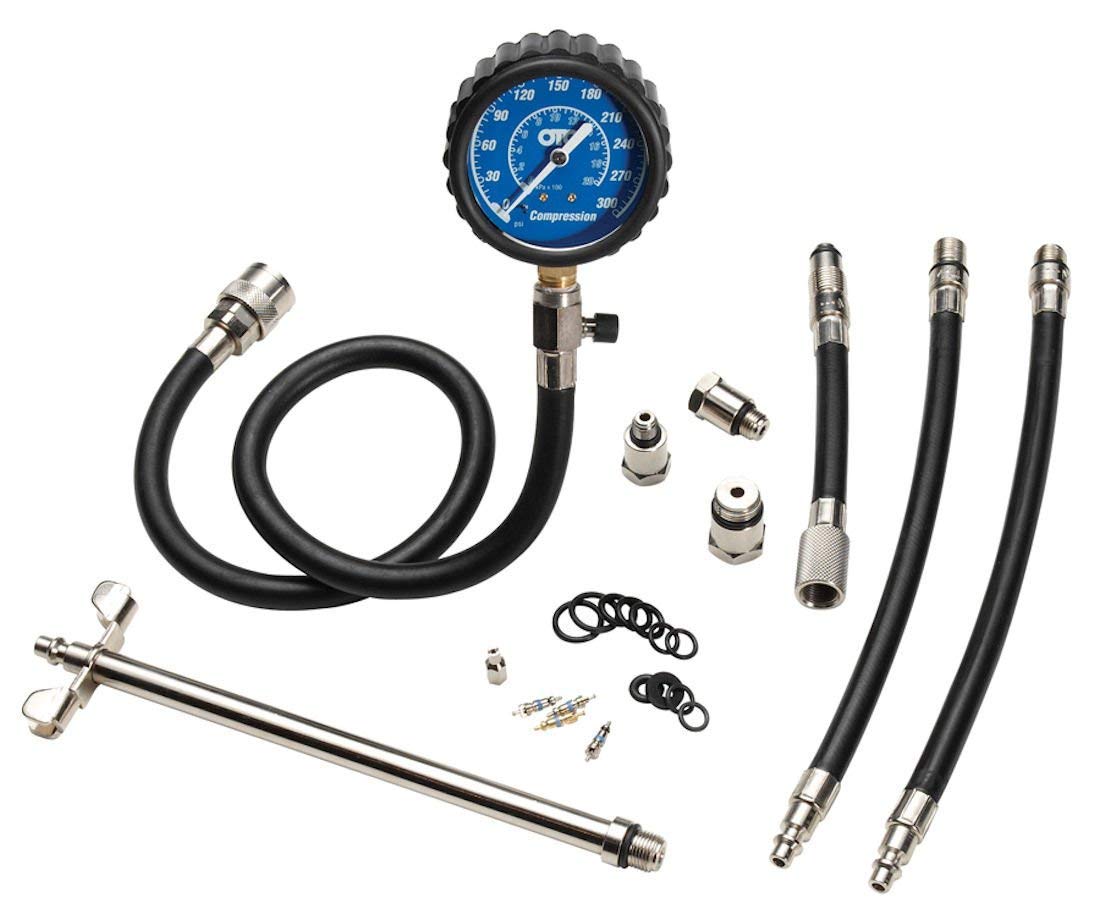
The OTC 5605 Deluxe Compression Tester Kit is designed for accurately testing compression in gasoline engines. This comprehensive kit includes a variety of standard and specialty adapters, ensuring compatibility with a wide range of vehicles, including those with recessed plug wells and Ford Triton engines using 16mm thread plugs. All metal components are nickel-plated for corrosion resistance, and adapters are compatible with both flat and tapered seat spark plugs. The kit features an extra-long 25-inch flexible hose gauge assembly with a quick coupler for convenient use in crowded engine compartments. The 2.5-inch gauge has a chrome bezel, a protective outer boot, and displays readings from 0-300 psi and 0-2100 kPa.

Package Contents
The OTC 5605 Deluxe Compression Tester Kit includes the following components:
- Rugged Blow-Molded Hard Case
- 2.5-inch Compression Gauge (0-300 psi / 0-2100 kPa) with protective boot
- 25-inch Flexible Hose Gauge Assembly with Quick Coupler
- 8-inch Deep Well 14mm Connector
- 5-inch Flexible Ford Triton 16mm Adapter
- 12-inch Flexible 14mm Standard Reach Adapter
- 12-inch Flexible 14mm Long Reach Adapter
- 10mm Thread Adapter
- 12mm Thread Adapter
- 18mm Thread Adapter
- Repair Parts Kit (includes extra valves and O-rings)
Safety Information
Always observe standard automotive safety precautions when working on vehicles. Wear appropriate personal protective equipment, such as safety glasses and gloves. Ensure the vehicle is in a well-ventilated area and properly supported if raised. Disconnect the battery's negative terminal before working on electrical components to prevent accidental engine cranking or electrical hazards.
Proposition 65 Warning: This product may contain chemicals known to the State of California to cause cancer and birth defects or other reproductive harm.
CAUTION! Failure to return throttle plates to the closed position before starting the engine can cause serious engine damage.
Setup and Preparation
- Warm Up Engine: Run the engine until it reaches normal operating temperature. This ensures accurate readings by allowing components to expand to their normal operating clearances.
- Stop Engine and Disconnect Ignition: Turn off the engine. Disconnect all spark plug wires and number them to ensure they are reconnected to the correct cylinders. Disable the ignition system according to the vehicle manufacturer's recommendations to prevent accidental spark.
- Loosen Spark Plugs: Loosen all spark plugs, but do not remove them yet. Use an air hose or stiff brush to remove any dirt or debris from around the spark plug wells. This prevents foreign material from entering the cylinders when the plugs are removed.
- Remove Air Filter and Open Throttle: Remove the air filter and set the throttle plates to the wide-open position. Be careful not to damage the linkage or throttle components.
Operating Instructions: Performing a Compression Test
Follow these steps to perform a compression test on each cylinder:
- Select Adapter: Choose the appropriate spark plug adapter and/or hose for the cylinder being tested. Screw the adapter securely into the spark plug well. Hand-tighten only; do not use a wrench.
- Connect Gauge: Connect the quick-coupler on the gauge hose assembly to the fitting on the spark plug hose. Ensure the hose couplings are fully engaged to prevent leaks.
- Crank Engine: Crank the engine for at least five compression strokes or until the pressure reading stops rising on the gauge.
- Record Reading and Relieve Pressure: Record the compression reading displayed on the gauge. Then, push the side release valve to relieve the pressure before disconnecting the gauge.
- Repeat for Remaining Cylinders: Reconnect the hose to the next spark plug well and repeat steps 6-9 for all remaining cylinders.

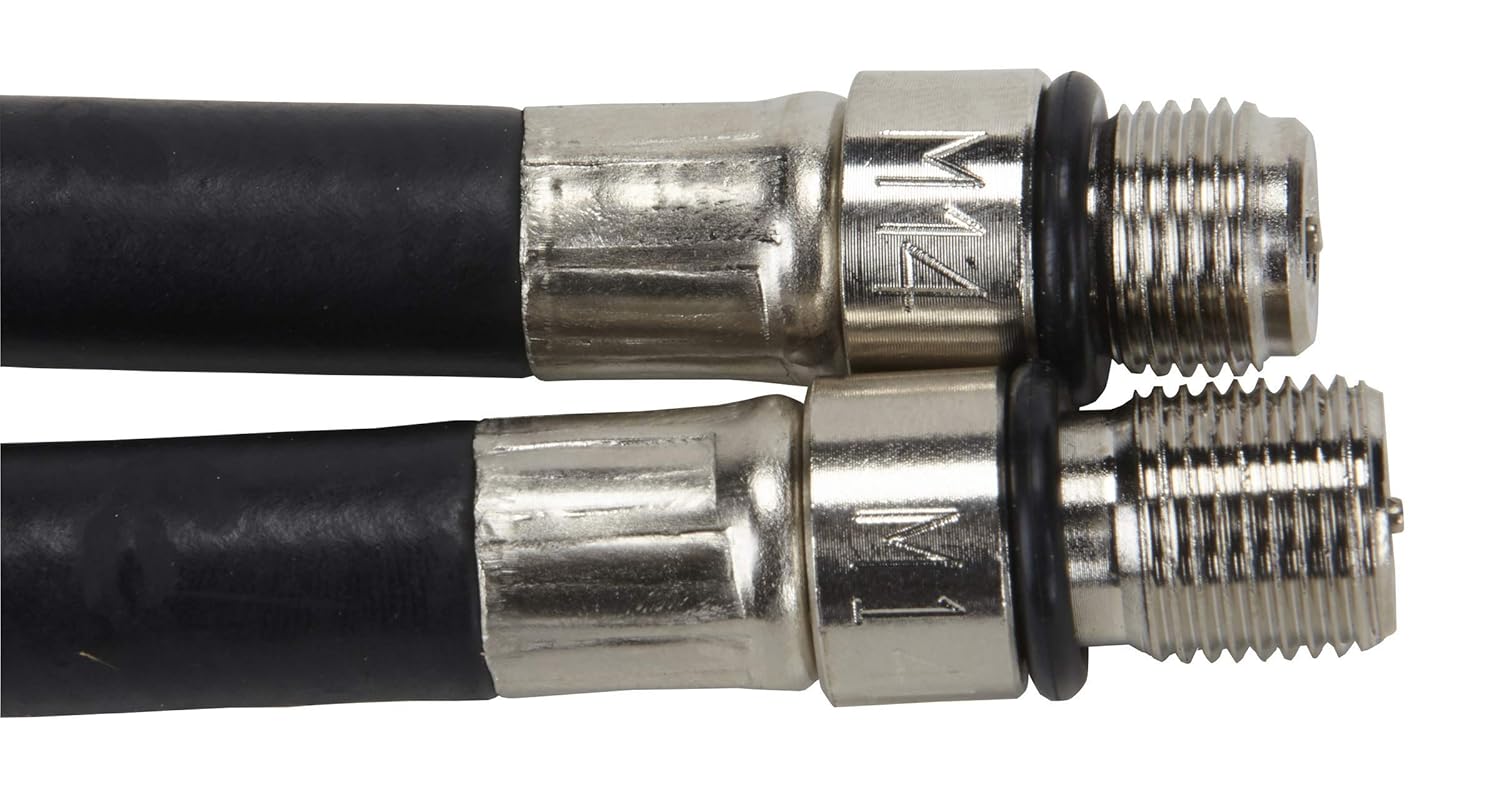
NOTE: For engines with long reach spark plugs, use the long reach hose. Do not use long reach plugs in short reach holes, as this may cause contact with the piston and result in engine damage.

Interpreting Test Results (Troubleshooting)
Understanding the compression readings is crucial for diagnosing engine issues:
- Normal Cylinder: The gauge needle should travel upscale with each compression stroke until it reaches a peak value. All cylinders should indicate a pressure that matches the vehicle manufacturer's specifications, and the reading should not vary more than 10% from cylinder to cylinder.
- Needle Fails to Travel Upscale: If the needle fails to travel upscale as described above, it may indicate a sticking valve.
- Considerably Higher Reading: If a reading is considerably higher than the vehicle manufacturer's specification, it may indicate carbon build-up in the cylinder. This can also suggest that the piston or cylinder head has been modified.
- Low Reading in Two Adjacent Cylinders: If two adjacent cylinders show readings 20 psi (or more) lower than the other cylinders, it often points to a defective head gasket or a cracked cylinder head. Water/coolant or oil may also be found in these cylinders.
- Low or Widely Varying Readings: If the readings are low or vary widely between cylinders, it suggests worn piston rings. This can lead to a burned or damaged piston.
After testing, clean, recap, and reinstall the spark plugs in the same order they were removed. Reconnect spark plug wires and the ignition system wiring that was disconnected in Step 5 of the Test Procedure.
Maintenance
To ensure the longevity and accuracy of your OTC 5605 Deluxe Compression Tester Kit, follow these maintenance guidelines:
- Cleaning: After each use, wipe down all components with a clean, dry cloth. Avoid using harsh chemicals or solvents that could damage the materials or markings.
- Storage: Store the kit in its original blow-molded hard case with the lid securely closed. This protects the components from dust, dirt, and physical damage. Keep the kit in a dry, temperature-controlled environment.
- Inspection: Periodically inspect hoses, adapters, and the gauge for any signs of wear, cracks, or damage. Ensure O-rings are intact and sealing properly.
- Repair Parts: The kit includes a repair parts kit with extra valves and O-rings. Refer to the table below for part numbers if replacements are needed.
Repair Parts List
| Part Number | Description |
|---|---|
| 0400-3430 | Carry Case |
| 002-0137 | 26" Hose and Release Valve |
| 0031-0460 | Compression Gauge |
| 0180-1496 | 18mm Adapter |
| 0180-1495 | 12mm Adapter |
| 0180-0893 | 10mm Adapter |
| 002-0135 | 14mm (Standard) Hose Assembly |
| 002-0136 | 14mm (Long Reach) Hose Assembly |
| 1000-5391 | Repair Kit |
| 0400-3009 | Gauge Boot |
| 5603 | Deep Well Connector |
| 5607 | Ford 3-Valve Triton Adapter |
Specifications
- Model Number: 5605
- Gauge Range: 0-300 psi (0-2100 kPa)
- Gauge Diameter: 2.5 inches
- Hose Length: 25 inches (flexible hose gauge assembly)
- Adapter Compatibility: Standard and specialty adapters for gasoline engines, including deep well 14mm, Ford Triton 16mm, 10mm, 12mm, 14mm (standard and long reach), and 18mm thread adapters.
- Material: Corrosion-resistant nickel-plated metal components
- Case: Rugged blow-molded hard case with removable lid
- Product Dimensions: 3.5 x 15 x 4.6 inches
- Item Weight: Approximately 2.09 Grams (0.07 ounces)
- UPC: 731413543456
Warranty and Support
OTC products are manufactured to high-quality standards. For specific warranty information, please refer to the documentation included with your purchase or visit the official OTC website. For technical assistance, replacement parts, or customer support, please contact OTC customer service.
You can find more information about OTC products and support by visiting the OTC Store on Amazon.


