
1. Introduction to the Service Manual Set
This comprehensive service and repair manual set is specifically designed for the 1991 and 1992 Cadillac Allante models. It includes the primary Service Information Manual and a dedicated Service Manual Supplement, providing detailed instructions and information essential for proper vehicle maintenance and repair.
The manuals contain step-by-step procedures, exploded illustrations, diagrams, and troubleshooting guides, mirroring the resources used by GM mechanics and technicians at dealerships. This set is an invaluable resource for owners and service professionals alike, aiming to facilitate accurate diagnostics and effective repairs, ultimately helping to maintain the vehicle's performance and longevity.
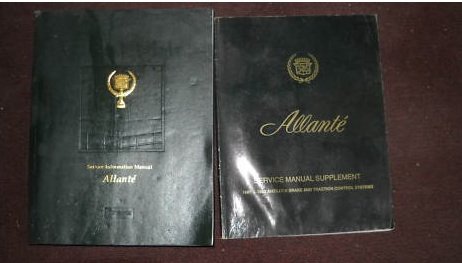
Figure 1: The 1991-1992 Cadillac Allante Service Information Manual (left) and Service Manual Supplement (right). These manuals provide detailed instructions and diagrams for vehicle maintenance and repair.
2. Safety Precautions and Preparation
Before commencing any service or repair work on your Cadillac Allante, it is crucial to observe all safety precautions. Always wear appropriate personal protective equipment, such as safety glasses and gloves. Ensure the vehicle is securely supported on jack stands if lifted, and disconnect the battery's negative terminal to prevent accidental electrical discharge.
Familiarize yourself with the vehicle's systems and the specific procedures outlined in this manual. Improper procedures can lead to injury or damage to the vehicle. Always work in a well-ventilated area, especially when dealing with fluids or fumes.
3. General Maintenance Procedures
Regular maintenance is vital for the longevity and optimal performance of your Cadillac Allante. This section covers routine checks and service intervals.
3.1. Fluid Level Checks
- Engine Oil: Check oil level regularly and change according to the recommended schedule using the specified oil type.
- Coolant: Inspect coolant level and condition. Ensure the cooling system is free of leaks.
- Brake Fluid: Verify brake fluid level and condition. Low fluid can indicate worn pads or a leak.
- Power Steering Fluid: Check fluid level and ensure no leaks are present in the power steering system.
- Transmission Fluid: For automatic transmissions, check fluid level with the engine running and at operating temperature.
3.2. Tire Care and Inspection
Proper tire inflation and regular inspection are critical for safety and fuel efficiency.
- Tire Pressure: Maintain recommended tire pressure as specified in the owner's manual or on the vehicle's door jamb sticker.
- Tread Depth: Inspect tire tread for wear and replace tires when tread depth is below safety limits.
- Rotation: Rotate tires periodically to ensure even wear and extend tire life.
4. Vehicle Systems Overview and Service
This section provides an overview of the major vehicle systems and detailed service procedures, including assembly and disassembly instructions.
4.1. Engine and Drivetrain
Detailed procedures for engine component removal, installation, and overhaul. Includes specifications for torque settings and clearances.
- Cylinder head removal and installation
- Timing chain/belt service
- Fuel system diagnostics and repair
- Transmission service and component replacement
4.2. Electrical Systems
Comprehensive wiring diagrams and diagnostic charts for all electrical components, including lighting, charging, starting, and accessory systems.
- Battery and charging system testing
- Fuse box layouts and circuit identification
- Sensor testing and replacement
4.3. Chassis, Suspension, and Steering
Instructions for inspecting, repairing, and replacing components of the suspension, steering, and chassis.
- Shock absorber and strut replacement
- Wheel bearing service
- Steering gear and pump procedures
4.4. Brake and Traction Control Systems
This section, heavily detailed in the Service Manual Supplement, covers the anti-lock brake system (ABS) and traction control system (TCS).
- Brake pad and rotor replacement
- Brake fluid bleeding procedures
- ABS sensor testing and replacement
- TCS component diagnostics
5. Troubleshooting Guide
This guide assists in diagnosing common issues based on symptoms. Refer to the detailed sections for specific repair procedures.
| Symptom | Possible Cause | Action/Reference |
|---|---|---|
| Engine Cranks but Won't Start | Fuel delivery issue, ignition system fault, sensor malfunction | Check fuel pressure, spark, and engine sensor readings (Section 4.1, 4.2) |
| Brake Pedal Feels Spongy | Air in brake lines, low brake fluid, worn master cylinder | Bleed brake system, check fluid level, inspect master cylinder (Section 4.4) |
| Unusual Noises from Suspension | Worn bushings, faulty shock absorbers, loose components | Inspect suspension components for wear or damage (Section 4.3) |
6. Technical Specifications
This section provides key technical specifications for the 1991-1992 Cadillac Allante, including engine data, fluid capacities, and torque specifications. Refer to the specific manual chapters for detailed component specifications.
- Engine Type: 4.5L V8 (1991), 4.6L Northstar V8 (1992)
- Horsepower: Varies by year and engine type
- Transmission: 4-speed automatic
- Brake Type: Four-wheel disc with ABS
- Tire Pressure: Refer to vehicle's door jamb sticker
- Oil Capacity: Refer to specific engine section in manual
7. Obtaining Further Support
For additional assistance or if you encounter issues not covered in detail within this manual set, it is recommended to consult with a certified Cadillac service center or a qualified automotive technician. These professionals have access to specialized tools, diagnostic equipment, and the latest service bulletins.
While this manual provides comprehensive information, complex repairs may require professional expertise. Always prioritize safety and proper repair techniques.


