
Introduction
This manual provides detailed electrical troubleshooting information specifically for the 1983 BMW 528e and 533i models. It is designed to assist technicians and enthusiasts in systematically identifying and resolving electrical system malfunctions. The content includes comprehensive wiring diagrams, component locations, and diagnostic procedures to ensure accurate and efficient repairs.
Setup for Effective Use
To maximize the utility of this manual, ensure you have the following tools and resources readily available:
- Digital Multimeter (DMM): Essential for measuring voltage, current, and resistance.
- Test Light: Useful for quick checks of power and ground circuits.
- Wiring Diagram Reference: This manual contains diagrams, but familiarity with general automotive electrical symbols is beneficial.
- Vehicle-Specific Information: Access to your vehicle's specific production details may be helpful for certain variations.
- Safety Equipment: Always use appropriate personal protective equipment (PPE) when working with electrical systems.
Familiarize yourself with the manual's layout before beginning any diagnostic work.
Operating the Manual
This manual is structured to guide you through electrical diagnostics logically. Each section focuses on specific electrical systems or components. Follow these guidelines for effective use:
- Identify the Symptom: Clearly define the electrical issue you are experiencing.
- Locate Relevant Section: Use the section headings to find the part of the manual that addresses your symptom or system.
- Review Wiring Diagrams: Pay close attention to the provided wiring diagrams. Understand the flow of current and the function of each component.
- Perform Diagnostic Tests: Follow the step-by-step diagnostic procedures outlined for each issue. These often involve checking voltage, resistance, or continuity at specific points.
- Interpret Results: Compare your test results with the specifications provided in the manual to determine the fault.
- Implement Repair: Once the fault is identified, perform the necessary repair or component replacement.
Understanding the symbols and conventions used in the diagrams is crucial for accurate interpretation.
Electrical System Maintenance
While this manual primarily focuses on troubleshooting, regular maintenance of your vehicle's electrical system can prevent many common issues. Key areas to consider include:
- Battery Health: Regularly check battery terminals for corrosion and ensure proper charge.
- Ground Connections: Verify that all ground connections are clean and secure. Poor grounds are a frequent cause of electrical problems.
- Fuse Inspection: Periodically inspect fuses for signs of damage or corrosion. Always replace a blown fuse with one of the correct amperage.
- Wiring Harnesses: Inspect wiring harnesses for chafing, cuts, or signs of heat damage.
- Component Integrity: Ensure electrical components are securely mounted and free from excessive vibration or moisture.
Proactive maintenance can significantly extend the life of your electrical components and reduce the need for extensive troubleshooting.
Troubleshooting Common Electrical Issues
This section provides a systematic approach to diagnosing and resolving common electrical problems encountered in 1983 BMW 528e and 533i models. Each issue is accompanied by diagnostic steps and references to specific diagrams within the manual.
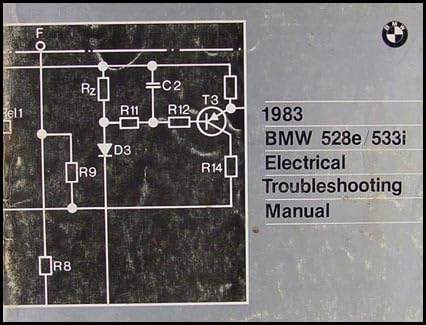
Example Troubleshooting Flow: No Start Condition (Electrical)
- Check Battery Voltage: Ensure the battery has sufficient charge (typically 12.6V or higher).
- Inspect Battery Terminals: Verify clean and tight connections.
- Test Starter Solenoid: Check for voltage at the starter solenoid activation wire when the key is turned to 'start'.
- Verify Ignition Switch Function: Confirm proper voltage output from the ignition switch in various positions.
- Examine Relays and Fuses: Consult the manual's fuse box diagram and relay locations to check relevant components (e.g., fuel pump relay, main relay).
- Trace Wiring: Use the provided wiring diagrams to trace circuits related to the starting system, looking for open circuits or shorts.
For detailed diagrams and specific component values, refer to the relevant chapters within this manual.
Specifications
Key specifications related to this manual and the vehicle models it covers:
| Specification | Detail |
|---|---|
| ASIN | B00435FTXG |
| Publisher | BMW |
| Publication Date | January 1, 1983 |
| Language | English |
| Item Weight | 14.7 ounces |
| Dimensions | 8.5 x 11 x 1 inches |