
1. Introduction
The Rain Harvesting First Flush Diverter Kit is designed to improve the quality of harvested rainwater by diverting the initial flow of water from your roof. This first flush often contains contaminants such as leaves, dust, bird droppings, and other debris that accumulate on the roof and in gutters. By diverting this initial flow, only cleaner water is directed into your storage tank.
This manual provides instructions for the installation, operation, maintenance, and troubleshooting of your First Flush Diverter Kit.

Figure 1: The Rain Harvesting First Flush Diverter Kit, showing the main body with a green float ball visible within the clear chamber, and the T-junction for connection to a downspout.
2. Components
The Rain Harvesting First Flush Diverter Kit includes the following parts:
- Diverter body (clear chamber with T-junction)
- Float ball (black or green)
- Ball seat
- Slow release valve assembly
- Mounting brackets
- Orifice reducers (various sizes)
- Instruction manual
Note: Additional 3-inch pipe for the diversion chamber is required and not included in the kit.
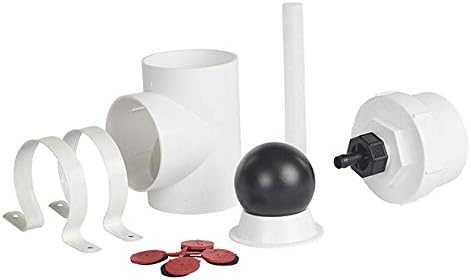
Figure 2: A complete set of components for the First Flush Diverter Kit, including the T-junction, end cap with drain valve, float ball, ball seat, mounting brackets, and orifice reducers.
3. Setup and Installation
Installation of the First Flush Diverter Kit involves integrating it into your existing downspout system. The kit is designed for 3-inch round pipes.
- Determine Diversion Volume: The length of the pipe used for the diversion chamber determines the volume of water diverted. A longer pipe diverts more initial water. Consult local guidelines or water quality recommendations for appropriate diversion volumes.
- Cut Downspout: Select a suitable location on your downspout, typically above your rainwater tank inlet. Cut a section of the downspout to accommodate the diverter's T-junction and the chosen length of the diversion pipe.
- Assemble Diverter: Attach the T-junction to the downspout. Connect the chosen length of 3-inch pipe to the vertical outlet of the T-junction. Insert the float ball and ball seat into the bottom of this pipe. Secure the slow release valve assembly to the bottom of the diversion pipe.
- Mounting: Use the provided mounting brackets to secure the diverter assembly firmly to a wall or support structure. Ensure the diverter is plumb and stable.
- Connect to Tank: Ensure the horizontal outlet of the T-junction is properly connected to your rainwater tank's inlet.
- Select Orifice: Choose an appropriate orifice reducer for the slow release valve. Smaller orifices drain the chamber slower, while larger ones drain faster.

Figure 3: An example installation of the First Flush Diverter Kit, showing its integration with a downspout leading to a large rainwater storage tank.
4. Operating Principles
The First Flush Diverter operates automatically with each rainfall event:
- Initial Flow Diversion: As rain begins, the first water from the roof flows into the vertical diversion chamber. This water, containing most of the contaminants, fills the chamber.
- Ball Sealing: As the chamber fills, the float ball rises. Once the chamber is full, the ball seats itself, sealing off the entrance to the diversion chamber and preventing further water from entering it.
- Clean Water Collection: With the diversion chamber sealed, subsequent clean rainwater is then directed through the horizontal outlet of the T-junction and into your rainwater storage tank.
- Automatic Draining: After the rain event, the slow release valve at the bottom of the diversion chamber gradually drains the diverted contaminated water. This prepares the system for the next rainfall.

Figure 4: Operational diagram showing (left) the first flush of contaminated water entering the chamber and (right) the chamber full and sealed by the ball, allowing clean water to flow to the tank.
5. Maintenance
Regular maintenance ensures optimal performance of your First Flush Diverter Kit:
- Inspect Regularly: Periodically check the diverter chamber, float ball, and slow release valve for any blockages, debris, or damage.
- Clean Chamber: If significant sediment or debris accumulates in the chamber, unscrew the bottom cap (slow release valve assembly) and flush out the contents. This is especially important after heavy rainfall or prolonged dry periods.
- Check Slow Release Valve: Ensure the slow release valve is draining properly. If it appears clogged, clean the orifice and surrounding area.
- Inspect Seals: Verify that all connections and seals are intact and not leaking. Replace any worn O-rings or damaged components.
6. Troubleshooting
| Problem | Possible Cause | Solution |
|---|---|---|
| Water continuously flows into the tank without diversion. | Float ball is stuck or not seating properly. | Inspect the chamber for debris obstructing the float ball. Clean the ball and ball seat. |
| Diverter chamber does not drain or drains too slowly. | Slow release valve orifice is clogged. | Unscrew the bottom cap and clear any debris from the orifice. Ensure the chosen orifice size is appropriate. |
| Water leaks from the bottom cap or connections. | Loose connection or damaged O-ring. | Tighten the bottom cap. Inspect and replace any worn or improperly seated O-rings. Ensure pipe compatibility. |
| Difficulty fitting standard PVC pipes. | Incompatibility with specific pipe dimensions (e.g., thin-wall PVC). | Ensure you are using 3-inch round pipes that are compatible with the diverter fittings. Consult a plumbing professional if necessary. |
7. Specifications
- Brand: Rain Harvesting
- Model Number: WDDS99
- Material: Polypropylene (PP)
- Color: White
- Product Dimensions: Approximately 4"L x 6"W x 8"H (main unit, excluding added pipe length)
- Item Weight: Approximately 1.61 pounds
- Pipe Suitability: Suits 3-inch round pipes
8. Warranty and Support
For warranty information and customer support, please contact Rain Harvesting directly or refer to the documentation provided at the point of purchase. Keep your proof of purchase for any warranty claims.
Manufacturer: Rainharvesting


