
Introduction
This manual provides essential information for the proper installation, operation, and maintenance of your Standard Motor Products V408 PCV Valve. Please read these instructions carefully before proceeding with any procedures to ensure safe and effective use.
Product Overview
The Positive Crankcase Ventilation (PCV) valve is a crucial component in your vehicle's emission control system. It regulates the flow of crankcase gases back into the engine's intake manifold to be re-burned, preventing harmful emissions from escaping into the atmosphere and maintaining proper engine pressure. The Standard Motor Products V408 PCV Valve is designed for reliable performance and compatibility with specified vehicle applications.
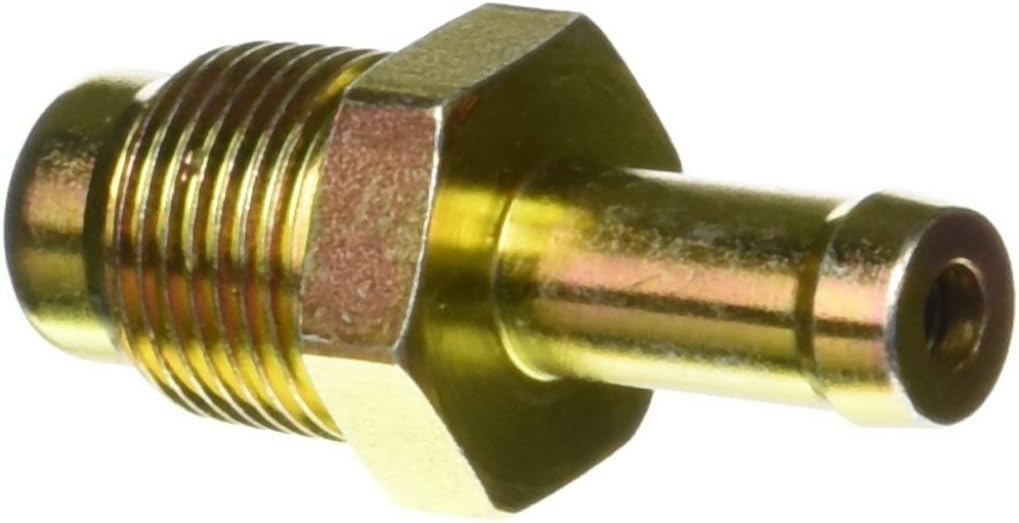
Image 1: The Standard Motor Products V408 PCV Valve. This image displays the brass-colored valve with threaded and barbed connections, indicating its design for engine integration.
Key features of the V408 PCV Valve include:
- Precision-engineered for specific vehicle applications.
- Constructed from durable materials for longevity.
- Designed to maintain optimal crankcase pressure.
Installation (Setup)
Disclaimer: Vehicle maintenance and repair can be complex. If you are not confident in your mechanical abilities, it is recommended to seek assistance from a qualified automotive technician. Always refer to your vehicle's specific service manual for detailed instructions and safety precautions.
Tools Required:
- Ratchet
- Extension
- 19mm Socket (or appropriate size for your vehicle's existing PCV valve)
- Anti-seize compound (recommended)
- Shop rags or towels
Installation Steps:
- Locate the PCV Valve: Consult your vehicle's service manual to identify the exact location of the PCV valve. It is typically found on the valve cover or intake manifold.
- Prepare for Removal: Ensure the engine is cool. Disconnect any hoses attached to the PCV valve.
- Remove the Old PCV Valve: Using the appropriate socket and ratchet with an extension, carefully unscrew the old PCV valve from its mounting point.
- Inspect the Area: Clean any debris or oil residue from the mounting area.
- Apply Anti-Seize: Apply a small amount of anti-seize compound to the threads of the new Standard Motor Products V408 PCV Valve. This will facilitate easier removal in the future. Note that the valve features tapered threads, which typically do not require sealing tape.
- Install the New PCV Valve: Hand-thread the new V408 PCV valve into its mounting hole to ensure it starts correctly. Then, use the ratchet and socket to tighten it securely. Do not overtighten.
- Reconnect Hoses: Reattach any hoses that were disconnected in Step 2. Ensure all connections are secure.
- Start Engine and Check: Start the vehicle's engine and check for any leaks or unusual noises.

Image 2: The Standard Motor Products V408 PCV Valve shown with approximate dimensions (2.8 inches / 7 cm in length). This image provides a visual reference for the valve's size.
Operation
The Standard Motor Products V408 PCV Valve operates automatically as an integral part of your vehicle's engine system. It is a passive component that regulates crankcase pressure and gas flow without requiring any direct user interaction after installation. Its function is continuous whenever the engine is running.
Maintenance
The PCV valve is a routine maintenance item. Its replacement interval varies depending on vehicle manufacturer recommendations, driving conditions, and fuel quality. It is generally advisable to inspect or replace the PCV valve as part of your vehicle's scheduled maintenance, often alongside spark plug replacement or oil changes.
- Inspection: Periodically check the PCV valve and its associated hoses for cracks, blockages, or signs of oil leakage.
- Replacement: If the valve is clogged, stuck open, or stuck closed, it should be replaced immediately to prevent potential engine damage or performance issues.
Troubleshooting
A malfunctioning PCV valve can lead to various engine problems. If you experience any of the following symptoms, consider inspecting or replacing your PCV valve:
- Rough Engine Idle: A PCV valve stuck open can create a vacuum leak, leading to a rough or unstable idle.
- Increased Oil Consumption: A faulty valve can cause excessive oil to be drawn into the intake manifold and burned.
- Oil Leaks: A clogged PCV valve can lead to increased crankcase pressure, potentially forcing oil past seals and gaskets.
- Engine Misfires or Stalling: Incorrect air-fuel mixture due to a malfunctioning PCV valve can cause these issues.
- Check Engine Light: In some cases, a PCV system fault can trigger a diagnostic trouble code.
If troubleshooting does not resolve the issue, or if you are unsure about the diagnosis, consult a certified automotive technician.
Specifications
| Feature | Detail |
|---|---|
| Brand | Standard Motor Products |
| Model Number | V408 |
| Exterior Finish | Machined |
| Inlet Connection Size | 0.25 Inches |
| Inlet Connection Type | Positive Crankcase Ventilation |
| Outlet Connection Size | 1.16 Inches |
| Outlet Connection Type | Positive Crankcase Ventilation |
| Number of Ports | 2 |
| Product Dimensions (L x W x H) | 1.5 x 1.16 x 2.88 inches |
| Item Weight | 0.01 ounces |
| UPC | 707390322704 |
Warranty and Support
For specific warranty information regarding your Standard Motor Products V408 PCV Valve, please refer to the documentation included with your purchase or visit the official Standard Motor Products website. For technical support or further assistance, please contact Standard Motor Products customer service directly.
Manufacturer: Standard Motor Products
Website: www.smpcorp.com