
Eagle TT55G
Eagle 5.5HP Honda Air Compressor TT55G User Manual
Model: TT55G
Introduction
This manual provides essential information for the safe and efficient operation, maintenance, and troubleshooting of your Eagle 5.5HP Honda Air Compressor, Model TT55G. Please read this manual thoroughly before operating the compressor to ensure proper use and to prevent injury or damage.
The Eagle TT55G is a robust twin-tank wheelbarrow air compressor designed for demanding applications, featuring a reliable Honda GX160 engine and delivering 12.5 CFM at 100 PSI with a maximum pressure of 150 PSI.
Important Safety Information
Failure to follow these safety instructions may result in serious injury or death.
- Always wear appropriate personal protective equipment (PPE), including eye protection, hearing protection, and gloves.
- Operate the compressor in a well-ventilated area to prevent carbon monoxide poisoning from engine exhaust.
- Ensure the compressor is on a stable, level surface before starting.
- Do not operate the compressor near flammable liquids or gases.
- Before performing any maintenance or adjustments, ensure the engine is off, the spark plug wire is disconnected, and all air pressure is relieved from the tanks.
- Regularly inspect all hoses, fittings, and tanks for damage or leaks. Do not use a damaged compressor.
- Keep children and bystanders away from the operating compressor.
- Never direct compressed air at yourself or others.
- Drain condensation from the air tanks daily to prevent corrosion and tank failure.
Setup and Assembly
- Unpacking: Carefully remove the compressor from its packaging. Inspect for any shipping damage. Report any damage immediately to your supplier.
- Wheel and Handle Assembly: Attach the pneumatic wheels and handle assembly as per the included hardware. Ensure all bolts are securely tightened. The wheelbarrow design facilitates portability.
- Engine Oil: The Honda GX160 engine may be shipped without oil. Fill the engine crankcase with the recommended oil type (refer to the Honda engine manual for specifics, typically SAE 10W-30) to the proper level indicated on the dipstick. Do not overfill.
- Fuel: Fill the fuel tank with fresh, unleaded gasoline. Do not use E85 or other ethanol-heavy fuels. Ensure the fuel cap is securely fastened.
- Air Filters: Ensure the metal air filters are securely in place on the compressor pump.
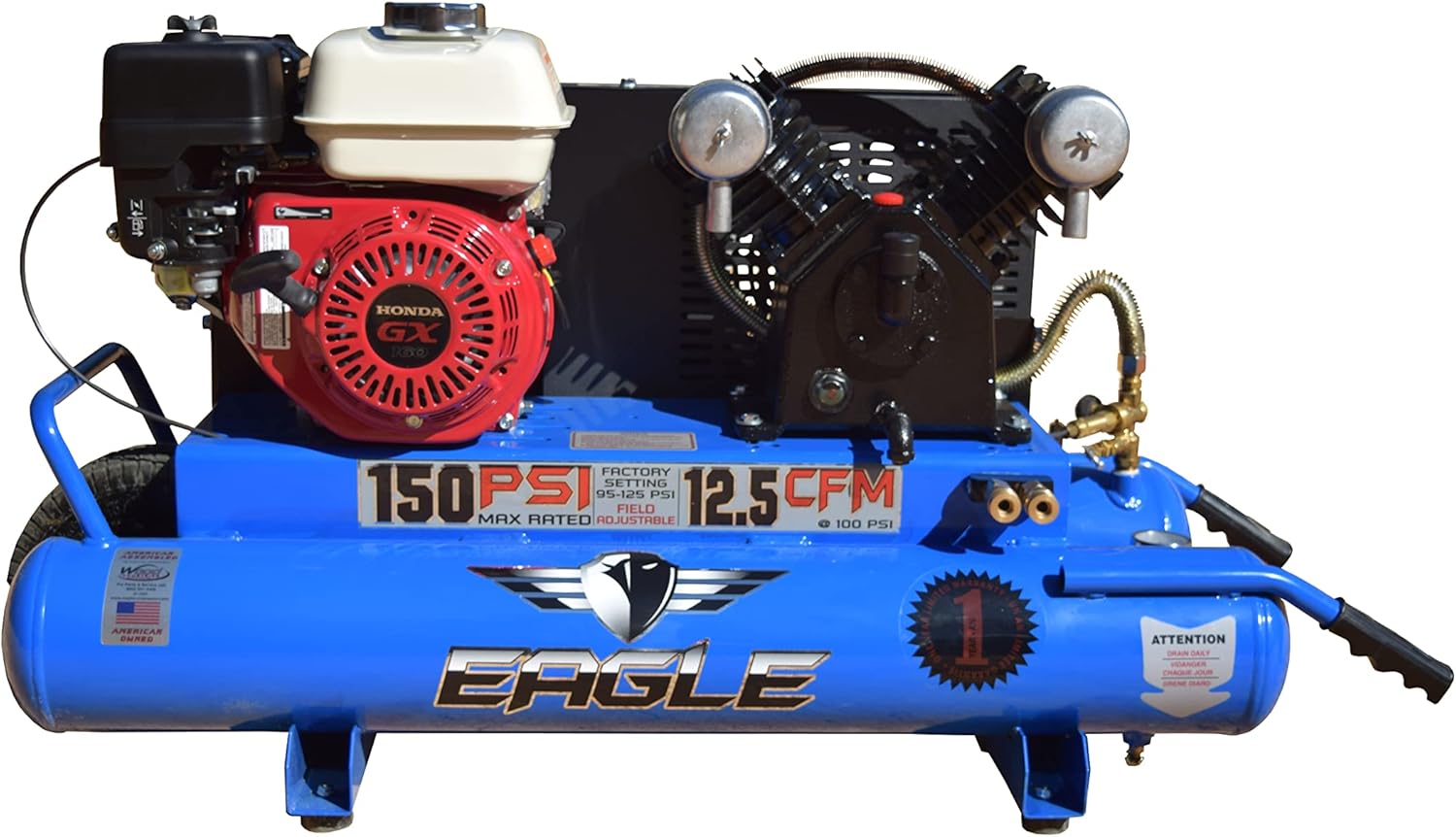
Figure 1: Eagle 5.5HP Honda Air Compressor, Model TT55G. This image shows the overall design of the compressor, including the Honda engine, twin tanks, and wheelbarrow frame.

Figure 2: Dimensions of the Eagle TT55G Air Compressor. The compressor measures approximately 48 inches in length, 18 inches in width, and 24.5 inches in height. This information is crucial for planning placement and transport.
Operating Instructions
- Pre-Start Checks:
- Verify engine oil level.
- Check fuel level.
- Ensure all connections are secure.
- Confirm drain valves on tanks are closed.
- Starting the Engine:
- Turn the engine switch to the "ON" position.
- Open the fuel valve.
- If the engine is cold, apply choke.
- Pull the recoil starter handle firmly until the engine starts. Release the choke gradually as the engine warms up.
- The compressor features an automatic idle control, which will adjust engine speed based on air demand.
- Pressure Adjustment:
The compressor is factory-set to operate between 95-125 PSI, with a maximum pressure of 150 PSI. The user-friendly regulator allows you to adjust the output air pressure to suit your specific tool requirements. Turn the regulator knob clockwise to increase pressure and counter-clockwise to decrease pressure.
- Connecting Air Tools:
Connect your air hose to one of the available air lines. Ensure the connection is secure to prevent air leaks. The compressor provides 3 lines for use.
- Shutting Down:
- Turn off the engine switch.
- Close the fuel valve.
- Bleed all air pressure from the tanks by opening the drain valves or using an air tool until the pressure gauges read zero.

Figure 3: Key specifications and features of the Eagle TT55G Air Compressor. This image highlights the 5.5 HP Honda GX160 engine, 10-gallon twin tank, 12.5 CFM @ 100 PSI, V-twin cylinder cast iron pump, and other operational benefits like automatic idle control and a user-friendly regulator.
Maintenance
Regular maintenance is crucial for the longevity and optimal performance of your air compressor. Always ensure the compressor is off, cooled down, and depressurized before performing any maintenance.
- Daily:
- Drain condensation from both air tanks. This prevents rust and extends tank life.
- Check engine oil level.
- Inspect air filters for excessive dirt or debris. Clean or replace if necessary.
- Every 25 Hours or Annually (whichever comes first):
- Change engine oil. Refer to the Honda engine manual for specific instructions and oil type.
- Inspect spark plug. Clean or replace as needed.
- Clean or replace air filters.
- Check all fasteners for tightness.
- Compressor Pump Maintenance:
The V-twin cylinder cast iron pump is designed for durability. Ensure the pump's oil level (if applicable, check the easy-view oil gauge) is maintained. Consult the pump's specific manual for detailed maintenance schedules.
- Belt Guard:
The sturdy metal belt guard protects moving parts. Periodically check for any damage or obstructions.
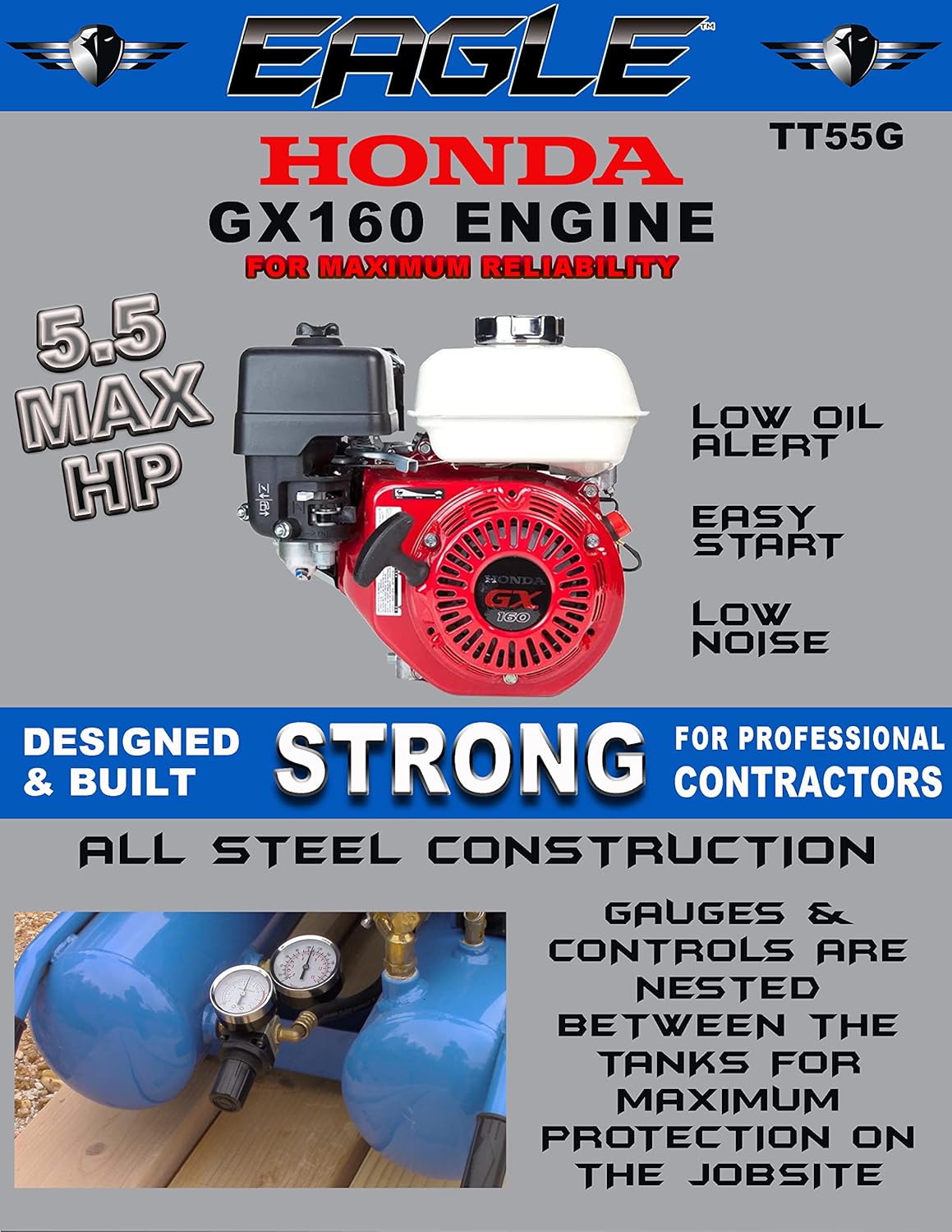
Figure 4: Close-up of the Honda GX160 engine, which powers the Eagle TT55G air compressor. This image highlights features like the low oil alert, easy start mechanism, and low noise operation, all contributing to maximum reliability and ease of maintenance.
Troubleshooting
| Problem | Possible Cause | Solution |
|---|---|---|
| Engine will not start | No fuel; Engine switch OFF; Choke not applied (cold engine); Low engine oil. | Add fuel; Turn engine switch ON; Apply choke; Check and add engine oil. |
| Compressor not building pressure | Tank drain valve open; Leaks in air lines/fittings; Faulty check valve; Worn pump components. | Close drain valve; Inspect and tighten connections or replace faulty parts; Contact service for pump issues. |
| Excessive vibration or noise | Loose components; Compressor not on level surface; Worn bearings. | Check and tighten all fasteners; Move compressor to a level surface; Contact service for internal component issues. |
| Air leaks | Loose fittings; Damaged hose; Faulty valve. | Tighten fittings; Replace damaged hose; Inspect and replace faulty valve. |
Specifications
| Feature | Detail |
|---|---|
| Brand | Eagle |
| Model Name | Eagle Twin Tank Wheelbarrow (TT55G) |
| Engine | 5.5 HP Honda GX160 |
| Power Source | Gasoline |
| Tank Capacity | 10 Gallons (Twin Tanks) |
| Air Flow Capacity (CFM) | 12.5 CFM @ 100 PSI |
| Maximum Operating Pressure | 150 PSI |
| Noise Level | 69 dB |
| Item Weight | 190 Pounds |
| Product Dimensions (L x W x H) | 47 x 18 x 24.5 inches |
| Special Feature | Twin tank, Steel rim pneumatic tire, Metal air filters, Sturdy metal belt guard, Automatic idle control, Easy view oil gauge |
| UPC | 777589000140 |

Figure 5: This image highlights the proven performance and assembly details of Eagle air compressors. It mentions over 45 years of manufacturing quality, proud assembly in the United States, and the combination of the GX160 engine and PV02A pump for extended life.
Warranty and Support
Eagle products are manufactured to high-quality standards. For specific warranty details, please refer to the warranty card included with your product or visit the official Eagle website. Keep your purchase receipt as proof of purchase for warranty claims.
For technical assistance, parts, or service inquiries, please contact Eagle customer support. Contact information can typically be found on the product packaging or the manufacturer's website.
Related documentsTT55G


Ask a question about this manual
Ask about setup, troubleshooting, compatibility, parts, safety, or missing instructions. Manuals+ will review the question and use this page’s manual context to help answer it.