1. Introduction
This manual provides essential information for the safe and effective installation, operation, and maintenance of the Schneider Electric NG125N Multi 9 Modular Circuit Breaker, model 18639. This device is specifically designed for applications requiring high breaking capacities and serves as a protective component in modular enclosures or electrical distribution panels.
Please read this manual thoroughly before attempting any installation or operation to ensure proper usage and prevent potential hazards.
2. Safety Information
WARNING: Electrical shock hazard. Installation and servicing must be performed by qualified personnel only. Failure to follow these instructions can result in serious injury or death.
- Always disconnect power at the main service panel before working on electrical circuits or equipment.
- Use appropriate personal protective equipment (PPE) such as insulated gloves and safety glasses.
- Ensure all wiring connections are secure and comply with local and national electrical codes.
- Do not operate the circuit breaker if it appears damaged.
- Verify the voltage and current ratings of the circuit breaker match the application requirements.
3. Product Overview
The Schneider Electric NG125N Multi 9 Modular Circuit Breaker (Model 18639) is a robust 3-pole device with a C-curve tripping characteristic, rated for 63 Amperes and 690 Volts. It is designed for reliable protection against overcurrents and short circuits in various electrical installations.
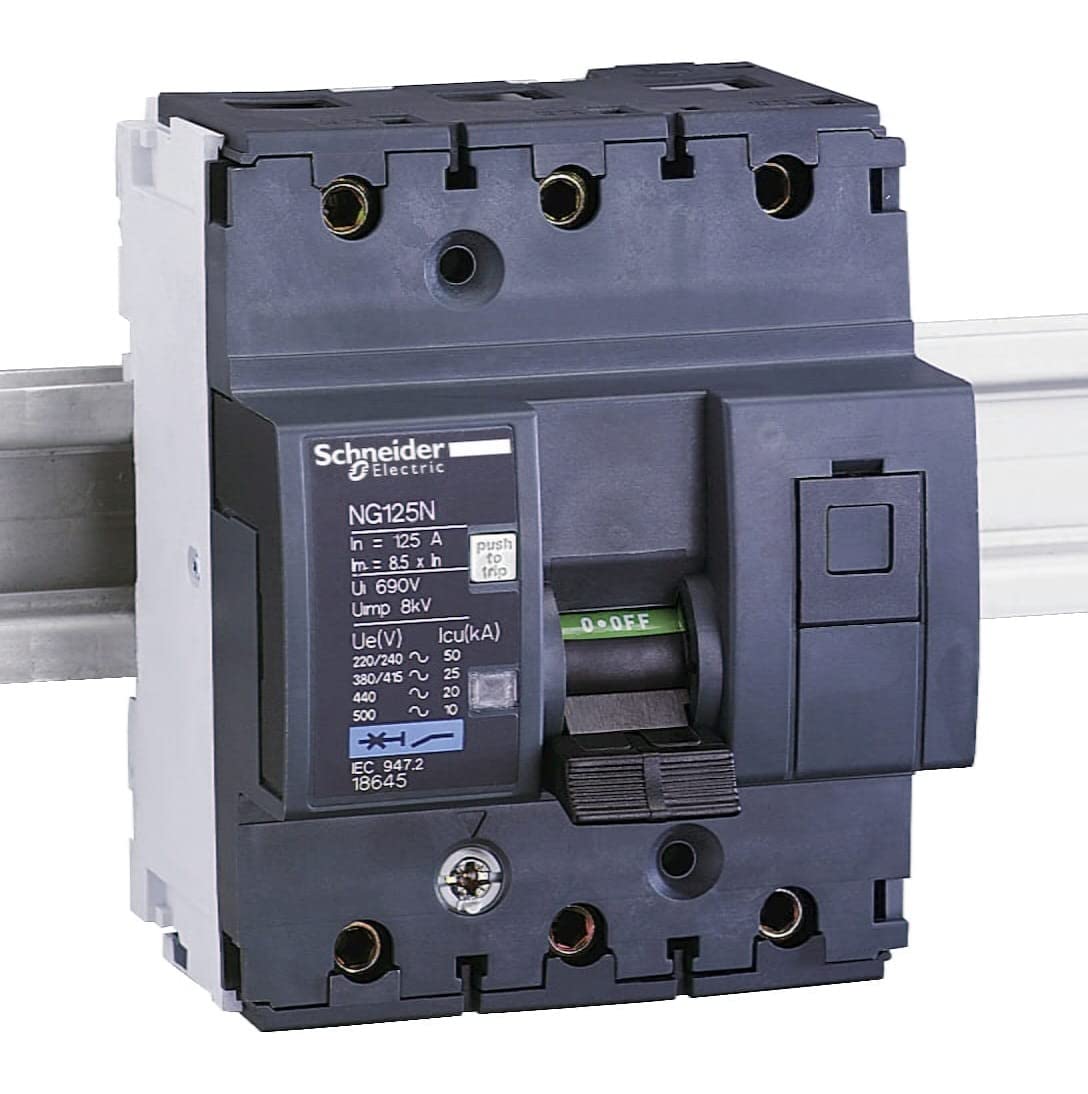
Figure 3.1: Front and side view of the Schneider Electric NG125N Multi 9 Modular Circuit Breaker (Model 18639), illustrating its compact design and terminal connections.
Key Features:
- Dimensions: Approximately 103 mm height, 81 mm width, 81 mm depth.
- Current Rating: 63 Amperes.
- Voltage Rating: 690 Volts.
- Poles: 3-pole configuration.
- Tripping Curve: C-curve, suitable for general applications.
4. Setup and Installation
This circuit breaker is designed for DIN-rail mounting. Installation should only be performed by a qualified electrician in accordance with all applicable electrical codes and standards.
- Power Disconnection: Ensure all power to the installation area is completely disconnected and locked out.
- Mounting: Securely attach the circuit breaker onto a standard DIN rail within the electrical enclosure. Ensure it clicks firmly into place.
- Wiring: Connect the incoming and outgoing electrical conductors to the appropriate terminals. Ensure correct polarity and phase sequence for multi-pole devices. Tighten terminal screws to the manufacturer's specified torque settings to prevent loose connections and overheating.
- Verification: Double-check all connections for tightness and correct wiring.
- Enclosure Closure: Close the electrical enclosure securely.
- Power Restoration: Restore power to the circuit.
Refer to the wiring diagram provided with your electrical panel or system for specific connection details.
5. Operating Instructions
The circuit breaker operates with a simple ON/OFF mechanism and provides visual indication of its status.
- To Turn ON: Push the operating lever to the "ON" position. The circuit is now energized.
- To Turn OFF: Push the operating lever to the "OFF" position. The circuit is now de-energized.
- Tripped State: If an overcurrent or short circuit occurs, the circuit breaker will automatically trip, moving the operating lever to an intermediate or "TRIPPED" position. This indicates a fault in the circuit.
- Resetting a Tripped Breaker: Before resetting, identify and rectify the cause of the trip. To reset, first push the lever fully to the "OFF" position, then push it to the "ON" position. If the breaker trips immediately again, do not force it; consult a qualified electrician.
6. Maintenance
The Schneider Electric NG125N circuit breaker is designed for minimal maintenance. However, periodic inspection is recommended to ensure continued safe operation.
- Visual Inspection: Periodically inspect the circuit breaker for any signs of physical damage, discoloration, or loose connections. Ensure the operating lever moves freely.
- Cleaning: If necessary, gently clean the exterior of the circuit breaker with a dry, lint-free cloth. Do not use abrasive cleaners or solvents. Ensure power is disconnected before cleaning.
- Terminal Tightness: Over time, terminal connections can loosen. It is advisable to periodically check and re-tighten terminal screws to the specified torque, especially in environments with vibration or significant temperature fluctuations. This should only be done by qualified personnel with power disconnected.
7. Troubleshooting
If you encounter issues with your circuit breaker, consider the following common scenarios:
- Breaker Trips Frequently:
- Overload: The circuit may be drawing more current than the breaker's rating. Reduce the load on the circuit.
- Short Circuit: A direct connection between live and neutral/ground wires. This requires immediate investigation by a qualified electrician.
- Ground Fault: Current leaking to ground.
- Faulty Appliance: Disconnect appliances one by one to identify the faulty device.
- Breaker Does Not Reset:
- Ensure the lever is pushed fully to the "OFF" position before attempting to move it to "ON".
- If it still does not reset, there might be a persistent fault or internal damage to the breaker. Do not force it; contact a qualified electrician.
- Breaker is Hot to the Touch:
- This could indicate an overload, loose connection, or internal fault. Immediately disconnect power and have it inspected by a qualified electrician.
For issues not covered here, or if you are unsure, always consult a qualified electrician.
8. Specifications
| Attribute | Value |
|---|---|
| Manufacturer | Schneider Electric |
| Model Number | 18639 |
| Product Dimensions (L x W x H) | 12.9 x 12.1 x 8.6 cm |
| Weight | 280 g |
| Amperage | 63 Amperes |
| Voltage | 690 Volts |
| Number of Poles | 3 |
| Circuit Breaker Type | Standard (C-curve) |
| Mounting Type | DIN-rail mounting |
| GTIN | 03303430186397 |
| First Available Date | February 12, 2020 |
9. Warranty and Support
For specific warranty information, please refer to the documentation provided at the time of purchase or contact your seller. Schneider Electric products typically come with a manufacturer's warranty covering defects in materials and workmanship.
For technical support, service, or further inquiries, please contact your authorized Schneider Electric distributor or visit the official Schneider Electric website for contact details in your region.


