
island B000SKVRQI
Robert Palmer - Double Fun Vinyl Record Manual
Model: B000SKVRQI
Introduction
This manual provides essential information for the proper handling, playback, and care of your Robert Palmer "Double Fun" vinyl record. Released in 1978, this album is a classic addition to any music collection. Following these guidelines will help preserve the quality and longevity of your vinyl.
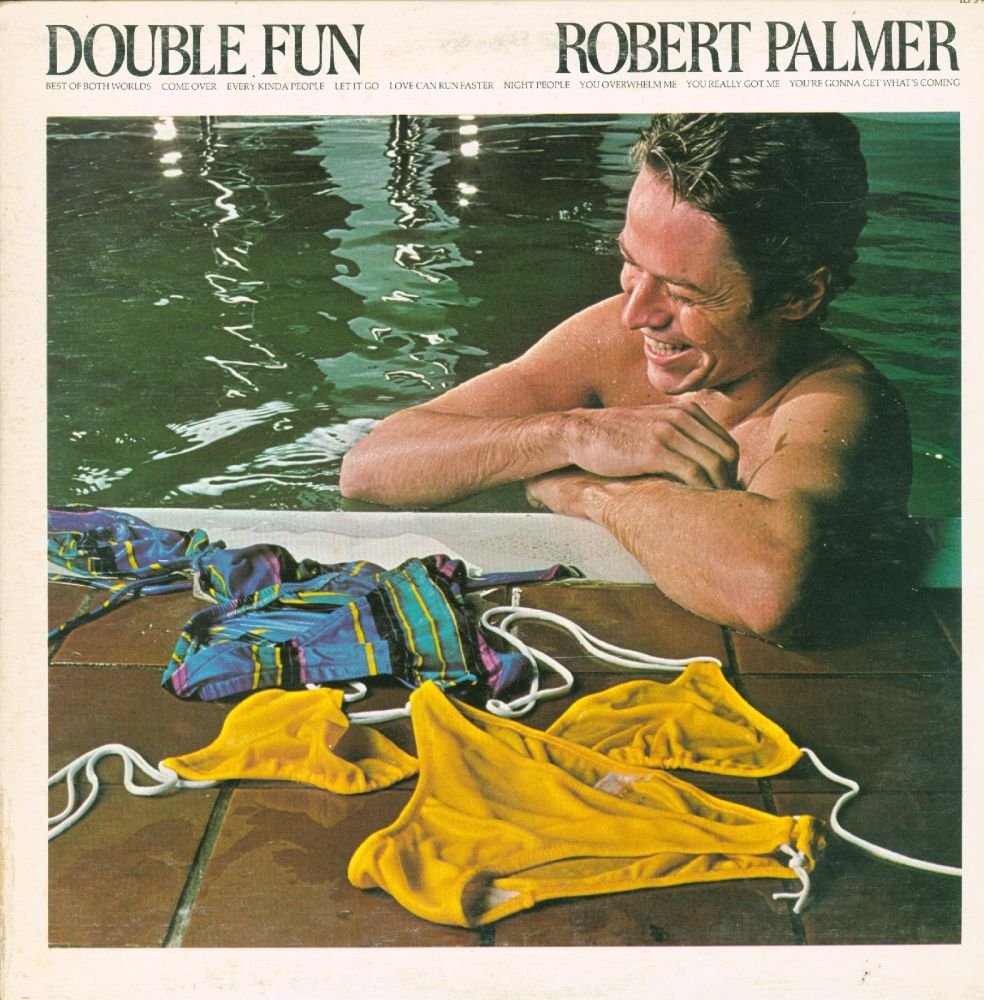
Image: Front cover of the "Double Fun" vinyl album, featuring Robert Palmer in a swimming pool.
Setup
Proper setup of your turntable and listening environment is crucial for optimal sound quality and record preservation.
1. Turntable Placement
- Place your turntable on a stable, level surface away from direct sunlight, heat sources, and vibrations.
- Ensure adequate ventilation around the turntable.
2. Cartridge and Stylus
- Verify that your turntable's cartridge is properly aligned and the stylus (needle) is clean and in good condition. A worn or dirty stylus can damage your record.
- Set the tracking force according to your cartridge manufacturer's recommendations.
3. Amplifier and Speakers
- Connect your turntable to an amplifier with a dedicated phono input (or a separate phono preamplifier).
- Position speakers to minimize acoustic feedback to the turntable.
Operating
Follow these steps for playing your vinyl record.
1. Handling the Record
- Always handle the record by its edges or the center label. Avoid touching the grooves, as oils from your skin can attract dust and degrade sound quality.
- Remove the record from its inner sleeve carefully.
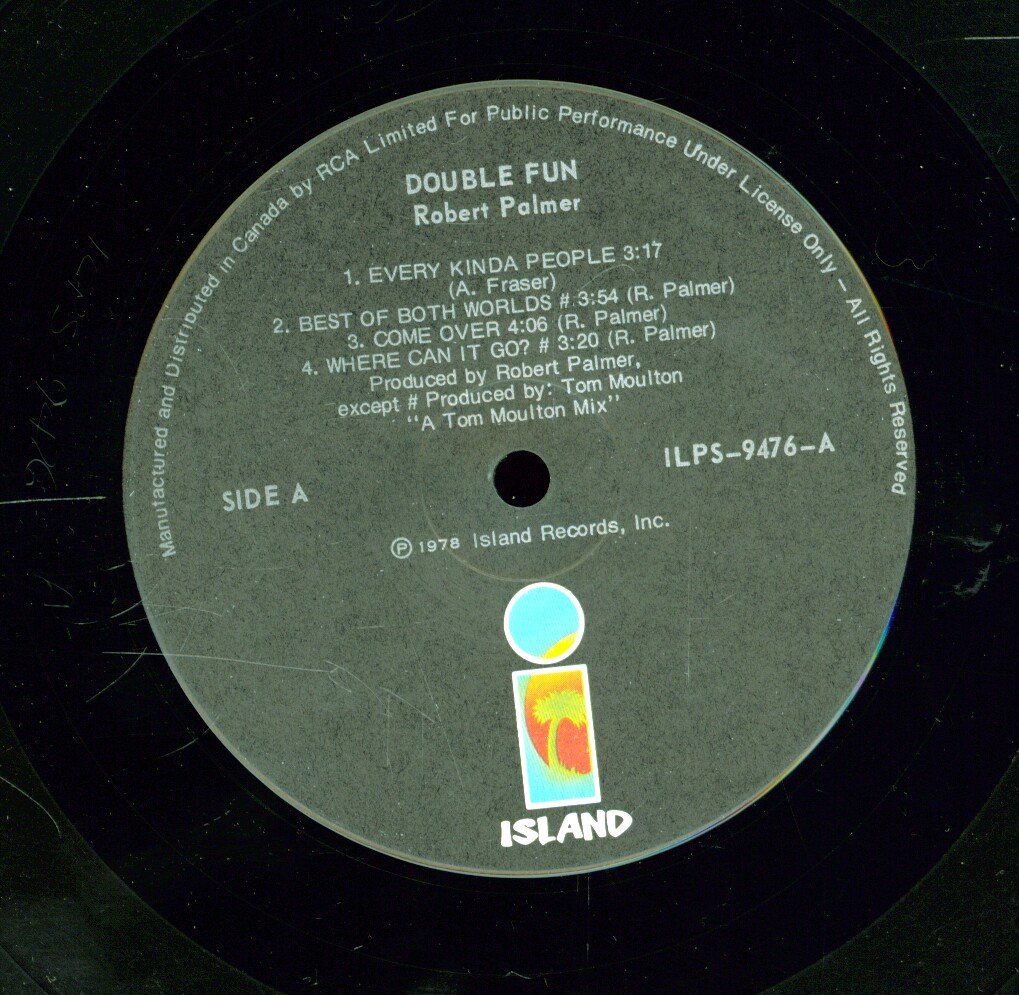
Image: Close-up of the "Double Fun" vinyl record, showing the Island Records label and track information.
2. Playing the Record
- Place the record gently onto the turntable platter.
- If your turntable has a clamp or weight, place it on the spindle.
- Clean the record surface with a carbon fiber brush before each play to remove dust.
- Carefully lower the tonearm onto the lead-in groove of the record.
- At the end of the side, gently lift the tonearm and return it to its rest.
Maintenance
Regular maintenance ensures the longevity of your vinyl collection.
1. Cleaning Records
- For light dust, use a carbon fiber brush. Brush along the grooves, not across them.
- For deeper cleaning, use a record cleaning solution and a microfiber cloth, or a dedicated record cleaning machine. Always follow the product instructions.
- Ensure records are completely dry before storing or playing.
2. Storage
- Store records vertically in a cool, dry place, away from direct sunlight and extreme temperature fluctuations.
- Use anti-static inner sleeves to protect records from dust and static buildup.
- Keep records in their original outer sleeves to protect the artwork and provide additional protection.
Troubleshooting
Common issues and their solutions.
| Problem | Possible Cause | Solution |
|---|---|---|
| Skipping or Jumping | Dust/debris in grooves, worn stylus, incorrect tracking force, unstable surface. | Clean record, inspect/replace stylus, adjust tracking force, ensure turntable is level. |
| Poor Sound Quality (Muffled/Distorted) | Dirty stylus, dirty record, incorrect cartridge alignment, worn stylus. | Clean stylus, clean record, check/adjust cartridge alignment, replace stylus. |
| Excessive Static | Dry environment, friction from inner sleeve. | Use anti-static brush, use anti-static inner sleeves, consider a humidifier. |
Specifications
Key specifications for the "Double Fun" vinyl record.
- Artist: Robert Palmer
- Album: Double Fun
- Format: Vinyl
- Label: Island Records
- Release Year: 1978
- ASIN: B000SKVRQI
- Number of Discs: 1
- Package Dimensions: 12.2 x 12.1 x 0.2 inches
- Item Weight: 9.6 ounces
Additional Information

Image: Detail from the "Double Fun" album artwork, showing a close-up of Robert Palmer.
For further details regarding the album's production or specific track information, please refer to the album's liner notes or reputable music databases.
Ask a question about this manual
Ask about setup, troubleshooting, compatibility, parts, safety, or missing instructions. Manuals+ will review the question and use this page’s manual context to help answer it.