
E-flite EFL4025
E-flite Ultra Stick 25e ARF Airplane User Manual
Model: EFL4025
Introduction
This manual provides essential information for the assembly, operation, and maintenance of your E-flite Ultra Stick 25e ARF Airplane. Please read this manual thoroughly before operating the aircraft to ensure safe and optimal performance. This model is designed for experienced hobbyists aged 14 years and up.

Figure 1: Top-down view of the E-flite Ultra Stick 25e ARF Airplane, showcasing its red, white, and blue color scheme and propeller.
Setup and Assembly
The E-flite Ultra Stick 25e is an Almost-Ready-to-Fly (ARF) model, requiring final assembly and installation of electronic components. Ensure all parts are present before beginning assembly.
Required Components (Not Included):
- Brushless Outrunner Motor (e.g., E-flite Power 25)
- Electronic Speed Controller (ESC)
- LiPo Battery (e.g., 3S 2200-3200mAh)
- Propeller (recommended size based on motor)
- 4-channel or more radio system (transmitter and receiver)
- 4-5 micro servos
- Appropriate charger for LiPo battery
Assembly Steps:
- Wing Assembly: Attach the two wing halves using the provided wing tube and secure them. Install aileron servos and connect control linkages.
- Tail Section Installation: Secure the horizontal and vertical stabilizers. Install elevator and rudder servos and connect control linkages.
- Landing Gear Installation: Attach the main landing gear and tail wheel assembly. Ensure wheels spin freely.
- Motor and ESC Installation: Mount the brushless motor to the firewall. Install the ESC in the fuselage, ensuring adequate airflow for cooling. Connect the motor to the ESC.
- Receiver and Battery Placement: Secure the receiver in the fuselage, away from high-current wires. Position the LiPo battery to achieve the recommended Center of Gravity (CG).
- Control Surface Setup: Adjust control linkages to ensure neutral positions. Set appropriate throws for ailerons, elevator, and rudder as per recommended settings.

Figure 2: The Ultra Stick 25e configured with optional floats for water operations. Note the robust landing gear structure supporting the floats.
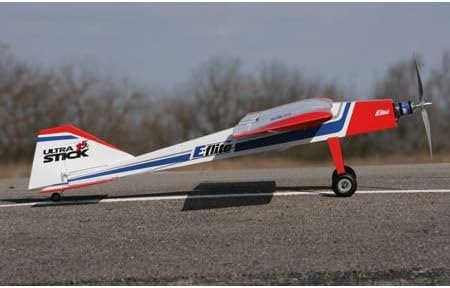
Figure 3: The Ultra Stick 25e positioned on a paved runway, ready for takeoff. The main landing gear and tail wheel are visible.
Operating Instructions
Pre-Flight Checklist:
- Verify battery is fully charged (aircraft and transmitter).
- Check all control surfaces for correct movement and direction.
- Ensure propeller is securely attached and free from damage.
- Confirm Center of Gravity (CG) is within recommended range.
- Perform a range check of your radio system.
Flight Characteristics:
The Ultra Stick 25e is known for its stable flight characteristics and aerobatic capabilities. It is suitable for intermediate to advanced pilots. Its design allows for a wide range of maneuvers, from basic loops and rolls to more complex 3D flying.

Figure 4: The Ultra Stick 25e in flight against a clear blue sky, demonstrating its stable flight profile.

Figure 5: Another aerial view of the Ultra Stick 25e, highlighting its wing and tail design during flight.
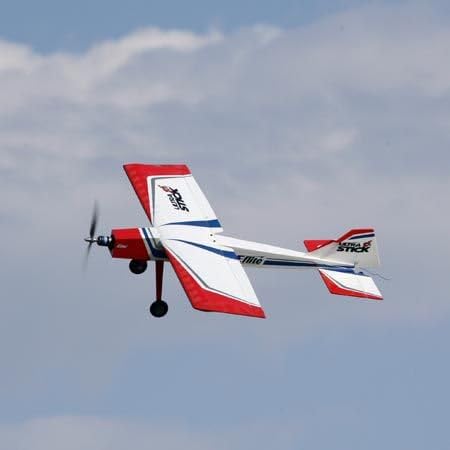
Figure 6: The Ultra Stick 25e performing an inverted flight maneuver, showcasing its aerobatic capabilities.
Maintenance
Regular maintenance is crucial for the longevity and safe operation of your Ultra Stick 25e.
- Post-Flight Inspection: After each flight, inspect the airframe for any damage, loose connections, or signs of wear. Check propeller for nicks or cracks.
- Control Linkages: Periodically check all control linkages and horns for security and freedom of movement.
- Motor and ESC: Ensure motor mounts are tight and ESC connections are secure. Monitor motor and ESC temperatures during operation.
- Battery Care: Follow manufacturer guidelines for LiPo battery charging, discharging, and storage. Never overcharge or over-discharge.
- Cleaning: Clean the aircraft with a soft, dry cloth. Avoid using solvents that may damage the covering.
Troubleshooting
| Problem | Possible Cause | Solution |
|---|---|---|
| Aircraft does not respond to controls. | Low transmitter/receiver battery; binding issue; damaged receiver/servo. | Charge batteries; re-bind transmitter and receiver; inspect and replace faulty components. |
| Motor not spinning or low power. | Discharged flight battery; loose motor/ESC connections; damaged motor/ESC. | Charge flight battery; check all connections; inspect and replace components as needed. |
| Aircraft flies erratically. | Incorrect CG; control surface trim issues; damaged control surface/linkage. | Adjust CG; adjust trims on transmitter; inspect and repair control surfaces/linkages. |
Specifications
| Feature | Detail |
|---|---|
| Model Number | EFL4025 |
| Brand | E-flite |
| Product Dimensions | 134.62 x 30.48 x 17.78 cm |
| Item Weight | 1 Kilogram |
| Recommended Age | 14 years and up |
| Toy Vehicle Form | Airplane |
| Special Features | Portable |
Related documentsEFL4025


Ask a question about this manual
Ask about setup, troubleshooting, compatibility, parts, safety, or missing instructions. Manuals+ will review the question and use this page’s manual context to help answer it.