1. Introduction
This manual provides essential information for the installation, care, and optimal use of your D'Addario EJ16 Phosphor Bronze Acoustic Guitar Strings. D'Addario was the first to use Phosphor Bronze in acoustic guitar strings, a material now widely recognized for its balanced sonic qualities and tonal warmth. These strings are precision wound to deliver consistent performance across various acoustic playing styles.
2. Product Overview
2.1 Key Features
- Construction: Precision-wound phosphor bronze wrap wire over a hexagonal high-carbon steel core.
- Tone: Designed to provide a balanced and warm acoustic tone, suitable for various musical genres.
- Material Origin: Phosphor Bronze strings were first introduced by D'Addario in the 1970s.
- Packaging: Supplied in a recyclable VCI (Volatile Corrosion Inhibitor) bag, which includes a code for product registration.
- Manufacturing: Produced in the USA, adhering to specific production standards.

Figure 1: Front packaging of D'Addario EJ16 Phosphor Bronze Acoustic Guitar Strings, Light Gauge (12-53).
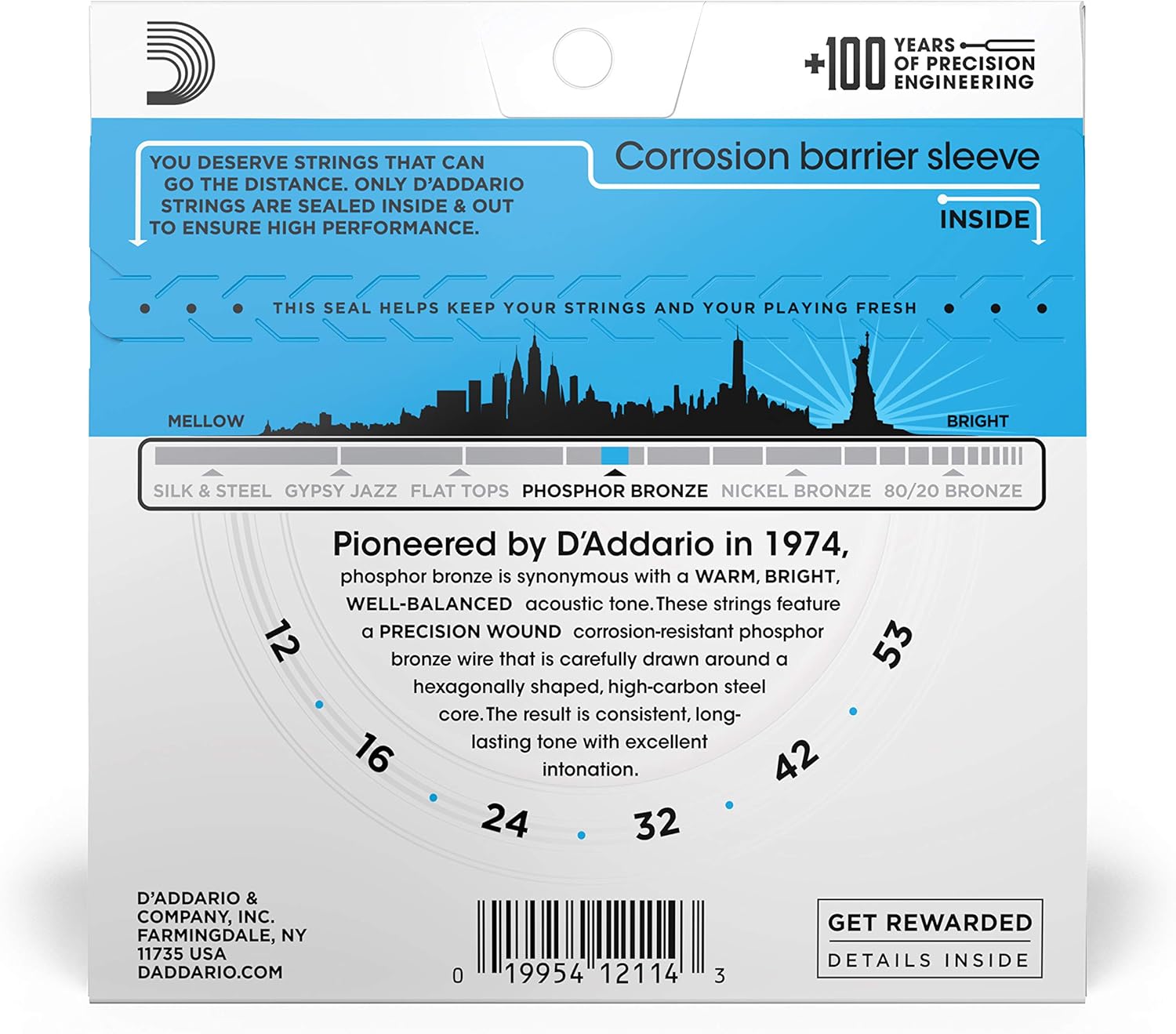
Figure 2: Back packaging detailing string gauges (12, 16, 24, 32, 42, 53) and the corrosion barrier sleeve technology.

Figure 3: Visual representation of corrosion-resistant packaging, commitment to sustainability, and USA manufacturing, alongside a detailed view of a string's winding.
3. Installation Guide
3.1 Preparing Your Guitar
Before installing new strings, ensure your guitar is clean. This is an opportune time to clean the fretboard and bridge area.
3.2 Removing Old Strings
- Loosen the tension on each string using your guitar's tuning pegs until they are slack.
- Carefully remove the bridge pins to release the ball ends of the strings from the bridge.
- Unwind the strings from the tuning pegs and remove them from the guitar.
3.3 Installing New Strings
- Insert the ball end of each new string into its corresponding hole in the bridge. Ensure the ball end is seated firmly against the bridge plate by gently pulling the string while re-inserting the bridge pin.
- Feed the other end of the string through the tuning machine post.
- For optimal tuning stability, bend the string at a 90-degree angle approximately one post's width past the tuning post. Wind the string around the post, ensuring at least 2-3 wraps for the thicker strings and 3-4 wraps for the thinner strings.
- Ensure each string is wound neatly downwards on the tuning post.

Figure 4: Close-up view of the string construction, highlighting the hexagonal core and precision winding.

Figure 5: The color-coded ball ends assist in identifying individual string gauges during installation.
3.4 Tuning and Stretching
- Tune each string to its correct pitch using an electronic tuner.
- Once tuned, gently pull each string upwards away from the fretboard several times along its length. This helps to stretch the strings and seat them properly, improving tuning stability.
- Re-tune the guitar after stretching. Repeat the stretching and tuning process a few times until the strings hold their pitch consistently.
4. Usage and Care
4.1 Playing Tips
These strings are designed to offer a balanced and warm tone. Experiment with different playing dynamics and techniques to explore the full tonal range. The light gauge (12-53) provides a comfortable playing experience while maintaining good projection.
4.2 Maintenance for Longevity
- Clean After Use: Wipe down your strings with a clean, dry cloth after each playing session. This removes oils, sweat, and dirt that can corrode strings and dampen their tone.
- Hand Hygiene: Wash your hands before playing to minimize the transfer of oils and dirt to the strings.
- Storage: When not in use, store your guitar in a stable environment, ideally in a case, to protect it from extreme temperature and humidity fluctuations.
- Regular Replacement: Strings naturally lose their vibrancy over time. Replace your strings regularly, depending on your playing frequency and style, to maintain optimal tone and playability.
5. Troubleshooting
5.1 Common Issues
- Tuning Instability: New strings require stretching to settle. Ensure proper installation and stretching as described in Section 3.4. Environmental changes can also affect tuning.
- Dull Tone: If strings sound dull shortly after installation, ensure they are clean. If the dullness persists or develops over time, it may indicate the strings need replacement due to accumulated grime or corrosion.
- Premature Breakage: Check for sharp edges on the bridge saddle, nut, or tuning machine posts that could be causing string wear. Ensure strings are not over-tightened during installation.
- Buzzing: String buzzing can be caused by improper string installation, incorrect string gauge for your guitar's setup, or issues with the guitar's action or fretwork. Consult a guitar technician if the issue persists after proper string installation.
6. Specifications
| Specification | Detail |
|---|---|
| Brand | D'Addario |
| Model Number | EJ16 |
| String Gauge | Light (12-53) |
| Number of Strings | 6 |
| String Material | Phosphor Bronze |
| Compatible Devices | 6 String Acoustic Guitar |
| Item Weight | 0.48 ounces |
| Product Dimensions | 0.75 x 5 x 5 inches |
| ASIN | B000EEJ8CS |
| Date First Available | October 2, 2001 |
7. Warranty and Support
D'Addario products are manufactured to high standards. For information regarding product warranty or support, please refer to the official D'Addario website or contact their customer service directly. Keep your purchase receipt as proof of purchase.
Official D'Addario Website: www.daddario.com


