
Behringer 730134
Behringer T1951 Ultra-Gain Vacuum Tube Stereo 4-band Parametric Equalizer
User Manual
1. Introduction
The Behringer T1951 Ultra-Gain Vacuum Tube Stereo 4-band Parametric Equalizer is a professional audio processing unit designed to provide precise tonal shaping and enhancement for various audio applications. Featuring a 12AX7A-based Ultra Tube circuit, it offers warm, musical equalization with four parametric bands per channel, allowing for detailed frequency attenuation and boosting. Its parallel architecture minimizes phase-shifting problems, ensuring high-fidelity audio reproduction.
This manual provides essential information for the safe and efficient operation of your T1951 equalizer, including setup, operation, maintenance, and troubleshooting.
2. Important Safety Instructions
- Read these instructions.
- Keep these instructions.
- Heed all warnings.
- Follow all instructions.
- Do not use this apparatus near water.
- Clean only with dry cloth.
- Do not block any ventilation openings. Install in accordance with the manufacturer’s instructions.
- Do not install near any heat sources such as radiators, heat registers, stoves, or other apparatus (including amplifiers) that produce heat.
- Do not defeat the safety purpose of the polarized or grounding-type plug. A polarized plug has two blades with one wider than the other. A grounding type plug has two blades and a third grounding prong. The wide blade or the third prong are provided for your safety. If the provided plug does not fit into your outlet, consult an electrician for replacement of the obsolete outlet.
- Protect the power cord from being walked on or pinched particularly at plugs, convenience receptacles, and the point where they exit from the apparatus.
- Only use attachments/accessories specified by the manufacturer.
- Use only with the cart, stand, tripod, bracket, or table specified by the manufacturer, or sold with the apparatus. When a cart is used, use caution when moving the cart/apparatus combination to avoid injury from tip-over.
- Unplug this apparatus during lightning storms or when unused for long periods of time.
- Refer all servicing to qualified service personnel. Servicing is required when the apparatus has been damaged in any way, such as power-supply cord or plug is damaged, liquid has been spilled or objects have fallen into the apparatus, the apparatus has been exposed to rain or moisture, does not operate normally, or has been dropped.
3. Setup and Connections
The T1951 is designed for integration into various audio setups, including studio recording, live sound, and broadcast environments. Ensure all connections are secure before powering on the unit.
3.1 Rack Mounting
The T1951 is a standard 19-inch rack-mountable unit. Ensure adequate ventilation around the unit when installing it in a rack. Leave at least one rack space above and below the unit if possible, especially if other heat-generating equipment is present.

Figure 3.1: The Behringer T1951 equalizer integrated into a professional audio rack setup.
3.2 Audio Connections
The T1951 features balanced XLR and 1/4" TRS connectors for both audio input and output, ensuring compatibility with professional audio equipment. Connect your audio source (e.g., mixer, preamplifier) to the T1951's inputs and the T1951's outputs to your next device in the signal chain (e.g., amplifier, recording interface).
- Inputs: Use XLR or 1/4" TRS cables to connect your audio source to the T1951's INPUT L and R jacks.
- Outputs: Use XLR or 1/4" TRS cables to connect the T1951's OUTPUT L and R jacks to your amplifier, recording device, or other destination.
3.3 Power Connection
Connect the supplied IEC power cable to the rear panel of the T1951 and then to a suitable AC power outlet. Ensure the voltage matches the unit's requirements (100-240V AC, 50/60 Hz, auto-sensing).
4. Operating Instructions
The T1951 offers comprehensive control over your audio's frequency spectrum. Familiarize yourself with the front panel controls to achieve optimal results.
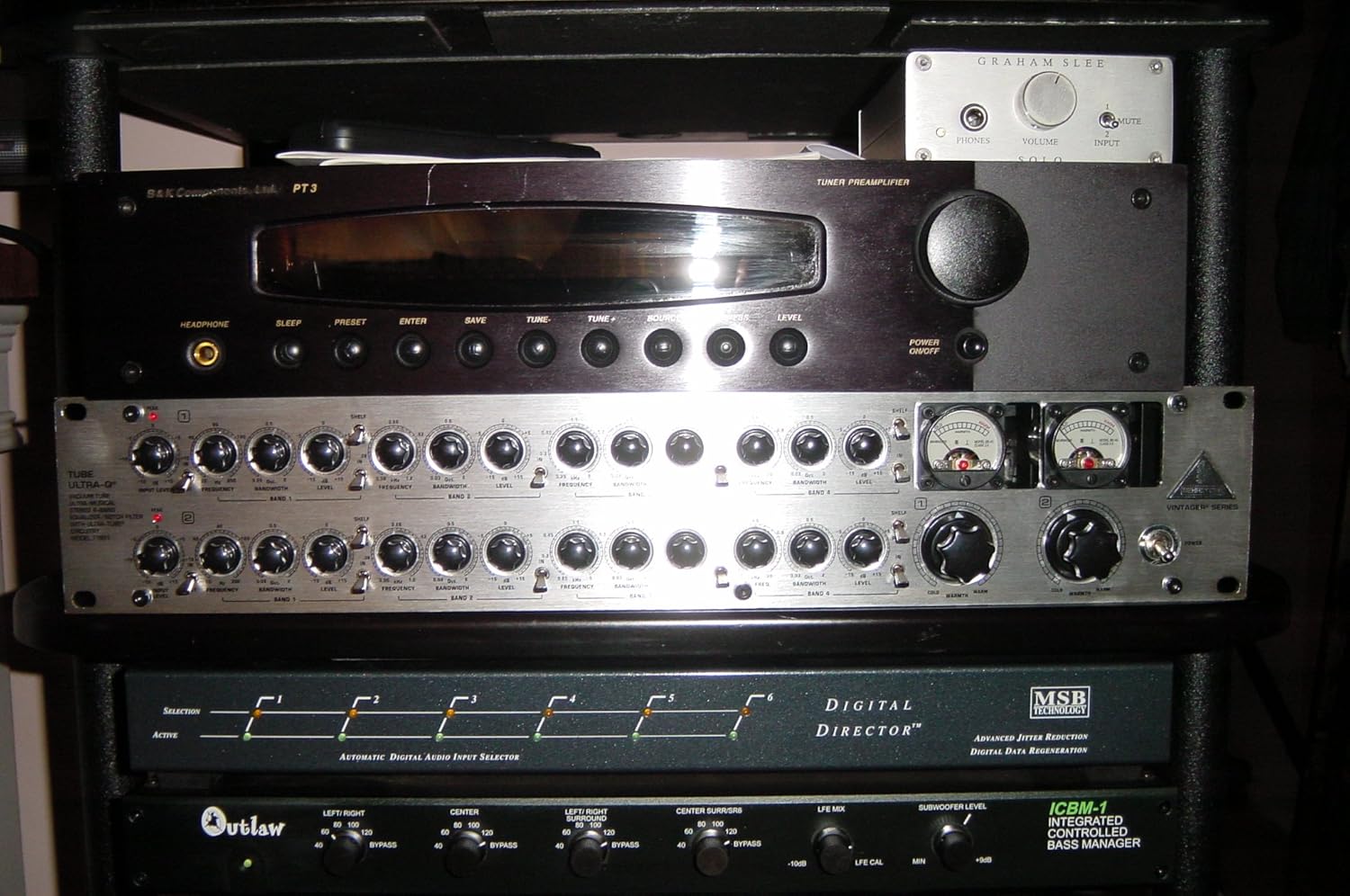
Figure 4.1: Front panel controls of the Behringer T1951.
4.1 Front Panel Controls Overview
- Input/Output Level Controls: Adjust the overall signal level entering and exiting the unit.
- VU Meters: Provide visual indication of the output signal level. Aim for levels that do not consistently peak into the red.
- Parametric EQ Bands (1-4): Each band features controls for:
- Frequency: Selects the center frequency of the band.
- Level: Boosts or cuts the selected frequency.
- Bandwidth (Q): Adjusts the width of the frequency band affected. A higher Q value means a narrower, more precise band.
- Shelf/Peak Switches: For the lo- and hi-frequency bands, these switches allow you to select between a shelving filter (affecting all frequencies above/below the set point) or a peak filter (affecting a specific band).
- In/Out Switch: Engages or bypasses the equalization for each channel.
- Peak LED: Illuminates when the signal level is too high, indicating potential clipping.
- Warmth Control: Adjusts the amount of tube saturation for added harmonic richness.
4.2 Basic Operation
- Power On: Ensure all connections are made, then power on the T1951.
- Set Levels: Start with input and output levels at unity gain (0 dB) or a neutral position. Adjust as needed to achieve optimal signal-to-noise ratio without clipping.
- Engage EQ: Press the "In/Out" switch for the channels you wish to equalize.
- Adjust Frequencies: For each band, select the desired frequency using the "Frequency" knob.
- Apply Boost/Cut: Use the "Level" knob to boost or cut the selected frequency.
- Shape Bandwidth: Adjust the "Bandwidth (Q)" knob to make the equalization effect wider or narrower.
- Utilize Warmth: Experiment with the "Warmth" control to add tube character to your sound.
5. Maintenance
The Behringer T1951 is designed for reliable operation. Regular, simple maintenance will help ensure its longevity.
- Cleaning: Disconnect the unit from power before cleaning. Use a soft, dry cloth to wipe down the exterior. Do not use liquid cleaners or solvents.
- Ventilation: Ensure that the ventilation openings are not blocked. Proper airflow is crucial for preventing overheating, especially for tube-based equipment.
- Tube Replacement: The 12AX7A vacuum tubes have a finite lifespan. If you notice a degradation in sound quality (e.g., reduced warmth, increased noise), the tubes may need replacement. This should be performed by qualified service personnel.
- Storage: If storing the unit for an extended period, keep it in a dry, temperature-controlled environment, away from direct sunlight and extreme temperatures.
6. Troubleshooting
This section addresses common issues you might encounter with your T1951 equalizer.
| Problem | Possible Cause | Solution |
|---|---|---|
| No sound output |
|
|
| Distorted sound / Peak LED constantly on |
|
|
| Hum or noise |
|
|
7. Technical Specifications
The following specifications are based on the manufacturer's data for the Behringer T1951.

Figure 7.1: Detailed technical specifications for the Behringer T1951.
7.1 Audio Input
- Connectors: XLR and 1/4" TRS
- Type: RF filtered, servo-balanced input stage
- Impedance: 50 kOhm balanced, 25 kOhm unbalanced
- Max. input level: +21 dBu balanced and unbalanced
- CMRR: typ. 40 dB, >55 dB @ 1 kHz
7.2 Audio Output
- Connectors: XLR and 1/4" TRS
- Type: electronically servo-balanced output stage
- Impedance: 60 Ohm balanced, 30 Ohm unbalanced
- Max. output level: +21 dBu, +20 dBm balanced and unbalanced
7.3 System Specifications
- Bandwidth: 18 Hz to 30 kHz, +/- 3 dB
- Signal-to-noise ratio: >100 dB, unweighted, 22 Hz to 22 kHz
- THD: 0.002 % typ. @ +4 dBu, 1 kHz, unity gain
- IMD: 0.01 % typ. SMPTE
7.4 Filter Section
- Type: state-variable parametric filter
- Level: variable (-15 dB to +15 dB)
- Frequency:
- Band 1: 20 Hz to 300 Hz
- Band 2: 60 Hz to 1.2 kHz
- Band 3: 250 Hz to 5 kHz
- Band 4: 1 kHz to 20 kHz
- Bandwidth: variable (0.03 to 2 octaves)
7.5 Function Switches/Indicators
- Audio In/Out: relay-controlled hard-wire bypass
- Shelf/Peak: switches outer bands from shelving to parametric
- In/Out: activates each filter bank
- Peak LED: LED indicator of input overload
- Warmth: variable (+10 dB to +60 dB)
7.6 Power Supply
- Mains voltages:
- USA/Canada: 120 V~, 60 Hz
- U.K./Australia: 240 V~, 50 Hz
- Europe: 230 V~, 50 Hz
- General Export Model: 100 - 120 V~, 200 - 240 V~, 50 - 60 Hz
- Power consumption: 35 Watts max.
- Fuse: 100 - 120 V~: T 1 A H; 200 - 240 V~: T 500 mA H
- Mains connection: standard IEC receptacle
7.7 Physical
- Dimension (H x W x D): 3 1/2" (89.5 mm) x 19" (482.6 mm) x 8 1/2" (217 mm)
- Net weight: approx. 8 kg
- Shipping weight: approx. 10 kg
8. Warranty and Support
Behringer products are built to high standards and undergo rigorous quality control. For detailed warranty information, please refer to the warranty card included with your product or visit the official Behringer website.
For technical support, service, or spare parts, please contact your authorized Behringer dealer or distributor. You can also find support resources, FAQs, and contact information on the official Behringer website: www.behringer.com
When contacting support, please have your product model (T1951) and serial number ready.
Ask a question about this manual
Ask about setup, troubleshooting, compatibility, parts, safety, or missing instructions. Manuals+ will review the question and use this page’s manual context to help answer it.