
Standard Motor Products BC120
Instruction Manual
Standard Motor Products BC120 Booster Cables
Model: BC120
Introduction
The Standard Motor Products BC120 Booster Cables are designed to provide a reliable connection for jump-starting vehicles with a dead battery. These cables are an essential tool for any vehicle owner, offering a safe and efficient way to get back on the road. Always follow the instructions carefully to ensure safe operation.
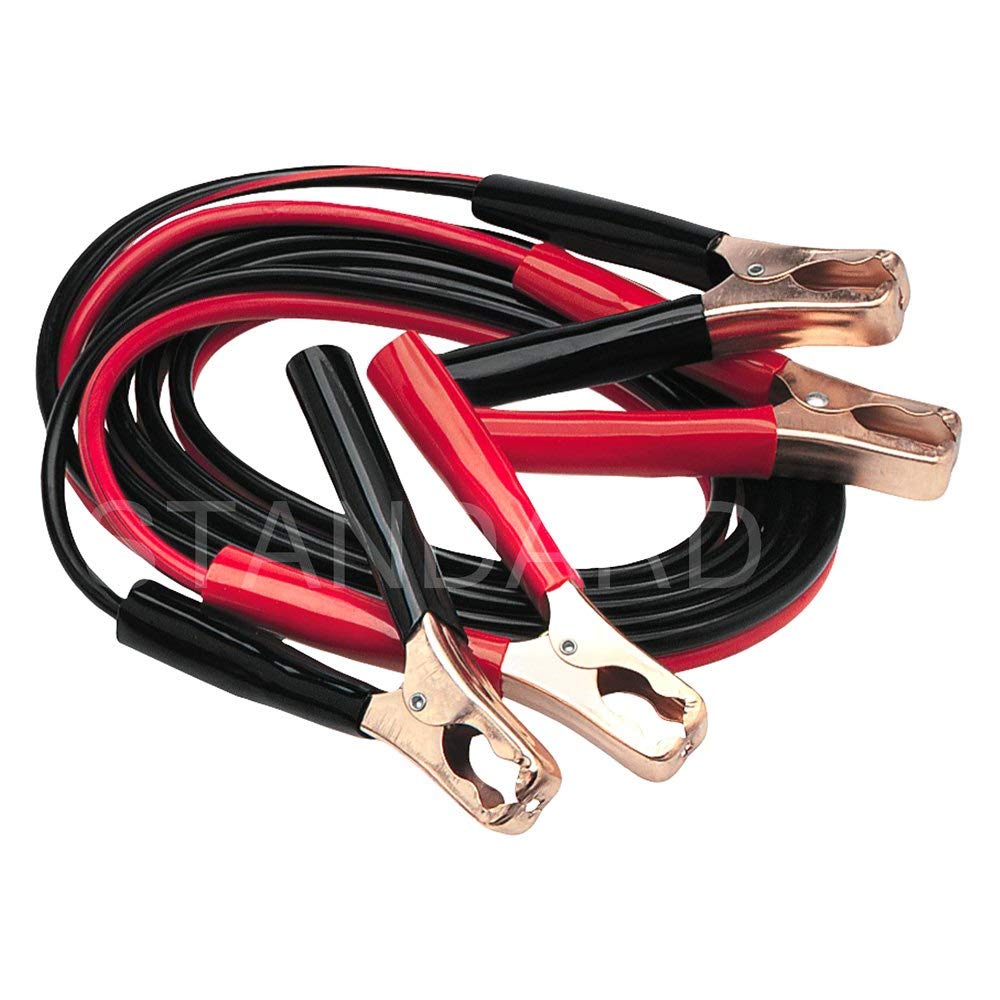
Image: Standard Motor Products BC120 Booster Cables. This image displays the coiled red and black booster cables, featuring robust red and black insulated clamps with copper-colored jaws at each end, ready for automotive use.
Safety Information
WARNING: Batteries contain sulfuric acid, which is corrosive. They also produce explosive gases. Always wear eye protection and gloves when working with batteries. Ensure proper ventilation.
- Do not smoke or allow sparks or flames near the battery.
- Ensure both vehicles are turned off before connecting cables.
- Do not allow cable clamps to touch each other or the vehicle body once connected to a battery.
- Keep children and bystanders away from the work area.
- If battery acid comes into contact with skin or eyes, flush immediately with water for at least 15 minutes and seek medical attention.
Package Contents
Your package should contain the following item:
- 1 x Standard Motor Products BC120 Booster Cables
Setup
Before attempting to jump-start a vehicle, ensure both vehicles are in Park (automatic) or Neutral (manual) and the parking brakes are engaged. Turn off all accessories (lights, radio, AC) in both vehicles.
Operating Instructions: Jump-Starting a Vehicle
Follow these steps carefully to jump-start a vehicle:
- Position Vehicles: Park the assisting vehicle close enough to the disabled vehicle so the booster cables can reach both batteries, but ensure the vehicles do not touch.
- Connect Positive (+) to Dead Battery: Connect one red (positive) clamp to the positive (+) terminal of the dead battery.
- Connect Positive (+) to Live Battery: Connect the other red (positive) clamp to the positive (+) terminal of the assisting vehicle's battery.
- Connect Negative (-) to Live Battery: Connect one black (negative) clamp to the negative (-) terminal of the assisting vehicle's battery.
- Connect Negative (-) to Engine Block: Connect the other black (negative) clamp to a clean, unpainted metal part of the disabled vehicle's engine block or chassis, away from the battery and moving parts. Do not connect directly to the negative terminal of the dead battery.
- Start Assisting Vehicle: Start the engine of the assisting vehicle and let it run for 5-10 minutes to charge the dead battery.
- Attempt to Start Disabled Vehicle: Try to start the disabled vehicle. If it doesn't start immediately, wait a few minutes and try again.
- Disconnect Cables (Reverse Order): Once the disabled vehicle starts, disconnect the cables in the reverse order of connection:
- Disconnect the black (negative) clamp from the disabled vehicle's engine block/chassis.
- Disconnect the black (negative) clamp from the assisting vehicle's battery.
- Disconnect the red (positive) clamp from the assisting vehicle's battery.
- Disconnect the red (positive) clamp from the dead battery.
- Keep Disabled Vehicle Running: Allow the disabled vehicle to run for at least 20-30 minutes to allow its alternator to recharge the battery.
Maintenance and Storage
- After each use, inspect the cables for any signs of damage, fraying, or corrosion.
- Clean any dirt or grime from the clamps and cables with a dry cloth. Do not use water or solvents.
- Store the booster cables in a dry, cool place, away from direct sunlight and extreme temperatures.
- Ensure the clamps do not touch each other during storage to prevent accidental short circuits.
Troubleshooting
| Problem | Possible Cause | Solution |
|---|---|---|
| Vehicle does not start after jump-start attempt. |
|
|
| Cables or clamps get hot during use. |
|
|
Specifications
| Attribute | Detail |
|---|---|
| Model Number | BC120 |
| Brand | Standard Motor Products |
| Manufacturer | Standard Ignition |
| Product Dimensions | 3 x 12 x 7 inches |
| Item Weight | 0.01 ounces |
| Country of Origin | USA |
| Exterior | Machined |
| ASIN | B000CPIPFK |
| Date First Available | December 2, 2005 |
Warranty and Support
For information regarding warranty coverage or technical support for your Standard Motor Products BC120 Booster Cables, please refer to the manufacturer's official website or contact their customer service directly. Keep your purchase receipt as proof of purchase.
You can typically find contact information on the Standard Motor Products website.
Ask a question about this manual
Ask about setup, troubleshooting, compatibility, parts, safety, or missing instructions. Manuals+ will review the question and use this page’s manual context to help answer it.