
Epiphone ESGSEBCH1
Epiphone SG Special Electric Guitar Instruction Manual
Model: ESGSEBCH1
1. Introduction
This manual provides essential information for the setup, operation, and maintenance of your Epiphone SG Special Electric Guitar. Please read this manual thoroughly to ensure proper use and to maximize the lifespan of your instrument.
The Epiphone SG Special features a classic SG body shape, equipped with two open-coil humbucker pickups, a LockTone Tune-O-Matic bridge, and a stopbar tailpiece. These components are designed to deliver reliable performance and sustain.
2. Product Overview


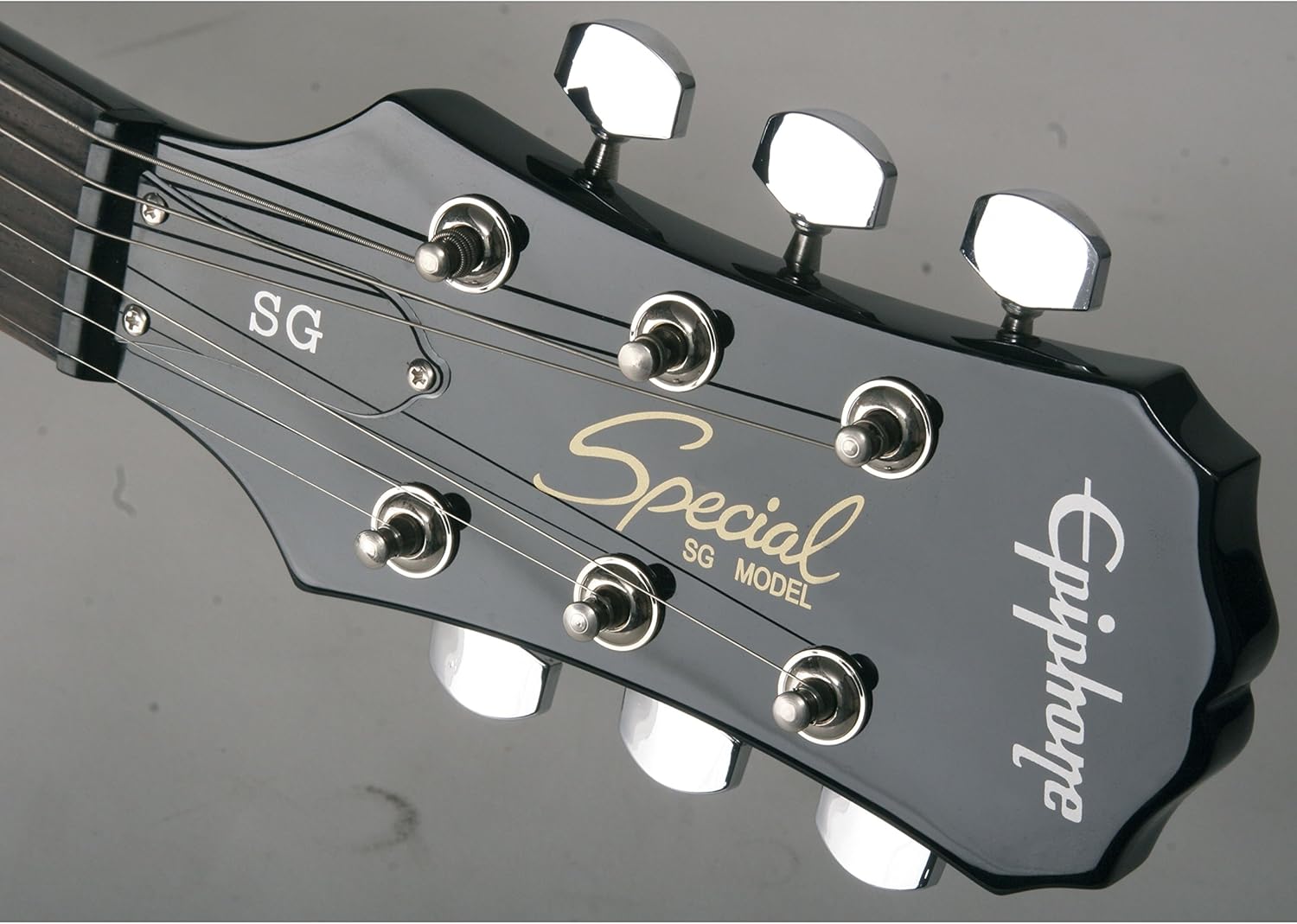
Key Features:
- Body: Laminated Alder/Maple construction, providing a balanced tonal foundation.
- Neck: Bolt-on Maple neck for stability and bright tone.
- Fretboard: Rosewood fretboard with dot inlays, offering a smooth playing surface.
- Pickups: Two open-coil humbuckers deliver a powerful and versatile sound.
- Bridge: LockTone Tune-O-Matic bridge and Stopbar tailpiece for enhanced sustain and simplified string changes.
- Headstock: 14-degree angled headstock design to increase string pressure at the nut, improving sustain and tuning stability.
- Hardware: Durable chrome hardware throughout.
Internal Components:
- Double-Waxed Pickups: Epiphone pickups undergo a double vacuum waxing process to ensure optimal performance and minimize microphonic feedback.
- Output Jack: Features an improved contact shape and heavy-duty spring steel for increased reliability and consistent signal transmission.
- Toggle Switches: All-metal, USA-designed switches provide reliable contact and extended operational life.
- Potentiometers: One-inch diameter potentiometers are used for precise control, longer life, and reliable service.
- Quick-Connectors: Wiring harnesses utilize quick-connectors for enhanced reliability and ease of service.
3. Setup
3.1 Unboxing and Inspection
- Carefully remove the guitar from its packaging.
- Inspect the guitar for any signs of damage that may have occurred during shipping.
- Ensure all accessories (if included) are present.
3.2 Initial Tuning
- Attach a guitar strap if desired.
- Connect your guitar to an amplifier using a standard instrument cable.
- Use an electronic tuner to tune the guitar to standard pitch (E-A-D-G-B-e, low to high). Gently stretch new strings to help them settle and hold tune.
3.3 Action and Intonation
The guitar is factory-set for optimal playability. However, environmental changes can affect the neck and string action. If adjustments are needed, it is recommended to consult a qualified guitar technician. The Tune-O-Matic bridge allows for individual string height and intonation adjustments.
4. Operating the Guitar
4.1 Controls
- Pickup Selector Switch: This three-position toggle switch allows you to select different pickup configurations:
- Up Position: Neck pickup only (rhythm).
- Middle Position: Both neck and bridge pickups.
- Down Position: Bridge pickup only (lead).
- Volume Knobs: Two volume knobs control the output level of each pickup independently.
- Tone Knobs: Two tone knobs adjust the treble response of each pickup independently. Turning clockwise increases treble, counter-clockwise decreases treble.
4.2 Connecting to an Amplifier
Insert a standard 1/4-inch instrument cable into the output jack located on the lower bout of the guitar. Connect the other end of the cable to your amplifier's input. Ensure the amplifier's volume is set to a low level before turning it on to avoid sudden loud noises.
5. Maintenance
5.1 Cleaning
- Wipe down the guitar body, neck, and strings with a soft, lint-free cloth after each use to remove sweat and grime.
- For a deeper clean, use guitar-specific cleaning and polishing products. Avoid abrasive cleaners.
- Clean the fretboard periodically with a lemon oil or fretboard conditioner to prevent drying and cracking.
5.2 String Replacement
Strings should be replaced regularly, depending on playing frequency and string type. The LockTone Tune-O-Matic bridge and stopbar tailpiece facilitate easier string changes. Replace one string at a time to maintain neck tension.
5.3 Storage
Store your guitar in a stable environment, away from extreme temperature changes and humidity fluctuations. A guitar case or gig bag is recommended for protection.
6. Troubleshooting
- No Sound: Check cable connections, amplifier power, and guitar volume/tone settings. Ensure the pickup selector is not in an 'off' position (though this model typically has no 'off' position).
- Buzzing Strings: This can be caused by low action, uneven frets, or a warped neck. Minor adjustments can be made to the bridge, but significant issues may require professional setup.
- Poor Tuning Stability: New strings require stretching. Ensure strings are properly wound around tuning posts. Worn tuning machines or nut slots can also contribute to instability and may require replacement or lubrication.
- Weak or Intermittent Signal: Inspect the instrument cable for damage. Check the output jack for loose connections.
For issues not covered here, or if you are uncomfortable performing adjustments, please contact a qualified guitar technician.
7. Specifications
| Feature | Specification |
|---|---|
| Brand | Epiphone |
| Model Number | ESGSEBCH1 |
| ASIN | B0002D01IQ |
| Body Material | Laminated Alder/Maple |
| Neck Material | Maple |
| Fretboard Material | Rosewood |
| Number of Frets | 22 |
| Scale Length | 24.75 inches |
| Nut Width | 1.68 inches |
| Pickup Configuration | HH (Two Humbuckers) |
| Bridge System | Tune-O-Matic with Stopbar Tailpiece |
| Hardware Finish | Chrome |
| Color | Black |
| Item Weight | 11 pounds |
| Product Dimensions | 44 x 16.5 x 4 inches |
| Hand Orientation | Right |
8. Warranty and Support
The Epiphone SG Special Electric Guitar comes with a limited lifetime warranty. For specific details regarding warranty coverage, terms, and conditions, please refer to the warranty card included with your product or visit the official Epiphone website.
For technical support, service, or parts inquiries, please contact Epiphone customer service through their official website or authorized service centers. Always provide your model number (ESGSEBCH1) and serial number when seeking support.
Related documentsESGSEBCH1


Ask a question about this manual
Ask about setup, troubleshooting, compatibility, parts, safety, or missing instructions. Manuals+ will review the question and use this page’s manual context to help answer it.