
Introduction
This manual provides essential information for the safe and effective use of your Philips Avent Anti-Colic Nipple (0m+ Flow). Please read these instructions carefully before first use and retain them for future reference. This nipple is designed for newborns (0 months and older) and is compatible with Philips Avent Anti-Colic Classic feeding bottles.
Key Features
- Anti-Colic System: Designed to reduce air ingestion, which helps to minimize colic and discomfort.
- Easy Latch-On: The nipple shape and ribbed texture facilitate a secure latch for your baby.
- Ribbed Texture: Prevents nipple collapse for uninterrupted feeding.
- BPA Free: Made from safe, Bisphenol A-free silicone material.
- Newborn Flow (0m+): Specifically designed for the feeding needs of newborns.

Image of two Philips Avent Anti-Colic Nipples (0m+ flow) with a graphic indicating '0m+' and flow rate '1'. These clear silicone nipples feature a wide base and ribbed texture.
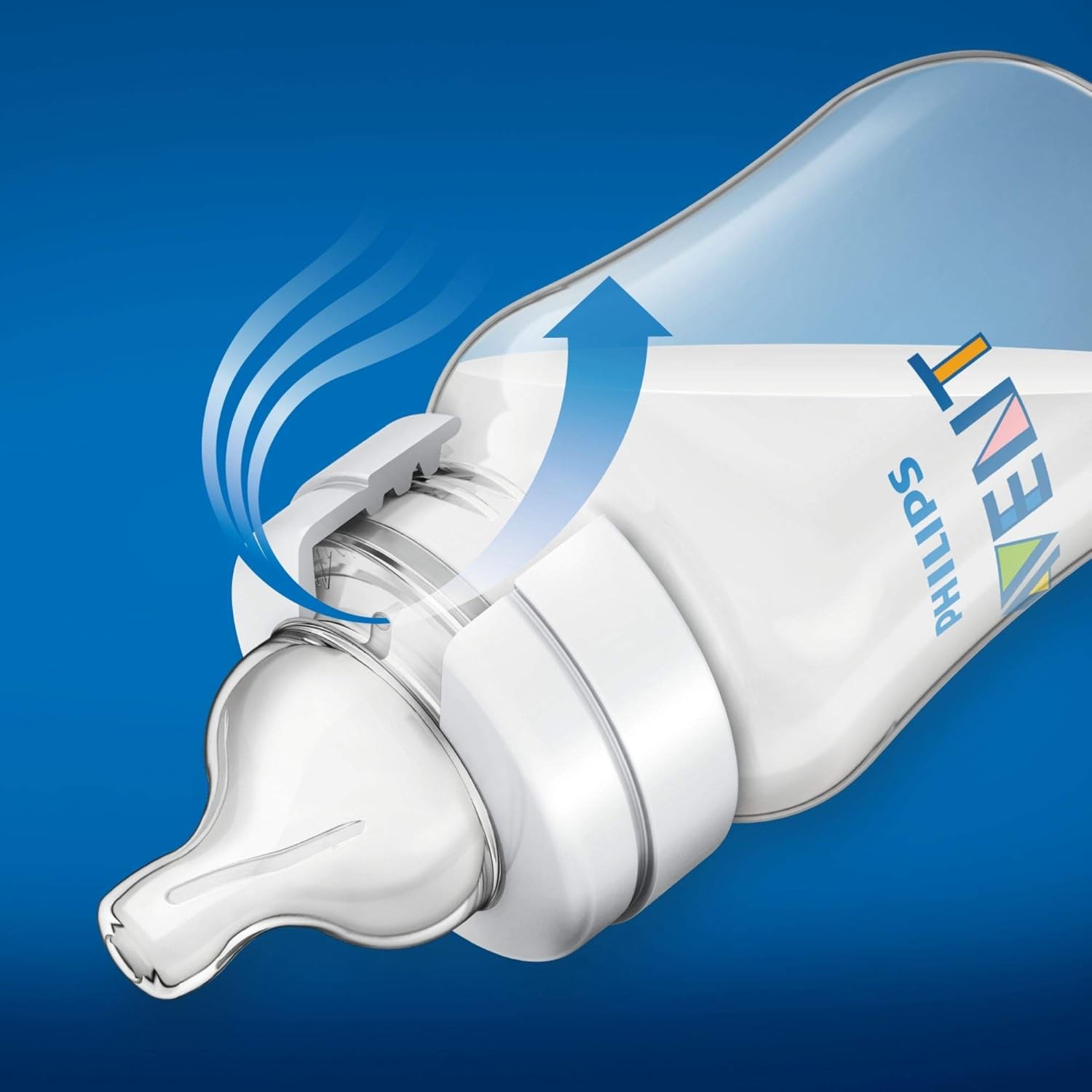
Diagram illustrating the anti-colic system of the Philips Avent bottle and nipple. Air flows into the bottle, not the baby's tummy, through a valve system.
Compatibility
The Philips Avent Anti-Colic Nipple (0m+ Flow) is specifically designed for use with Philips Avent Anti-Colic Classic feeding bottles.
Important: This teat does not fit on Philips Avent Natural bottle range.

Image displaying three Philips Avent Anti-Colic Classic feeding bottles of different sizes (125ml, 260ml, 330ml) with nipples attached, illustrating compatibility.
Setup and Assembly
- Inspect: Before first use, inspect the nipple for any tears, cracks, or damage. Replace immediately if any damage is found.
- Clean: Thoroughly clean and sterilize the nipple and bottle components according to the "Cleaning and Maintenance" section.
- Assemble: Insert the nipple into the screw ring. Ensure the nipple is pulled through until it is seated securely.
- Attach: Screw the assembled nipple and screw ring onto the bottle. Do not overtighten.

Close-up image of a single Philips Avent Anti-Colic Nipple, highlighting its ribbed texture and wide base for proper assembly.
Operating Instructions
- Prepare Formula/Milk: Prepare formula or breast milk according to manufacturer's instructions or healthcare professional's advice. Ensure the temperature is safe for feeding.
- Fill Bottle: Fill the Philips Avent Anti-Colic Classic feeding bottle with the prepared liquid.
- Check Flow: Before feeding, always check the milk flow by inverting the bottle. Milk should drip steadily, not pour.
- Feeding: Position your baby comfortably and offer the nipple. Ensure the anti-colic valve is positioned correctly to allow air to flow into the bottle.
- Monitor: Observe your baby during feeding for signs of discomfort or difficulty.

Image of an adult feeding a baby with a Philips Avent Anti-Colic bottle, demonstrating proper usage during feeding.
Cleaning and Maintenance
Proper cleaning and sterilization are crucial for your baby's health.
Cleaning
- Disassemble: After each use, disassemble all bottle and nipple components.
- Rinse: Rinse all parts thoroughly under cold running water to remove any milk residue.
- Wash: Wash all components in warm, soapy water using a clean bottle brush. Ensure all milk residue is removed from the nipple, especially the anti-colic valve.
- Rinse Again: Rinse all parts thoroughly with clean water.
Sterilization
Sterilize all cleaned components using one of the following methods:
- Boiling: Place all components in a pot of boiling water for 5 minutes. Ensure parts do not touch the sides of the pot to prevent damage.
- Steam Sterilizer: Use a Philips Avent steam sterilizer or another suitable steam sterilizer according to its instructions.
- Microwave Sterilizer: Use a microwave sterilizer according to its instructions.
- Cold Water Sterilization: Use a cold water sterilization solution according to its instructions.
Storage
After cleaning and sterilization, store all dry components in a clean, dry, and covered container. Avoid direct sunlight or heat.
Replace nipples every 3 months or sooner if they show signs of wear, damage, or discoloration.
Troubleshooting
| Issue | Possible Cause | Solution |
|---|---|---|
| Nipple collapse during feeding | Vacuum buildup; nipple not properly vented; baby sucking too hard for flow rate. | Ensure anti-colic valve is clear and functioning. Check if nipple flow rate is appropriate for baby's age and feeding style. Consider a faster flow nipple if baby is struggling. |
| Milk flow too slow | Nipple hole blocked; nipple flow rate too slow for baby's age. | Ensure nipple hole is clear. Consider a faster flow nipple (e.g., 1m+, 3m+). |
| Milk flow too fast | Nipple flow rate too fast for baby's age. | Ensure nipple flow rate is appropriate for baby's age (0m+ for newborns). |
| Leaking from bottle/nipple | Nipple not properly assembled; screw ring not tightened correctly; damaged nipple. | Reassemble nipple and screw ring, ensuring a secure fit. Check nipple for damage and replace if necessary. |

Image showing a chart of Philips Avent nipple flow rates, including 0m (extra slow), 0m+ (newborn), 1m+ (slow), 3m+ (medium), 6m+ (fast), and variable flow options, to help identify the correct nipple for a baby's age and feeding needs.
Specifications
- Model Number: SCF631/27
- Flow Rate: Newborn Flow (0m+)
- Material: Silicone (BPA Free)
- Quantity: Pack of 2 nipples
- Compatibility: Philips Avent Anti-Colic Classic Feeding Bottles
- Country of Origin: Indonesia
- Item Weight: 0.05 Kilograms (for the pack)
Safety Information
- Always use this product with adult supervision.
- Never use feeding nipples as a soother.
- Continuous and prolonged sucking of fluids will cause tooth decay.
- Always check food temperature before feeding.
- Keep all components not in use out of children's reach.
- Before each use, pull the nipple in all directions to check for tears or weak spots. Discard at the first signs of damage or weakness.
- Do not leave the nipple in direct sunlight or heat, or leave in disinfectant ("sterilizing solution") for longer than recommended, as this may weaken the nipple.
Warranty and Support
For warranty information or product support, please refer to the Philips Avent official website or contact their customer service directly. Keep your proof of purchase for any warranty claims.


