
1. Introduction and Overview
The All American 1930 Model 921 is a 21.5-quart pressure cooker and canner designed for home use. It features a unique metal-to-metal sealing system, eliminating the need for gaskets, and is constructed from high-grade cast aluminum for durability. This appliance is suitable for use on gas, electric, or flat top stoves. This manual provides essential information for the safe and effective operation and maintenance of your pressure cooker/canner.
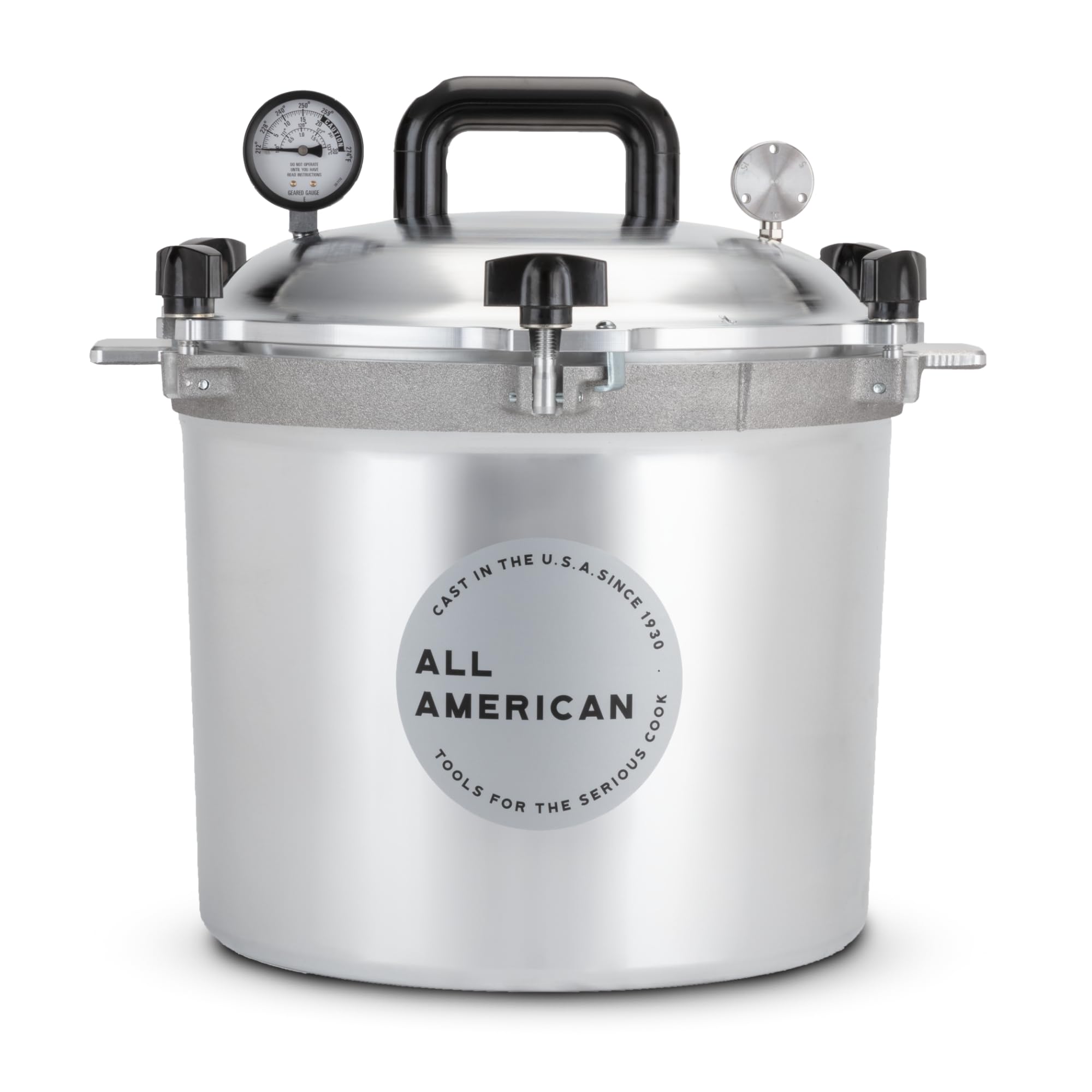
Image: The All American 1930 Model 921 Pressure Cooker/Canner, showcasing its robust design and key components like the pressure dial gauge and regulator weights.
2. Safety Information
Always prioritize safety when operating a pressure cooker/canner. Failure to follow instructions can result in serious injury or damage to the appliance.
- USDA Recommendation: The USDA recommends pressure canning as the only safe method for canning low-acid foods such as meats, vegetables, and certain fruits.
- Heavy Appliance: This unit is heavy. Always place the canner on the stove before adding contents. Avoid moving the canner when it is filled with jars and water.
- Stovetop Compatibility: Ensure your stovetop can support the weight and size of the canner. Using it on a burner that is too small for the canner's base can cause heat to concentrate on the cooktop, potentially damaging flat cooktops.
- Lid Sealing: Always align the pot and lid arrows. Tighten the wing nuts correctly, two at a time across from each other, gently at first, then tighten firmly in the same cross-pattern to ensure an even, steam-tight seal.
- Pressure Monitoring: Monitor the pressure gauge and regulator weight carefully during operation. Never force open a canner under pressure.
- Cleaning Products: Aluminum can react with certain cleaning products, leading to pitting or damage. Use only mild soap and a soft sponge for cleaning.
- Proposition 65 Warning: This product may expose you to chemicals known to the State of California to cause cancer and birth defects or other reproductive harm. For more information, go to www.P65Warnings.ca.gov.
3. Setup
Before first use, and periodically thereafter, ensure proper assembly and lubrication.
Initial Cleaning
Wash the canner body, lid, and all components with warm, soapy water. Rinse thoroughly and dry completely before assembly.
Lid Assembly and Lubrication
Apply a thin coat of olive oil or petroleum jelly (Vaseline, unscented) to the metal-to-metal sealing surfaces of the lid and pot rim. This ensures a proper seal and prevents sticking. Avoid scented products as they may contain abrasives.

Image: Detailed diagram highlighting key features of the All American Pressure Canner, including the pressure dial gauge, regulator weights, and metal-to-metal seal.
Vent Pipe Replacement
If replacing the vent pipe, ensure the new pipe is securely installed. Apply a couple of drops of olive oil to the threads of the new vent pipe before installation.
Video: Instructions for replacing the vent pipe on an All American Pressure Canner. This video demonstrates applying olive oil to the threads and securing the new vent pipe.
Wing Nuts, Pins, and Bayonet Clamps Replacement
Periodically inspect and replace worn wing nuts, pins, or bayonet clamps to maintain a secure seal. Use a punch and hammer to tap the pin until flush during replacement. Exercise caution to avoid damaging the edges of the hole, as this could compromise pressure maintenance.
Video: Guide on replacing wing nuts, pins, and bayonet clamps on an All American Pressure Canner. This video shows the process of tapping pins into place.
Overpressure Plug Replacement
The overpressure plug is a critical safety feature. Inspect it regularly for wear and replace if damaged. This plug is designed to release excess pressure if other safety mechanisms fail.
Video: Demonstration of replacing the overpressure plug on an All American Pressure Canner. This video highlights the importance of this safety component.
4. Operating Instructions
Follow these steps for safe and effective pressure cooking or canning.
Preparation and Loading
- Place the canning rack at the bottom of the canner.
- Add the recommended amount of water for your recipe (typically 2-3 inches for canning). For pressure cooking, follow specific recipe guidelines.
- Carefully place jars (for canning) or food (for pressure cooking) into the canner.

Image: The All American Pressure Canner loaded with jars, demonstrating its versatile and high-capacity use for canning.
Sealing and Heating
- Place the lid on the canner, aligning the arrows on the lid and pot.
- Tighten the wing nuts in a cross-pattern, two at a time, until the lid is securely sealed.
- Place the canner on a suitable heat source.
- Heat the canner on high until a steady stream of steam escapes from the vent pipe. Allow steam to vent for 7-10 minutes to ensure all air is expelled.
- Place the appropriate pressure regulator weight (5, 10, or 15 lb) onto the vent pipe.
Video: A comprehensive guide to using the All American Pressure Cooker Canner, covering preparation, sealing, and pressure regulation.
Pressure Control and Processing
- Once the regulator weight begins to jiggle or rock gently, indicating the desired pressure has been reached, reduce the heat to maintain a steady pressure.
- Process for the time specified in your recipe.
- The pressure gauge provides visual confirmation of internal pressure.
Video: Explanation of the safety features of the All American Pressure Canner, including the pressure gauge and regulator weight, and how they contribute to safe operation.
Cooling and Opening
- After processing, turn off the heat and allow the canner to cool naturally until the pressure gauge reads zero and no steam escapes when the regulator weight is gently nudged.
- Remove the regulator weight.
- Unscrew the wing nuts in a cross-pattern and carefully remove the lid, tilting it away from you to avoid steam burns.
5. Maintenance
Proper maintenance ensures the longevity and safe operation of your All American pressure cooker/canner.
- Cleaning: After each use, wash all parts with warm, soapy water and a soft sponge. Rinse thoroughly and dry immediately to prevent water spots or mineral buildup. Avoid abrasive cleaners or harsh chemicals that can damage the aluminum.
- Mineral Buildup: To minimize mineral buildup from hard water, consider using filtered, distilled, or pre-boiled water for canning. If buildup occurs, a mild solution of vinegar and water can be used, but always rinse thoroughly.
- Lid Lubrication: Reapply a thin coat of olive oil or petroleum jelly to the metal-to-metal sealing surfaces every 3-4 uses to maintain a proper seal and ease of opening/closing.
- Gauge Inspection: The steam gauge should be replaced yearly to ensure accurate pressure readings.
- Component Check: Regularly inspect the vent pipe, overpressure plug, wing nuts, and bayonet clamps for any signs of wear or damage. Replace components as needed.
6. Troubleshooting
Address common issues that may arise during operation.
- Vapor Lock: If the canner experiences a vapor lock at zero pressure, gently loosen two clamp screws with a paper towel-wrapped flat-head screwdriver. Allow it to sit for a few moments until the lid can turn freely. If stuck, use a dish towel-wrapped screwdriver to gently pry the lid under the arms. Always protect the aluminum surface.
- Uneven Sealing/Steam Leaks: Ensure the lid and pot arrows are aligned and the metal-to-metal sealing surfaces are clean and lubricated. Tighten the wing nuts evenly in a cross-pattern. Uneven tightening can lead to steam leaks and premature wear on components.
- Pressure Fluctuations: Adjust heat gradually to maintain a steady pressure. Sudden changes in heat can cause pressure to fluctuate. Ensure the regulator weight is clean and free of obstructions.
7. Specifications
| Brand | All American |
| Model Number | 921 |
| Capacity | 21.5 Quarts (approx. 19 pint jars or 7 quart jars) |
| Material | Aluminum |
| Color | Silver |
| Product Dimensions (D x W x H) | 12.25"D x 12.25"W x 15.37"H |
| Item Weight | 17.8 Pounds |
| Compatible Stovetops | Gas, Electric, Flat Top Stoves |
| Closure Type | Snap |
| Manufacturer | Wisconsin Aluminum Foundry |

Image: Visual representation of the Model 921's capacity, showing it holds 21.5 quarts, approximately 18 pint jars or 7 quart jars.

Image: Comparison table of various All American Pressure Canner models, detailing capacity, dimensions, and recommended heat sources.
8. Warranty
The All American 1930 Model 921 Pressure Cooker/Canner comes with a manufacturer's warranty. For specific details regarding coverage, terms, and conditions, please refer to the warranty documentation included with your product or contact the manufacturer directly.
9. Support
For assistance with your All American pressure cooker/canner, including inquiries about replacement parts, service, or additional manuals, please contact Wisconsin Aluminum Foundry, the manufacturer. Contact information can typically be found on their official website or in the product packaging.


