1. Ifihan
Thank you for choosing the VEVOR Electric Utility Cart, Model EWB7614. This manual provides essential information for the safe assembly, operation, and maintenance of your new electric cart. Please read this manual thoroughly before using the product to ensure proper function and to prevent injury or damage.
This electric utility cart is designed to assist with transporting heavy loads in various environments such as gardens, farms, and warehouses. Its robust design and electric assist feature make it an efficient tool for material handling.
2. Awọn ilana aabo
Always prioritize safety when operating the electric utility cart. Failure to follow these instructions may result in serious injury or property damage.
- Ka iwe afọwọkọ naa: Understand all operating instructions and safety warnings before use.
- Ohun elo Idaabobo Ti ara ẹni: Wear appropriate safety gear, including sturdy footwear and gloves.
- Agbara fifuye: Maṣe kọja agbara fifuye ti o pọju ti 500 lbs (226 kg). Ikojọpọ le fa aisedeede ati ibajẹ.
- Stable Loads: Ensure all loads are securely placed and balanced in the cart to prevent shifting during transport.
- Ilẹ̀: Operate the cart on stable, relatively even surfaces. Be cautious on inclines and uneven terrain.
- Braking: Familiarize yourself with the braking system and test it before each use. Use the electronic parking brake when stopped on inclines.
- Awọn ọmọde ati awọn ohun ọsin: Keep children and pets away from the operating area. This is not a toy.
- Aabo Batiri: Only use the provided charger. Do not expose the battery to extreme temperatures or moisture. Do not charge for more than 8 hours.
- Itọju: Regularly inspect the cart for any damage or loose parts. Do not operate if damaged.
3. Ọja Ipariview
3.1 irinše
The VEVOR Electric Utility Cart (Model EWB7614) includes the following main components and accessories:
- 1x Itọsọna olumulo
- 1x mọto
- 2x Large Wheels
- 1x Small Wheel
- 1x Chassis
- 1x Mu
- 1x Handle Bracket
- 1x Dumping Handle
- 1x Bottom Mesh
- 2x Left and Right Side Mesh
- 2x Front and Rear Side Mesh
- 1x Decorative Panel
- 1x Apoti batiri
- Ṣaja 1x
- 8x Large R Pins
- 2x Cotter Pins
- 2x Retaining Pins
- 8x M8x25 Screws (pcs)
- 12x M6x40 Screws + Nuts + Washers (pcs)
- 4x M6x60 Screws + Nuts + Washers (pcs)
- 2x Wheel Axle Plugs
- 4x USB Ties

Image: VEVOR Electric Utility Cart with its charger and various components laid out.
3.2 Awọn pato
| Ẹya ara ẹrọ | Sipesifikesonu |
|---|---|
| Nọmba awoṣe | EWB7614 |
| Ara | 3 kẹkẹ |
| Agbara | 36V-12A-500W |
| Agbara Batiri | 36V-12A-432Wh |
| Forward Speed (D Power) | 0-5 km / h |
| Reverse Speed (R Power) | 0-3.5 km / h |
| Agbara fifuye | 226 kg (500 lbs) |
| Cargo Bed Dimensions | 850 x 550 x 275 mm (33.46 x 21.65 x 10.83 inches) |
| Ohun elo Tire | Rubber - Inflatable |
| Tire Specifications | 13-5.00-6 |
| Braking System | Yes (Electronic Parking, Wheel Brakes, ECO Downhill Assist) |
| Awọn ohun elo akọkọ | Iron + Plastic + Aluminum Alloy + Rubber + Lead Acid |
| Iwọn Ọja | 53.4 kg (117.73 lbs) |
| Awọn iwọn Ọja (L x W x H) | 1500 x 680 x 930 mm (59.06 x 26.77 x 36.61 inches) |

Image: Detailed dimensions and specifications of the VEVOR Electric Utility Cart.
4. Eto ati Apejọ
The VEVOR Electric Utility Cart requires some assembly. Please refer to the included user manual for detailed, step-by-step assembly instructions. Ensure all components listed in Section 3.1 are present before beginning assembly.
- Ṣii silẹ: Carefully unpack all components and check for any shipping damage.
- Awọn irinṣẹ: Gather any necessary tools for assembly (e.g., wrenches, screwdrivers).
- Fifi sori ẹrọ kẹkẹ: Attach the large and small wheels as per the instructions, ensuring they are securely fastened.
- Chassis and Bed Assembly: Connect the chassis and cargo bed components, including the bottom and side meshes.
- Handle and Controls: Install the handle and handle bracket, ensuring all control cables are properly connected and secured.
- Fifi sori batiri: Carefully install the battery into its designated box.
- Ṣayẹwo Ipari: Before first use, double-check all bolts, nuts, and pins to ensure they are tightened and secured.

Image: The VEVOR Electric Utility Cart in its fully assembled state.
5. Awọn ilana Iṣiṣẹ
5.1 Ngba agbara si Batiri naa
Before initial use, fully charge the 36V-12A-432Wh battery. Connect the charger to the battery box and then to a standard power outlet. The charging indicator on the charger will show the charging status. It is recommended to charge for no more than 8 hours to ensure battery safety and longevity.

Image: The battery compartment of the electric cart, indicating its 432Wh capacity and charging recommendation.
5.2 Ipilẹ isẹ
- Titan/Apapa: Locate the power switch on the control panel and turn the cart on.
- Iṣakoso iyara: Use the throttle control on the handle to adjust the speed. The cart offers forward speeds up to 5 km/h and reverse speeds up to 3.5 km/h.
- Smooth Start: The innovative controller minimizes startup impact, ensuring a smooth acceleration and preventing cargo from shifting abruptly.
- Eto Braking: The cart features electronic parking, wheel brakes, and ECO downhill assist for safe and stable operation. Engage the electronic parking brake when stopping, especially on inclines.

Image: An operator using the electric cart, demonstrating its forward and reverse speeds and suitability for slopes up to 15 degrees.

Image: The cart's braking features, including electronic parking, ECO downhill assist, and wheel brakes, ensuring secure transport.
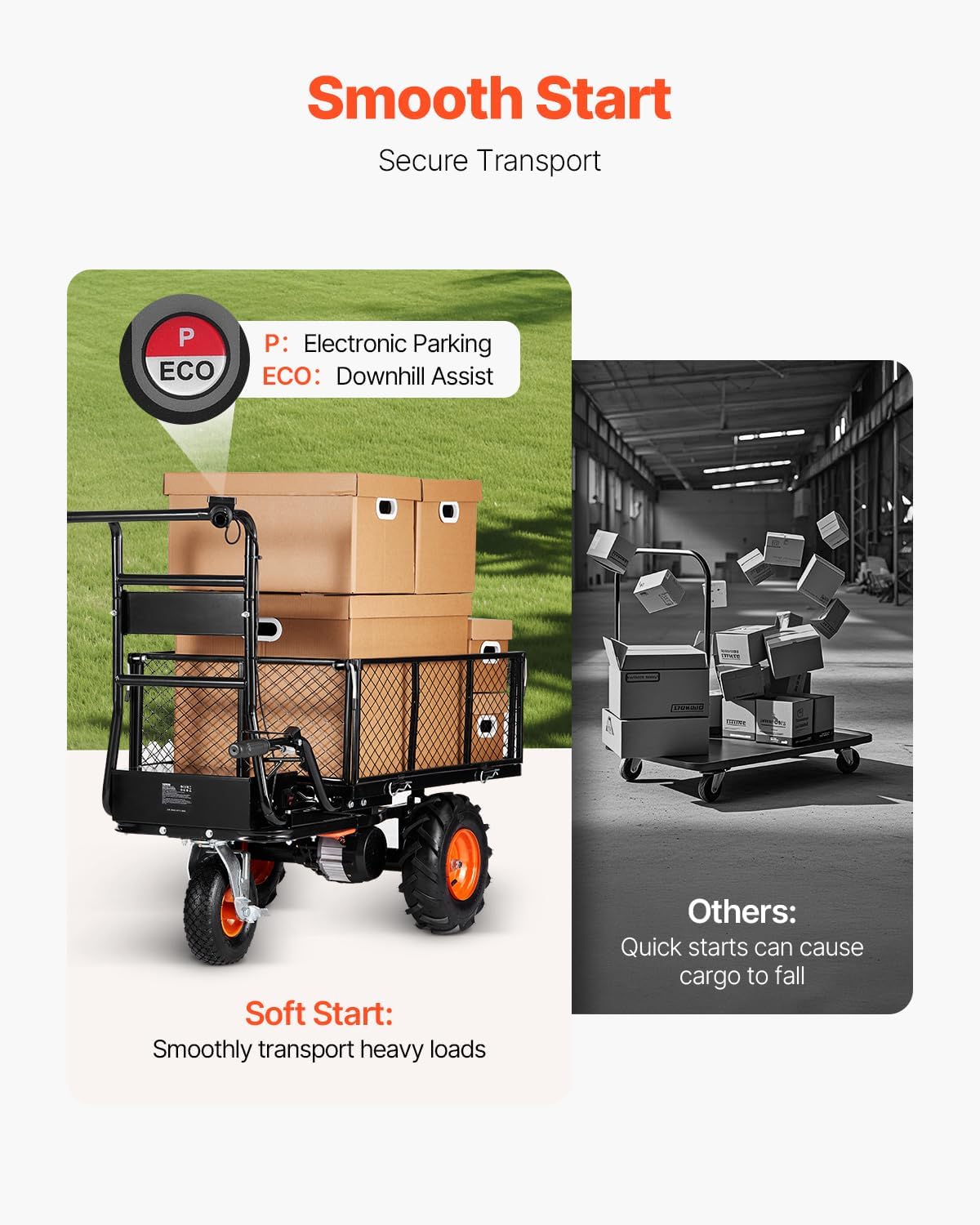
Image: Illustration of the smooth start feature, which ensures stable transport of heavy loads by preventing abrupt movements.
5.3 Ikojọpọ ati Gbigbe
- Agbara fifuye: The cart can carry up to 226 kg (500 lbs). Distribute the load evenly to maintain stability.
- Convertible Fence Design: The cart features a convertible fence design, allowing for easy loading and unloading. The side meshes can be adjusted or removed to accommodate larger or irregularly shaped items.
- Ibadọgba ti ilẹ: The 13-inch rubber wheels are designed to adapt to various terrains, including rock, mud, grass, and snow.

Image: The cart's flexible design, allowing conversion between a fenced cart for small items and a flatbed for larger items like bagged fertilizers.

Image: The electric cart being loaded with firewood, showcasing its 500 lbs load capacity for transporting various materials.

Image: The cart's 13-inch rubber wheels and 360-degree swivel feature, designed to tackle diverse terrains like rock, mud, grass, and snow.
5.4 Unloading
The cart is designed for effortless unloading. Utilize the dumping handle and the 90-degree discharge angle to efficiently empty the cargo bed. The extended handle reduces effort during the unloading process.

Image: The cart's extended handle and tilting function making the unloading of materials like firewood simple and efficient.
6. Itọju
Regular maintenance ensures the longevity and safe operation of your VEVOR Electric Utility Cart.
- Ninu: Clean the cart regularly with a damp cloth. Avoid using harsh chemicals that could damage the finish or electrical components.
- Itọju Batiri: Store the battery in a cool, dry place when not in use. Charge the battery fully before long-term storage and recharge every 3 months to maintain its health.
- Titẹ Taya: Check tire pressure periodically and inflate to the recommended PSI as indicated on the tire sidewall.
- Awọn ohun mimu: Periodically check all bolts, nuts, and screws for tightness. Tighten any loose fasteners.
- Lubrication: Lubricate moving parts, such as wheel axles and pivot points, as needed with appropriate grease or oil.
- Idaabobo Ibaje: The cart is constructed with rust-resistant iron and aluminum alloy. However, avoid prolonged exposure to moisture and store in a dry area to prevent corrosion.

Image: Details on the durable construction materials of the cart, including heavy-duty iron, rust-resistant powder coating, a reinforced frame, and thicker mesh for long-lasting use.
7. Laasigbotitusita
If you encounter issues with your VEVOR Electric Utility Cart, refer to the following common troubleshooting steps:
- Apoti Ko Nṣiṣẹ Lori:
- Ṣayẹwo boya batiri ti gba agbara ni kikun.
- Ensure the battery is correctly installed and connections are secure.
- Rii daju pe iyipada agbara wa ni ipo 'ON'.
- Motor Not Engaging / Weak Power:
- Jẹrisi pe batiri naa ni idiyele ti o to.
- Check for any obstructions around the wheels or motor.
- Ensure the throttle control is functioning correctly.
- Brakes Not Functioning Properly:
- Inspect the brake cables and mechanisms for wear or damage.
- Ensure the electronic parking brake engages firmly.
- Awọn Ariwo Alailẹgbẹ:
- Duro isẹ lẹsẹkẹsẹ.
- Inspect for loose parts, foreign objects, or damaged components.
If these steps do not resolve the issue, please contact VEVOR customer support for further assistance.
8. Atilẹyin ọja ati Support
For warranty information, technical support, or to order replacement parts, please contact VEVOR customer service. Refer to the contact details provided with your purchase documentation or visit the official VEVOR webojula.
Olupese: VEVOR
Ọjọ Akọkọ Wa: Oṣu Kẹta Ọjọ 9, Ọdun 2025


