1. Ntuziaka nchekwa dị mkpa
Please read all instructions carefully before using this appliance and retain them for future reference. Failure to follow these instructions may result in electric shock, fire, or serious personal injury.
- Jikọọ ngwaọrụ ahụ na ebe a na-etinye ọkụ eletrik n'ala mgbe niile.
- Ejila eriri ma ọ bụ plọg mebiri emebi rụọ ọrụ ahụ.
- Keep the unit away from flammable materials and open flames.
- Gbaa mbọ hụ na ikuku ikuku dị na gburugburu unit ahụ mgbe ọ na-arụ ọrụ.
- Etinyekwala ihe n'ime oghere ikuku ma ọ bụ ntinye.
- Kwupu ngwa ngwa tupu ihicha ma ọ bụ ịrụ ọrụ ọ bụla.
- Ezubere ngwa a maka iji ndị mmadụ (gụnyere ụmụaka) nwere ike anụ ahụ, mmetụta uche ma ọ bụ nke uche, ma ọ bụ enweghị ahụmịhe na ihe ọmụma, ma ọ bụrụ na enyereghị ha nlekọta ma ọ bụ ntụziaka gbasara iji ngwa ahụ site n'aka onye na-ahụ maka nchekwa ha.
2. Ngwaahịa gafereview
The FlinQ Mobile Air Conditioner is a versatile unit designed to provide cooling, dehumidification, and fan functions for your living space. It is equipped with an energy-efficient design and comes with a window kit for easy installation.

Foto 2.1: N'ihu view of the FlinQ Mobile Air Conditioner, showing the main air outlet and control panel area.

Figure 2.2: The mobile air conditioner unit, displaying its energy efficiency label (Class A) and the included remote control for convenient operation.
3. Akụkụ na akụkụ
Familiarize yourself with the main components of your mobile air conditioner:
- Isi nkeji (nwere ogwe njikwa)
- Ọkpụkpọ mkpofu
- Window Sealing Kit (adjustable window slider/plate)
- Njikwa anya
- Drain Hose (for continuous drainage in dehumidification mode)
- Air Filters (located on the back/side)
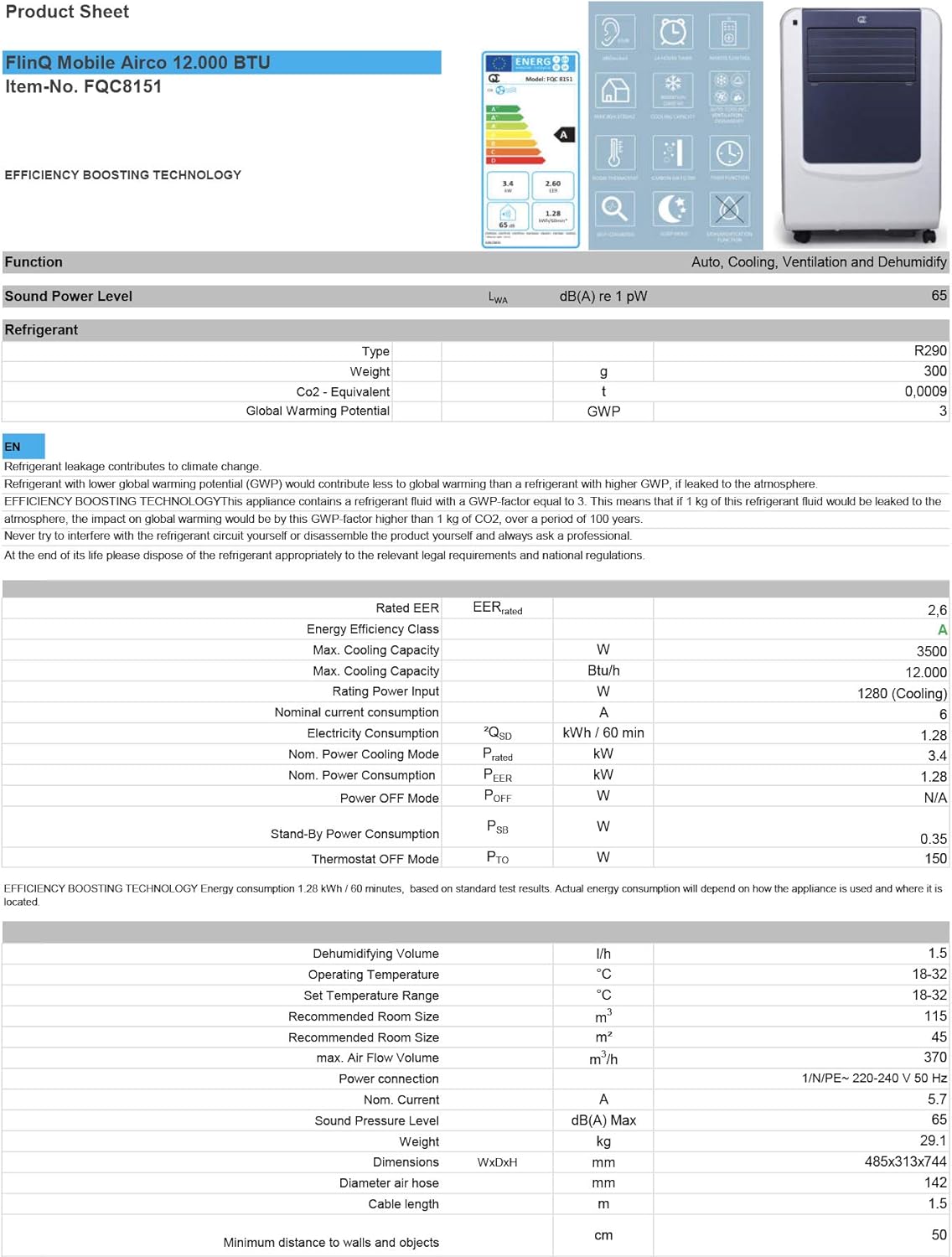
Figure 3.1: The remote control and a visual representation of the unit's key features, including noise level (65dB), 24-hour timer, cooling capacity (12000 BTU/h), room thermostat, carbon air filter, self-diagnosis, sleep mode, remote control function, timer function, auto cooling/fan/dehumidification, and dehumidification function.
4. Ntọala na nwụnye
4.1 Nwepu
Carefully remove the air conditioner and all accessories from the packaging. Inspect for any damage during transit. Keep the original packaging for future storage or transport.
4.2 Ntinye
Place the unit on a flat, stable surface. Ensure there is at least 30 cm (12 inches) of clear space around the unit for proper airflow. Do not place it near heat sources or in direct sunlight.
4.3 Ntinye windo ngwa
To ensure efficient cooling, the hot air extracted by the unit must be vented outside. Use the provided window sealing kit for this purpose.
- Jikọọ njikọ ọkpọkọ ikuku na oghere ikuku dị n'azụ nke ngwaọrụ ahụ.
- Extend the exhaust hose and attach the window adapter to the other end.
- Adjust the window slider/plate to fit your window opening.
- Insert the window adapter into the opening of the window slider/plate.
- Close the window as much as possible to seal the opening around the kit, minimizing air leakage.

Foto 4.1: Akụkụ view of the mobile air conditioner, illustrating the connection point for the exhaust hose, which expels hot air from the room.
5. Ntuziaka ọrụ
5.1 Ogwe njikwa
The control panel is located on the top of the unit and features various buttons and an LED display for setting modes, temperature, and timer functions.
5.2 Ime Remote
The remote control allows you to operate all functions of the air conditioner from a distance. Ensure the remote control batteries are inserted correctly.
5.3 Ụdị arụ ọrụ
Press the 'Mode' button to cycle through the available operating modes:
- Ụdị oyi: Maka ime ka ụlọ ahụ jụọ oyi. Jiri bọtịnụ nhazi okpomọkụ hazie okpomọkụ ịchọrọ.
- Ụdị ihicha mmiri: Removes excess moisture from the air. The fan speed is typically fixed in this mode. Consider connecting a drain hose for continuous drainage.
- Fan Ọnọdụ: Circulates air without cooling. You can adjust the fan speed (Low, Medium, High).

Ọgụgụ 5.1: nso nso view of the adjustable louvers on the air conditioner's front panel, which direct the airflow.
6. Nlekọta
Nlekọta anya mgbe niile na-eme ka arụmọrụ dị mma ma gbasaa ogologo ndụ nke ikuku ikuku gị.
6.1 Cleaning Air Filters
The air filters should be cleaned every two weeks or more frequently depending on usage and air quality. Dirty filters reduce efficiency and can damage the unit.
- Kwupu igwe ntụ oyi n'ofe ọkụ.
- Locate and remove the air filters (usually on the back or side of the unit).
- Wash the filters under running water (warm, not hot) or use a vacuum cleaner to remove dust.
- Allow the filters to air dry completely before reinserting them. Do not expose them to direct sunlight.

Figure 6.1: Illustration of how to remove the air filter from the mobile air conditioner for cleaning, highlighting the accessible filter panel.
6.2 Mmiri Ịwụpụ Mmiri
The unit collects condensed water during cooling and dehumidification. The internal tank will fill up, and the unit may stop operating when full. Drain the water regularly.
- Place a shallow pan or tray under the drain port (usually at the bottom rear of the unit).
- Wepu plọg mmiri ahụ ka mmiri wee pụta.
- For continuous drainage in dehumidification mode, attach the provided drain hose to the drain port.
6.3 Nchekwa
Mgbe ị na-echekwa unit maka ogologo oge:
- Wụpụ mmiri niile dị na ngwaọrụ ahụ.
- Hichaa ihe nzacha ikuku.
- Kpupu eriri ike wee kechie ya nke ọma.
- Debe ihe dị n'ime ya n'ebe kpọrọ nkụ ma dị jụụ, ọkachasị n'ime ngwugwu mbụ ya.
7. Nchọpụta nsogbu
Tupu ị kpọtụrụ ndị ahịa, biko lee tebụl na-esonụ maka nsogbu ndị a na-enwekarị na ngwọta ha:
| Nsogbu | Ihe nwere ike ime | Ngwọta |
|---|---|---|
| Unit anaghị agbanwuo | Enweghị ike; Agbanyeghi eriri ike; tank mmiri zuru oke | Lelee ebe ọkụ eletrik dị; Tinye eriri ọkụ eletrik; wụpụ tankị mmiri |
| Ngwa ahụ anaghị ajụ oyi nke ọma | Dirty air filters; Exhaust hose blocked/leaking; Room too large; Doors/windows open | Clean filters; Check hose for blockages/proper sealing; Ensure room size is within capacity; Close doors/windows |
| Unit na -eme mkpọtụ | Unit not on a flat surface; Air filters dirty | Place on flat surface; Clean air filters |
| Mmiri na-agbapụta site na unit | Drain plug not properly sealed; Unit tilted | Ensure drain plug is secure; Place unit on a level surface |
8. Nkọwapụta
Technical details for the FlinQ Mobile Air Conditioner:
| Njirimara | Uru |
|---|---|
| Nọmba nlereanya | 8720168680396 |
| Akụkụ ngwaahịa | 74 x 48 x 31 cm |
| Ibu Ibu | 29 g (Note: This weight seems unusually low for an AC unit, please refer to product packaging for accurate weight) |
| Ọkwa mkpọtụ | 65 dB |
| Ike jụrụ oyi | 12000 BTU / h |
| Nha ime ụlọ akwadoro | Ihe ruru 45 m² |
| Atụmatụ pụrụ iche | Njikwa anya |
| Klas ike | A |

Figure 8.1: Official product sheet detailing technical specifications, energy consumption, cooling capacity, and dimensions of the FlinQ Mobile Air Conditioner.
9. Akwụkwọ ikike na nkwado
This FlinQ Mobile Air Conditioner comes with a limited warranty. Please refer to the warranty card included with your purchase for specific terms and conditions.
For technical support, service, or warranty claims, please contact your retailer or the manufacturer directly. Keep your proof of purchase for warranty validation.
Ozi mkpọtụrụ:
- Akara: FLINQ
- Websaịtị: www.flinq.nl (Ọpụample, please refer to actual product documentation for correct websaịtị)
- Email: support@flinq.nl (Ọpụample, please refer to actual product documentation for correct email)


