1. Okwu mmalite
The SonicWall TZ500 is a high-performance network security/firewall appliance designed to provide robust protection and secure connectivity for businesses, schools, remote offices, and retail sites. This device integrates advanced security features to defend against cyberattacks while offering comprehensive network management capabilities.
Key functionalities include intrusion prevention, malware protection, application control, content filtering, spyware protection, URL filtering, and denial of service (DoS) attack mitigation. The TZ500 operates with stateful packet filtering and signature-based intrusion prevention to ensure a secure network environment.
2. Ihe ngwugwu
Verify that your SonicWall TZ500 package contains the following items:
- SonicWall TZ500 Network Security/Firewall Appliance
- Igwe ọkụ
- Ngwa akwa-ugwu
- eriri njikwa
- Ntuziaka mmalite ngwa ngwa (ọ bụrụ na etinyere ya)
3. Ihe karịrị anụ ahụview
Familiarize yourself with the ports and indicators on your SonicWall TZ500 appliance.

Foto 3.1: Front panel of the SonicWall TZ500 appliance. This image shows the front of the SonicWall TZ500, featuring the SonicWall logo, model number TZ500, two USB 3.0 ports (labeled U0/U1), status indicator LEDs, and eight RJ-45 Gigabit Ethernet ports (labeled X0-X7) with corresponding activity LEDs.
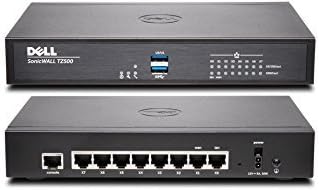
Foto 3.2: Front and rear panels of the SonicWall TZ500 appliance. The top image displays the front panel as described in Figure 3.1. The bottom image shows the rear panel, which includes the power input, a console port, and the eight RJ-45 Gigabit Ethernet ports (X0-X7) from a rear perspective.
3.1 Ogwe ihu
- USB 3.0 Ports (U0/U1): Two SuperSpeed USB ports for connecting external devices such as 3G/4G/5G wireless WAN adapters or for system backups.
- Igwe ọkụ ọnọdụ: Indicators for power, system status, and network activity.
- Ethernet Ports (X0-X7): Eight 10/100/1000Base-T Gigabit Ethernet ports for LAN and WAN connections. Each port has dedicated link/activity LEDs.
3.2 Ogwe azụ
- Ntinye ike: Connector for the power adapter.
- Ọdụ ụgbọ mmiri: RJ-45 serial port for command-line interface (CLI) access.
- Ethernet Ports (X0-X7): N'azụ view of the eight Gigabit Ethernet ports.
4. Nhazi
4.1 Mwepu na ntinye
- Carefully remove the SonicWall TZ500 appliance and all accessories from the packaging.
- Place the appliance on a stable, flat surface or install it in a rack using the provided rack-mount kit. Ensure adequate ventilation around the device to prevent overheating.
- Zere idobe ngwaọrụ n'akụkụ ebe okpomọkụ ma ọ bụ na ìhè anyanwụ.
4.2 Ijikọ ngwaọrụ
- Njikọ Ike: Plug the power cable into the appliance's power input and then into a suitable power outlet.
- Jikọọ WAN: Connect your internet service provider's modem or router to the designated WAN port (typically X1) on the SonicWall TZ500 using an Ethernet cable.
- Jikọọ LAN: Connect your internal network devices (e.g., switches, computers) to the LAN ports (e.g., X0, X2-X7) using Ethernet cables.
- Njikọ njikwa (Nhọrọ): For initial CLI configuration, connect the console cable from the appliance's console port to a serial port on your computer.
4.3 Nhazi izizi
After connecting the hardware, power on the device. The SonicWall TZ500 can be configured via a web-based management interface or through the command-line interface (CLI).
- Web Ihuenyo: Mepee a web browser on a computer connected to the LAN side of the TZ500. Enter the default IP address (e.g., 192.168.168.168) in the address bar. Follow the on-screen prompts for initial setup, including changing default passwords and configuring network settings.
- CLI: Use a terminal emulator (e.g., PuTTY) to connect to the console port. Refer to the SonicWall documentation for CLI commands and procedures.
5. Ijikwa ngwaọrụ
The SonicWall TZ500 provides a comprehensive suite of features to manage and secure your network.
5.1 Ọrụ ndị bụ isi
- Firewall: Controls inbound and outbound network traffic based on predefined security rules.
- Ntụgharị asụsụ netwọkụ (NAT): Translates private IP addresses to public IP addresses, allowing multiple devices on a private network to share a single public IP address.
- VPN (Netwọk nkeonwe mebere): Establishes secure, encrypted connections over public networks.
5.2 Atụmatụ nchekwa
The TZ500 integrates advanced security services to protect your network:
- Intrusion Prevention System (IPS): Detects and blocks network intrusions and exploits.
- Malware Protection: Scans and blocks viruses, worms, and other malicious software.
- Njikwa ngwa: Manages and restricts access to specific applications or application categories.
- Nzacha ọdịnaya: Blocks access to inappropriate or unproductive web ọdịnaya.
- Spyware Protection: Prevents and removes spyware infections.
- URL Nzacha: Ihe nzacha web access based on URL categories and reputation.
- Denial of Service (DoS) Protection: Defends against various DoS and Distributed Denial of Service (DDoS) attacks.
5.3 Nhazi netwọkụ
Nke web management interface provides tools for configuring:
- Ntọala ihu: Configure IP addresses, subnet masks, and other parameters for LAN and WAN interfaces.
- Ntugharị: Define static routes or enable dynamic routing protocols.
- Ihe nkesa DHCP: Configure the appliance to assign IP addresses to network devices automatically.
- Wireless Settings (if applicable): Configure integrated wireless access points.
6. Nlekọta
Regular maintenance ensures optimal performance and security of your SonicWall TZ500 appliance.
- Mmelite femụwe: Periodically check for and install the latest firmware updates from the SonicWall support portal. Firmware updates often include security patches and new features.
- Ndabere nhazi: Regularly back up your appliance's configuration settings. This allows for quick restoration in case of a system failure or misconfiguration.
- Log Monitoring: Review system logs regularly for any unusual activity or security alerts.
- Nyocha anụ ahụ: Ensure all cables are securely connected and that the appliance has adequate airflow. Keep the device free from dust and debris.
7. Nchọpụta nsogbu
Nkebi a na-enye usoro nhazi nsogbu maka nsogbu ndị a na-ahụkarị.
7.1 Enweghị ike
- Verify that the power cable is securely connected to both the appliance and a working power outlet.
- Jiri ngwaọrụ ọzọ lelee oghere ọkụ ahụ iji hụ na ọ na-arụ ọrụ.
- Ensure the power adapter is the correct one supplied with the device.
7.2 No Network Connectivity
- Check the Ethernet cable connections to the WAN and LAN ports. Ensure the link/activity LEDs are illuminated.
- Verify IP address configurations on the appliance and connected devices.
- Confirm that your internet service provider's modem is operational.
- Restart the SonicWall appliance and connected network devices.
7.3 Enweghị ike ịnweta Web Njikwa Njikwa
- Ensure your computer is connected to a LAN port of the TZ500.
- Verify that your computer's IP address is in the same subnet as the TZ500's LAN interface (e.g., if TZ500 is 192.168.168.168, your computer should be 192.168.168.x).
- Gbalịa ikpochapụ cache ihe nchọgharị gị ma ọ bụ jiri ihe nchọgharị dị iche.
- If the default IP address has been changed, use the new IP address.
8. Nkọwapụta
Technical specifications for the SonicWall TZ500 Network Security/Firewall Appliance:
| Njirimara | Nkọwapụta |
|---|---|
| Nọmba nlereanya | 01-SSC-0445 |
| Ibu Ibu | 1.05 Kilogram (2.31 pound) |
| Akụkụ ngwaahịa (LxWxH) | 5.91 x 8.86 x 1.38 sentimita asatọ |
| Ihe gbasara ikpe | Plastic |
| Ụdị interface | RJ45 |
| Ọnụego mbufe data | 1000 Megabits Per Second (Gigabit Ethernet) |
| RAM | 1024 MB |
| Ụdị ikuku | 802.11a, 802.11n (if applicable to specific model variant) |
| Ọnụọgụ nke ọdụ ụgbọ mmiri USB 2.0 | 2 (USB 3.0 ports are present, often backward compatible) |
| Sistemụ nrụọrụ | SonicOS 6.x |
| Nha ebe nchekwa Flash | 64 MB |
| Ọnụọgụ nke ọdụ ụgbọ mmiri | 8 (Gigabit Ethernet) |
| Ngwa gụnyere | Power cable, rack-mount kit, console cable |
9. Akwụkwọ ikike na nkwado
The SonicWall TZ500 appliance typically includes a 1-year Comprehensive Gateway Security Suite and 24x7 Support. This suite provides ongoing protection and access to technical assistance.
For detailed warranty information, technical support, or to renew your security services, please visit the official SonicWall support website or contact your authorized SonicWall reseller. Ensure you have your product's serial number available when contacting support.
Akụrụngwa dị n'ịntanetị: For the latest documentation, firmware, and knowledge base articles, please refer to the SonicWall support portal.


