1. Einleitung
This manual provides essential instructions for the proper use and care of your Kodak Classic K100 USB 2.0 128GB Flash Drive. Please read this manual thoroughly before using the device to ensure optimal performance and longevity. The Kodak K100 flash drive offers reliable storage for your data, featuring a cap and body design for protection and portability.
2. Sicherheitshinweise
- Do not expose the flash drive to extreme temperatures, direct sunlight, or high humidity.
- Lassen Sie das Gerät nicht fallen und setzen Sie es keinen starken Stößen aus.
- Halten Sie das Gerät von Wasser und anderen Flüssigkeiten fern.
- Do not attempt to disassemble or modify the flash drive. This will void the warranty.
- Ensure proper ejection of the device from your computer before removal to prevent data corruption.
3. Produktüberschreitungview
The Kodak Classic K100 USB 2.0 Flash Drive is designed for portable data storage. It features a protective cap and a standard USB Type-A connector.

Image 3.1: Kodak K100 USB Flash Drive with its protective cap removed, revealing the USB Type-A connector. The drive body is black with a red stripe and the Kodak logo, and "128GB" printed on it.
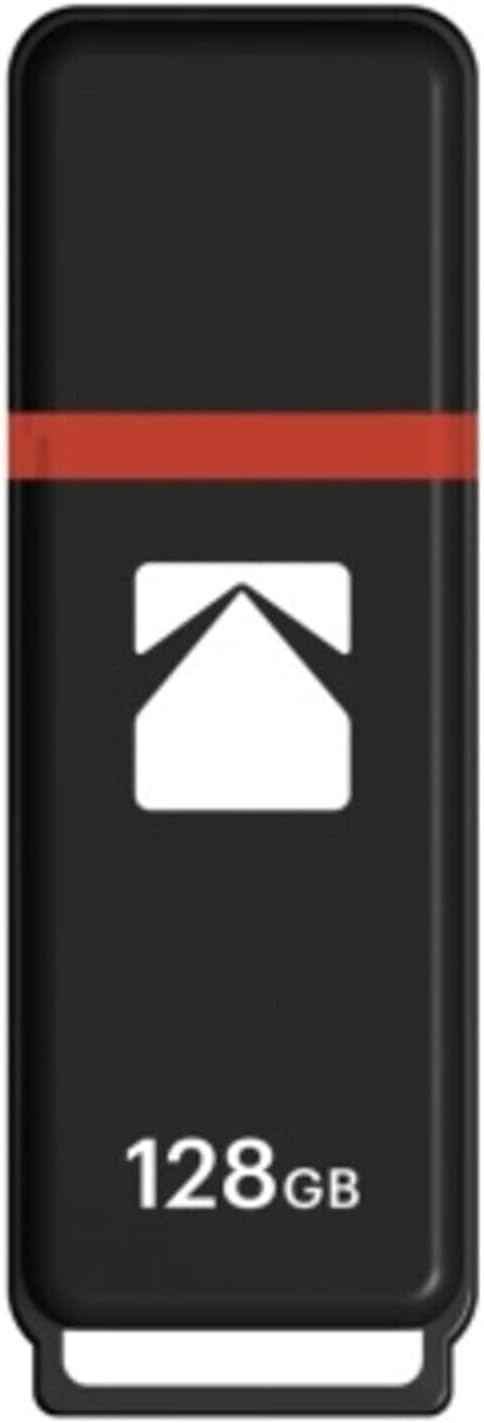
Image 3.2: Kodak K100 USB Flash Drive with its protective cap securely in place. The drive is black with a red stripe and the Kodak logo, and "128GB" printed on it.
Komponenten:
- USB-Anschluss: Standard USB 2.0 Type-A for connecting to computers and compatible devices.
- Schutzkappe: Covers the USB connector when not in use, preventing dust and damage. The cap can be securely clipped onto the rear of the drive during use.
- Drive Body: Houses the flash memory and control circuitry.
- Lanyard-Schlaufe: Located at the end of the drive for attaching a lanyard or keychain (lanyard not included).
4. Einrichtung
The Kodak K100 Flash Drive is a plug-and-play device, requiring no special driver installation for most operating systems.
Anschließen an einen Computer:
- Remove the protective cap from the USB flash drive. You can clip the cap onto the rear of the drive to prevent loss.
- Suchen Sie einen freien USB-A-Anschluss an Ihrem Computer.
- Insert the USB connector of the flash drive firmly into the USB port.
- Your computer's operating system will automatically detect the device. A notification may appear indicating that the device is ready for use.
The flash drive will appear as a removable storage device (e.g., "Removable Disk" or "KODAK K100") in your computer's file Explorer (Windows) oder Finder (macOS).
5. Bedienungsanleitung
Once connected, the Kodak K100 Flash Drive functions like any other storage device.
Übertragen Files:
- Zum Kopieren Files to the Flash Drive: Öffnen Sie den Ordner mit den files you wish to transfer. Drag and drop the files or folders into the flash drive's window, or copy them (Ctrl+C/Cmd+C) and paste them (Ctrl+V/Cmd+V) into the flash drive's directory.
- Zum Kopieren Files from the Flash Drive: Open the flash drive's window. Drag and drop the files or folders from the flash drive to your desired location on your computer, or copy them (Ctrl+C/Cmd+C) and paste them (Ctrl+V/Cmd+V) to your computer's directory.
Safely Removing the Flash Drive:
It is crucial to safely eject the flash drive before physically removing it to prevent data loss or corruption.
- Windows: Right-click on the flash drive icon in "This PC" or the system tray (bottom right corner), then select "Eject" or "Safely Remove Hardware." Wait for the "Safe to Remove Hardware" message before unplugging.
- macOS: Drag the flash drive icon from your desktop or Finder sidebar to the Trash icon, or right-click (or Control-click) the flash drive icon and select "Eject." Wait for the icon to disappear before unplugging.
- Linux: Right-click the flash drive icon on your desktop or file Manager und wählen Sie „Auswerfen“ oder „Aushängen“.
6. Wartung
Proper care ensures the longevity and reliability of your flash drive.
- Reinigung: Use a soft, dry, lint-free cloth to clean the exterior of the flash drive. Do not use liquid cleaners or solvents.
- Lagerung: When not in use, keep the protective cap on the USB connector to prevent dust and debris from entering. Store the drive in a cool, dry place, away from magnetic fields.
- Datensicherung: Regularly back up important data stored on the flash drive to another storage medium (e.g., computer hard drive, cloud storage) to prevent data loss in case of device malfunction or damage.
7. Fehlerbehebung
| Problem | Mögliche Ursache | Lösung |
|---|---|---|
| Flash drive not detected by computer. |
|
|
| Kann nicht schreiben files to the flash drive. |
|
|
| Die Datenübertragung ist langsam. |
|
|
| Fehlermeldung „Festplatte ist schreibgeschützt“. |
|
|
8. Spezifikationen
| Besonderheit | Detail |
|---|---|
| Modellname | Kodak Classic K100 |
| Artikelmodellnummer | EKMMD128GK102P10 |
| Kapazität | 128 GB |
| Schnittstelle | USB 2.0 (USB Type A) |
| Lesegeschwindigkeit | Bis zu 15 MB/s |
| Schreibgeschwindigkeit | Bis zu 5 MB/s |
| Kompatibilität | Windows 10, 8, 7, Vista, XP; Mac OS 10.4 or later; Linux 2.6.31 or higher |
| Farbe | Red (as per current product variant) |
| Abmessungen (LxBxH) | 4.6 x 3.6 x 0.6 Zoll |
| Gewicht | 1.92 Unzen |
| Besondere Merkmale | Compact, Lightweight, Cap clips onto back |
9. Garantie und Support
For warranty information and technical support regarding your Kodak Classic K100 USB 2.0 Flash Drive, please refer to the official Kodak webBesuchen Sie die Website oder kontaktieren Sie den Kundendienst. Einzelheiten finden Sie in der Regel in Ihren Kaufunterlagen oder auf der Produktverpackung.
Online-Hilfe: Besuchen Sie die offizielle KODAK-Website. webWebsite mit FAQs, Treiber-Downloads (falls zutreffend) und Kontaktinformationen.
Datenwiederherstellung: While this product is designed for reliability, data loss can occur. Consider purchasing a data recovery plan for critical data, if available from your retailer. Always back up important files.


