
YATOINTO 4W-BLUE
YATOINTO Rope Hoist Pulley System Instruction Manual
Model: 4W-BLUE
1. Introduction
This manual provides instructions for the safe and effective use of the YATOINTO Rope Hoist Pulley System, Model 4W-BLUE. This heavy-duty pulley block and tackle system is designed for lifting and moving heavy objects with an 8:1 lifting power ratio, featuring a 65ft diamond-braided polypropylene fiber rope and a 2200 lbs (4400 lbs breaking strength) load capacity. Please read this manual thoroughly before operation.
Safety Information
- Always inspect the pulley system, rope, and hooks for damage before each use. Do not use if any components are worn or damaged.
- Ensure the anchor point for the pulley system is secure and rated for the load being lifted.
- Do not exceed the maximum working load of 2200 lbs (1000 kg).
- Keep hands and clothing clear of moving parts during operation.
- Always maintain control of the rope. Do not allow the load to drop freely.
- Wear appropriate personal protective equipment (PPE), such as gloves and safety glasses.
- This system is not designed for overhead lifting where people are present underneath the load.
2. Product Components
The YATOINTO Rope Hoist Pulley System consists of the following main components:
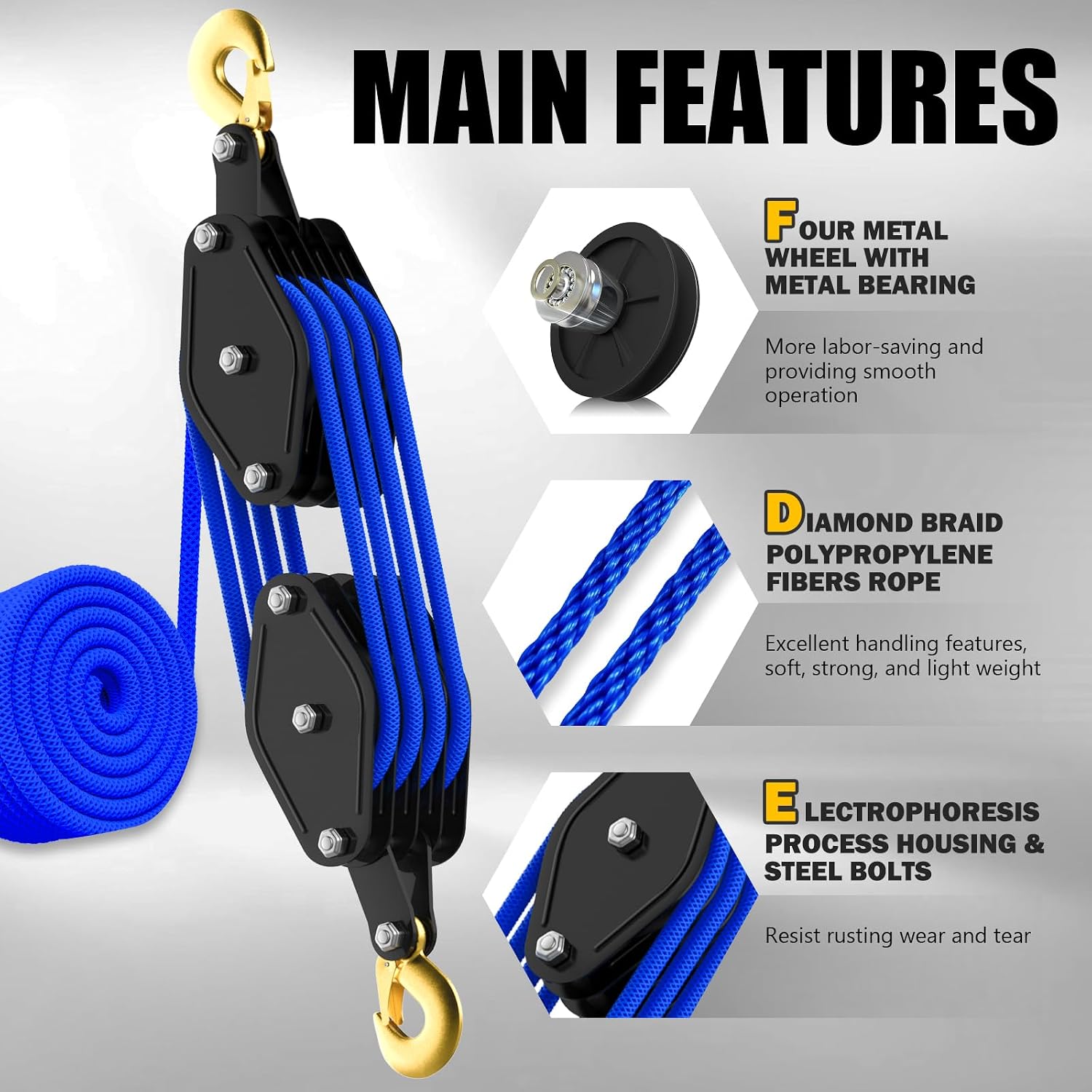
- Pulley Blocks: Two blocks, each with multiple metal wheels and bearings, designed for smooth rope movement.
- Rope: 65 ft (19.8 m) of diamond-braided polypropylene fiber rope, known for its strength and lightweight properties.
- Hooks: Galvanized alloy steel hooks on each pulley block for secure attachment to anchor points and loads.
- Housing: Black-coated housing with an electrophoretic coating process for enhanced rust and scratch resistance.

3. Specifications
| Feature | Detail |
|---|---|
| Model Number | 4W-BLUE |
| Max Working Load | 2200 lbs (1000 kg) |
| Breaking Strength | 4400 lbs (2000 kg) |
| Lifting Ratio | 8:1 |
| Rope Material | High-Density Polypropylene |
| Rope Diameter | 1/4 inch |
| Rope Length | 65 ft (19.8 m) |
| Housing Material | Anti-rust electrophoretic coating housing |
| Bearing Type | Metal Needle Bearings |
| Item Weight | 3.65 pounds |
| Package Dimensions | 8.46 x 5.2 x 4.37 inches |

4. Setup Instructions
Follow these steps to set up your YATOINTO Rope Hoist Pulley System:
- Identify Anchor Points: Select a strong, stable overhead anchor point for the upper pulley block and a secure attachment point on the load for the lower pulley block. Ensure both points can safely support the intended load.
- Attach Upper Pulley: Securely attach the hook of the upper pulley block to your chosen overhead anchor point. Verify that the hook is fully closed and locked, if applicable.
- Attach Lower Pulley: Securely attach the hook of the lower pulley block to the load you intend to lift. Ensure the hook is fully closed and locked.
- Rope Management: Ensure the 65ft rope is free of tangles and knots. The rope should be threaded through the pulley blocks as shown in the product diagrams to achieve the 8:1 mechanical advantage.
- Test Connection: Before lifting the full load, apply a small amount of tension to the rope to ensure all connections are secure and the system is stable.

5. Operating Instructions
Once the pulley system is securely set up, follow these steps for safe operation:
- Clear the Area: Ensure the lifting path is clear of obstructions and personnel.
- Apply Lifting Force: Pull the free end of the rope steadily and smoothly to lift the load. The 8:1 ratio significantly reduces the effort required.
- Control the Load: Maintain a firm grip on the rope at all times. Avoid sudden jerks or releases.
- Secure the Load: Once the load is at the desired height, secure the rope to prevent accidental lowering. This can be done by tying off the rope to a secure point or using a friction hitch if you are experienced with such knots.
- Lowering the Load: To lower the load, slowly release the rope while maintaining control. Ensure a clear path below the load.
- Disassembly: After use, carefully lower the load, unhook the pulley blocks, and coil the rope neatly for storage.

6. Maintenance
Proper maintenance ensures the longevity and safe operation of your pulley system:
- Regular Inspection: Before and after each use, inspect the rope for fraying, cuts, or excessive wear. Check pulley blocks for cracks, bends, or loose components. Ensure hooks are not deformed and their safety latches (if present) operate correctly.
- Cleaning: Clean the rope and pulley blocks with mild soap and water if they become dirty. Rinse thoroughly and allow to air dry completely before storage.
- Lubrication: The metal needle bearings are designed for smooth operation. If any squeaking or stiffness occurs, a light application of a suitable lubricant to the bearing points may be beneficial.
- Storage: Store the pulley system in a dry, clean place, away from direct sunlight and extreme temperatures. Coil the rope neatly to prevent tangles.
7. Troubleshooting
Here are some common issues and their potential solutions:
| Problem | Possible Cause | Solution |
|---|---|---|
| Difficulty pulling rope / Stiff operation | Rope tangled or twisted; Pulleys dirty or dry; Load too heavy. | Untangle rope; Clean and lubricate pulleys; Reduce load to within specifications. |
| Rope fraying or showing wear | Friction against sharp edges; Overloading; Age/wear. | Inspect anchor points and load for sharp edges; Ensure load is within limits; Replace rope if significantly worn. |
| Load not lifting smoothly | Uneven pulling force; Rope not properly seated in pulleys. | Apply steady, even force; Re-thread rope to ensure it sits correctly in all pulley grooves. |
8. Customer Support
If you have any questions or require assistance with your YATOINTO Rope Hoist Pulley System, please contact our customer satisfaction team. Refer to your product packaging or the retailer's website for specific contact information.
Ask a question about this manual
Ask about setup, troubleshooting, compatibility, parts, safety, or missing instructions. Manuals+ will review the question and use this page’s manual context to help answer it.