
Introduction
This user guide provides detailed instructions for operating the ICOM IC-7300 transceiver. It covers essential setup procedures, operational functions, advanced features, and troubleshooting tips to help both new and experienced ham radio operators maximize their experience with the device.
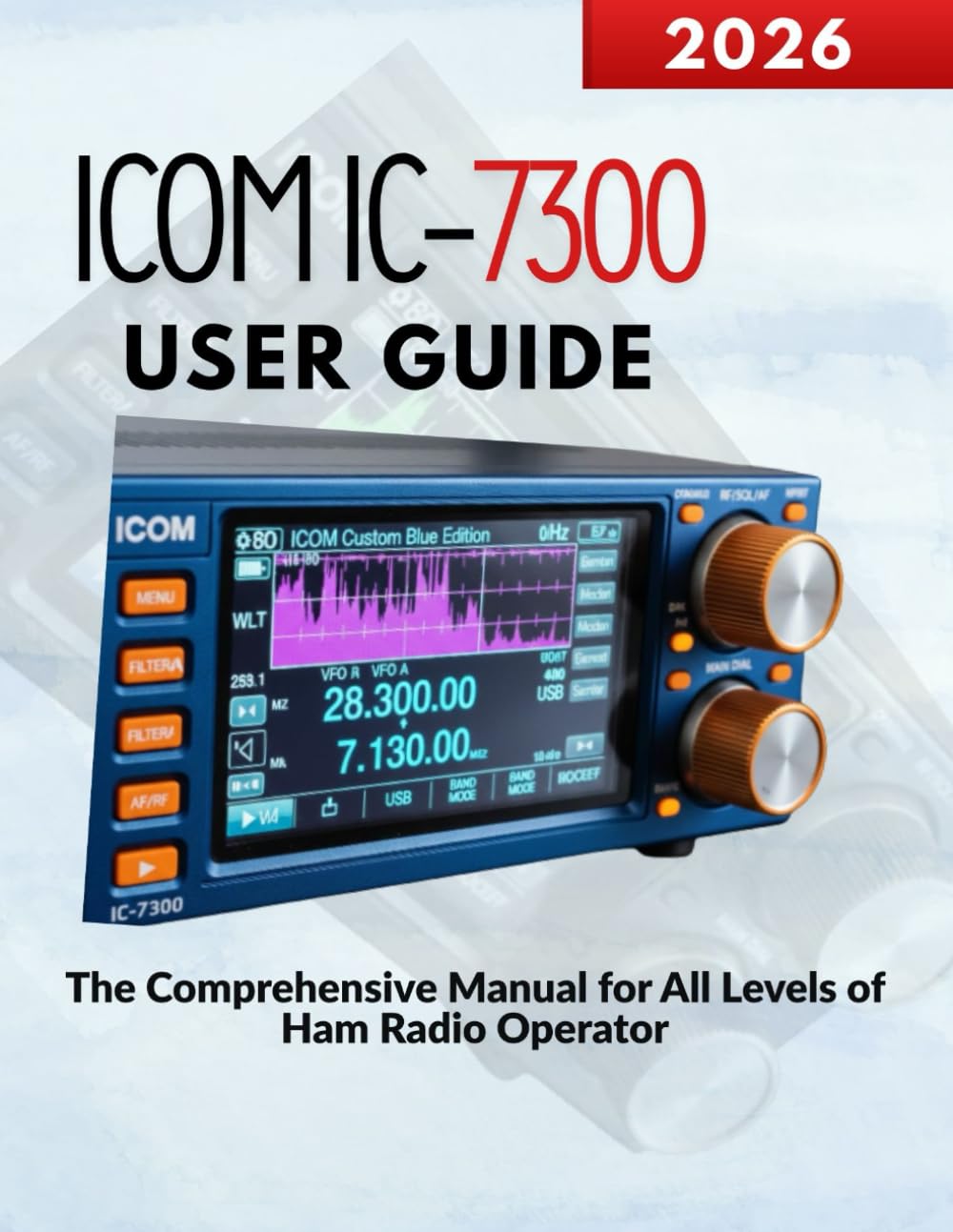
Image: Front cover of the ICOM IC-7300 User Guide book. This image displays the title and design of the manual itself.
Setup
Proper setup is crucial for optimal performance of your ICOM IC-7300. This section outlines the initial steps to get your transceiver operational.
1. Unpacking and Inspection
- Carefully remove all components from the packaging.
- Verify that all accessories listed in the packing list are present.
- Inspect the transceiver for any signs of physical damage.
2. Connecting Power
Connect the supplied DC power cable to the transceiver's DC IN jack. Ensure the power supply is rated for the IC-7300's requirements (typically 13.8V DC). Connect the other end to a stable power source, observing correct polarity.
3. Antenna Connection
Connect your antenna cable to the ANT connector on the rear panel. Use a high-quality coaxial cable with appropriate connectors. Ensure the antenna is properly tuned for the operating frequencies to prevent damage to the transceiver.
4. Initial Settings
Upon first power-on, the transceiver may require initial setup of date, time, and basic operating preferences. Refer to the detailed instructions in the manual for navigating the menu system to configure these settings.
Operating
This section details the various operational aspects of the ICOM IC-7300, from basic tuning to advanced digital modes.
1. Basic Operation
- Power On/Off: Press and hold the power button to turn the unit on or off.
- Frequency Tuning: Use the main dial to adjust the operating frequency. The step size can be changed via the menu.
- Mode Selection: Press the MODE button to cycle through available modes such as USB, LSB, CW, RTTY, AM, and FM.
- Volume Control: Adjust the AF gain knob for desired audio output level.
2. Digital Signal Processing (DSP)
The IC-7300 features advanced DSP capabilities to enhance signal quality. Key DSP functions include:
- Noise Reduction (NR): Reduces random noise components in the received signal.
- Automatic Gain Control (AGC): Automatically adjusts receiver gain to maintain a consistent audio output level.
- Notch Filter: Eliminates specific interfering tones from the received audio.
3. Advanced Digital Modes
The IC-7300 supports various digital modes, including FT8, RTTY, and PSK31. Connecting your transceiver to a computer via USB allows for seamless integration with digital mode software. Detailed configuration steps for each mode are provided in the full manual.
4. External Device Connection
The transceiver can be connected to external devices such as linear amplifiers, tuners, and computer interfaces. Refer to the manual for specific connection diagrams and settings for each type of device.
Maintenance
Regular maintenance ensures the longevity and reliable operation of your ICOM IC-7300.
1. Cleaning
- Wipe the exterior of the transceiver with a soft, dry cloth.
- For stubborn dirt, use a cloth lightly dampened with water and a mild detergent, then wipe dry.
- Do not use strong solvents or abrasive cleaners.
2. Firmware Updates
Periodically check the ICOM website for firmware updates. Keeping your transceiver's firmware up-to-date can provide new features, performance enhancements, and bug fixes. Follow the instructions provided by ICOM carefully during the update process.
3. Environmental Considerations
- Operate the transceiver in a well-ventilated area to prevent overheating.
- Avoid exposing the unit to direct sunlight, extreme temperatures, or high humidity.
- Keep the transceiver away from dust and moisture.
Troubleshooting
This section addresses common issues you might encounter with your ICOM IC-7300 and provides basic troubleshooting steps.
1. No Power
- Check all power cable connections.
- Verify the power supply is functioning correctly and providing the correct voltage.
- Check the transceiver's fuse.
2. No Audio Output
- Ensure the AF gain (volume) knob is turned up.
- Check headphone or external speaker connections.
- Verify that the squelch level is not set too high.
3. Poor Transmission/Reception
- Inspect antenna connections and cable integrity.
- Ensure the antenna is properly tuned for the operating frequency.
- Check the SWR (Standing Wave Ratio) using the built-in meter. High SWR can indicate an antenna issue.
- Verify correct mode selection for the desired communication.
For more complex issues, consult the detailed troubleshooting section within the comprehensive manual or contact ICOM support.
Specifications
The following specifications pertain to the ICOM IC-7300 User Guide book itself, which is the product being described.
| Attribute | Value |
|---|---|
| ASIN | B0GF26G5T5 |
| Publisher | Independently published |
| Publication Date | January 5, 2026 |
| Language | English |
| Print Length | 131 pages |
| ISBN-13 | 979-8242657724 |
| Item Weight | 14.4 ounces |
| Dimensions | 8.5 x 0.3 x 11 inches |

Image: Back cover of the ICOM IC-7300 User Guide book. This image shows the back cover, including the ISBN barcode.


