
1. Introduction
Thank you for choosing the BitFenix AL118 ATX Mid Tower PC Case. This manual provides essential information for the proper installation, operation, and maintenance of your new PC case. Please read this manual thoroughly before beginning installation to ensure correct setup and to prevent any damage to the product or its components. Keep this manual for future reference.
Safety Information
- Always disconnect the power supply from the wall outlet before installing or removing any components.
- Handle components with care to avoid electrostatic discharge (ESD) damage. Consider using an anti-static wrist strap.
- Ensure all cables are properly routed and secured to prevent interference with fans or other moving parts.
- Do not open the power supply unit (PSU) as it contains high voltage components.
- Keep the case away from direct sunlight, high temperatures, and moisture.
2. Product Overview and Features
The BitFenix AL118 is a high-performance ATX Mid Tower PC case designed for enthusiasts. It features a tempered glass side panel, integrated ARGB lighting, and comes equipped with a 1000W 80+ Gold Gen5 ATX 3.0 power supply unit. The case offers extensive compatibility for various motherboard sizes, GPUs, and cooling solutions.
Key Features:
- Form Factor: ATX Mid Tower
- Power Supply: Integrated 1000W 80+ Gold Gen5 ATX 3.0 PSU
- Side Panel: Tempered Glass
- Lighting: Addressable RGB (ARGB) elements
- Motherboard Support: MicroATX, Mini-ITX (ATX implied by case type)
- Front I/O: 1 x USB 3.2 Type-C, 2 x USB 3.0
- Storage Bays: 2 x 2.5" internal, 1 x 3.5" internal
- GPU Clearance: Up to 400mm
- Cooling Support:
- Top Radiator: 240mm, 280mm, 360mm
- Rear Radiator: 1 x 120mm
- Rear Fan: 1 x 120mm (pre-installed ARGB)
- Top Fan: 3 x 120mm or 3 x 140mm (support)
- Side Fan: 3 x 120mm (pre-installed ARGB)
3. Setup Guide
Follow these steps to properly set up your BitFenix AL118 PC case and install your components.
3.1 Unpacking and Initial Inspection
- Carefully remove the case from its packaging.
- Inspect the case for any signs of damage during transit. If damaged, contact your retailer immediately.
- Remove the tempered glass side panel by unscrewing the thumb screws (if present) or releasing the latch mechanism. Place it on a soft, flat surface to prevent scratches.
- Locate the accessory box inside the case, which contains screws, cable ties, and other mounting hardware.
3.2 Motherboard Installation
- Ensure the correct standoffs are installed for your motherboard form factor (MicroATX, Mini-ITX). Additional standoffs may be in the accessory box.
- Install the I/O shield into the rear opening of the case.
- Carefully place your motherboard onto the standoffs, aligning the screw holes.
- Secure the motherboard with the provided screws. Do not overtighten.

Figure 3.2.1: Internal view of the case, highlighting the motherboard tray and various mounting points for fans and components.
3.3 Graphics Card (GPU) Installation
- Remove the necessary expansion slot covers from the rear of the case, corresponding to your GPU's size.
- Insert your GPU into the appropriate PCIe slot on the motherboard until it clicks into place.
- Secure the GPU to the case with screws.
- Connect the required PCIe power cables from the PSU to the GPU.
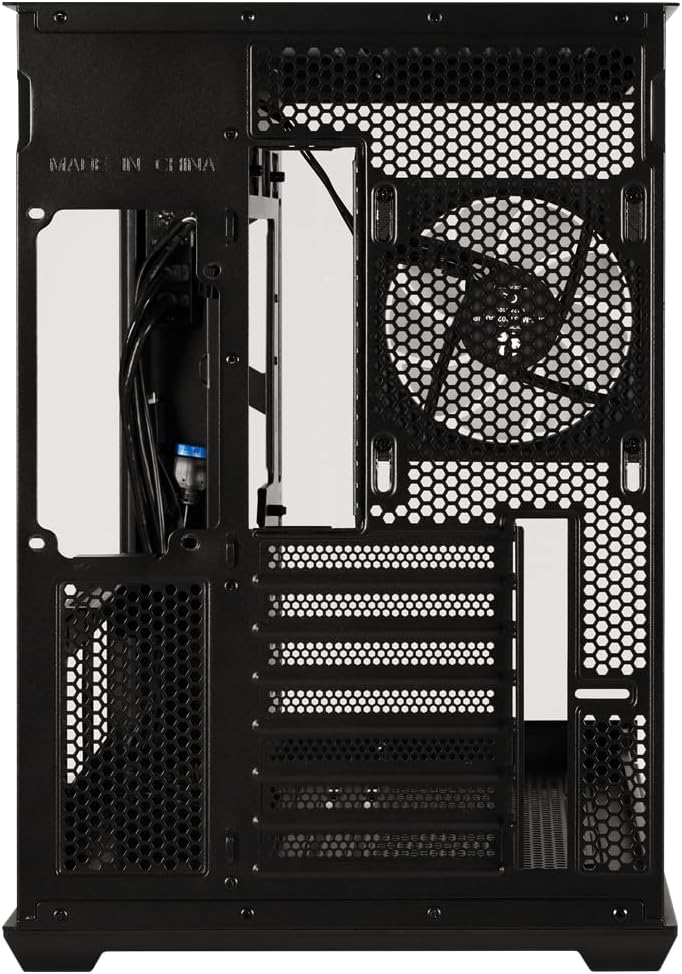
Figure 3.3.1: Rear view of the case, showing the expansion slots where graphics cards are mounted and the pre-installed rear fan.
3.4 Storage Drive Installation (2.5" SSD/HDD, 3.5" HDD)
- Locate the 2.5" drive mounts (2 available) and 3.5" drive bay (1 available). These are typically found behind the motherboard tray or in a dedicated drive cage.
- For 2.5" drives, secure them to the mounting brackets with screws.
- For 3.5" drives, slide them into the drive cage and secure with screws or tool-less clips if available.
- Connect SATA data cables to the motherboard and SATA power cables from the PSU to each drive.
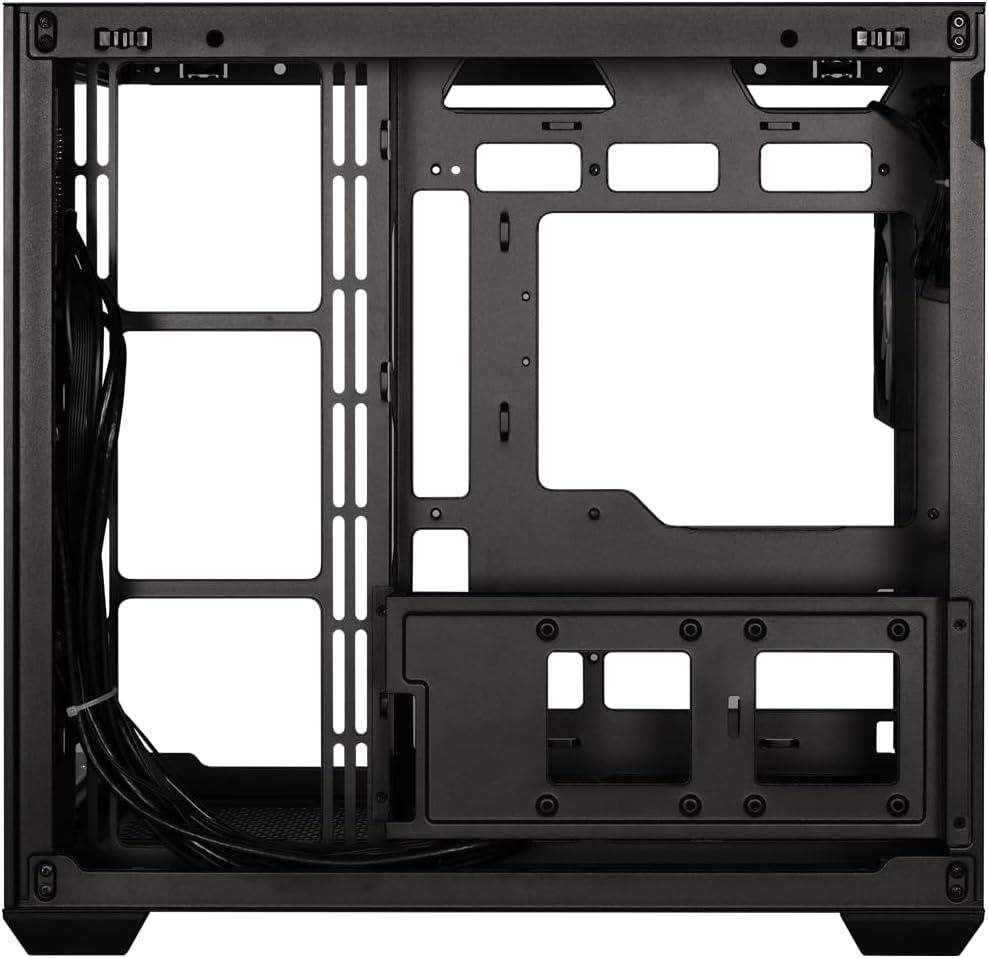
Figure 3.4.1: View behind the motherboard tray, illustrating the cable management channels and mounting locations for 2.5-inch and 3.5-inch storage drives.
3.5 Power Supply Unit (PSU) Connections
Your BitFenix AL118 case comes with a pre-installed 1000W 80+ Gold Gen5 ATX 3.0 PSU. Ensure all necessary power cables are connected:
- 24-pin ATX Power: Connect to the motherboard.
- 8-pin (4+4) EPS/CPU Power: Connect to the motherboard CPU power header.
- PCIe Power: Connect to your graphics card(s) as required.
- SATA Power: Connect to your storage drives.
- Peripheral/Molex Power: Connect to any other components requiring this type of power.
3.6 Front Panel Connections
Connect the front panel cables to the corresponding headers on your motherboard:
- USB 3.2 Type-C: Connect the internal USB-C header cable to your motherboard's USB 3.2 Gen2 Type-C header.
- USB 3.0: Connect the internal USB 3.0 header cable to your motherboard's USB 3.0 header.
- HD Audio: Connect to your motherboard's audio header.
- Power SW, Reset SW, HDD LED, Power LED: Connect these small connectors to the front panel header pins on your motherboard according to your motherboard manual.

Figure 3.6.1: Internal view showing the pre-installed ARGB fans and the routing of front panel I/O cables, including USB 3.2 Type-C and USB 3.0 connections.
3.7 Cable Management
Utilize the cable routing cutouts and tie-down points behind the motherboard tray to manage cables. Proper cable management improves airflow and aesthetics.
- Route main power cables (24-pin, EPS) through the largest cutouts.
- Use cable ties or Velcro straps (included in accessory box) to bundle and secure cables.
- Ensure no cables obstruct fan blades or airflow paths.
4. Operating Instructions
4.1 Powering On Your System
- Once all components are installed and cables connected, replace the tempered glass side panel.
- Connect the AC power cord to the PSU and then to a wall outlet.
- Flip the power switch on the back of the PSU to the 'ON' position.
- Press the power button on the front panel of your case.
4.2 ARGB Lighting Control
The BitFenix AL118 features Addressable RGB (ARGB) lighting. The control method depends on how the ARGB components are connected:
- Motherboard Sync: If the ARGB cables are connected to a compatible 3-pin 5V ARGB header on your motherboard, you can control the lighting effects using your motherboard's RGB software (e.g., ASUS Aura Sync, MSI Mystic Light, Gigabyte RGB Fusion, ASRock Polychrome Sync).
- Integrated Controller: If the case includes a built-in ARGB controller (often connected to a reset button or dedicated ARGB button), you can cycle through pre-programmed lighting modes by pressing that button. Refer to the specific controller's instructions if applicable.
5. Maintenance
Regular maintenance helps ensure optimal performance and longevity of your PC components.
- Dust Filters: The case is equipped with dust filters (e.g., top, front, bottom). Regularly remove and clean these filters with water and mild soap, or by vacuuming/brushing them. Ensure they are completely dry before re-installing.
- Interior Cleaning: Periodically use compressed air to blow dust out of the case interior, especially from fan blades, heatsinks, and vents. Ensure the system is powered off and unplugged before cleaning.
- Tempered Glass: Clean the tempered glass panel with a microfiber cloth and a non-abrasive glass cleaner. Avoid harsh chemicals.
6. Troubleshooting
If you encounter issues with your PC build, refer to the following common troubleshooting steps:
- No Power / System Not Starting:
- Ensure the PSU power switch is in the 'ON' position.
- Check that the AC power cord is securely connected to both the PSU and the wall outlet.
- Verify all PSU cables (24-pin, EPS, PCIe) are firmly connected to the motherboard and components.
- Confirm the front panel power switch cable is correctly connected to the motherboard header.
- No Display Output:
- Ensure your monitor is connected to the graphics card (GPU) output, not the motherboard's integrated graphics output (unless you are using integrated graphics).
- Reseat the graphics card in its PCIe slot.
- Check that the GPU's power cables are securely connected.
- Fans Not Spinning / ARGB Not Working:
- Verify that all fan power cables are connected to the motherboard fan headers or a fan controller.
- Check ARGB cables are connected to a compatible 3-pin 5V ARGB header on the motherboard or an ARGB controller.
- If using motherboard software, ensure it is installed and configured correctly.
- Overheating:
- Ensure all case fans are spinning and oriented correctly for optimal airflow (intake/exhaust).
- Clean dust filters and case interior as described in the Maintenance section.
- Verify CPU cooler and GPU cooler are properly installed and functioning.
7. Specifications
| Feature | Specification |
|---|---|
| Model Name | BitFenix AL118 1000W 80+Gold Gen5 ATX 3.0 TemperedGlass ARGB ATX MidTower SiyahKasa BFC-ALB100KKGSK-4A |
| Part Number | BFC-ALB100KKGSK-4A |
| Case Type | ATX Mid Tower |
| Motherboard Compatibility | MicroATX, Mini-ITX (ATX implied by case type) |
| Power Supply Unit (PSU) | 1000W 80+ Gold Gen5 ATX 3.0 (Pre-installed) |
| PSU Location | Bottom |
| Side Panel | Tempered Glass |
| Front I/O Ports | 1 x USB 3.2 Type-C, 2 x USB 3.0 |
| Internal 2.5" Drive Bays | 2 |
| Internal 3.5" Drive Bays | 1 |
| Max GPU Length | 400mm |
| Top Radiator Support | 240mm, 280mm, 360mm |
| Rear Radiator Support | 1 x 120mm |
| Front Panel Fan Support | None (Side fans are present) |
| Rear Panel Fan Support | 1 x 120mm |
| Top Panel Fan Support | 3 x 120mm, 3 x 140mm |
| Pre-installed Fans (Side) | 3 x 120mm ARGB |
| Pre-installed Fans (Rear) | 1 x 120mm ARGB |
| Product Dimensions | 48 x 45.5 x 34.5 cm |
| Product Weight | 8 Kilograms |
8. Warranty and Support
BitFenix products are manufactured to the highest quality standards. For specific warranty terms and conditions, please refer to the warranty card included with your product or visit the official BitFenix website. If you encounter any issues that cannot be resolved using this manual, please contact BitFenix customer support or your retailer for assistance.
Official BitFenix Website: www.bitfenix.com


