1. Introduction
This manual provides essential information for the safe and efficient operation of your VEVOR 3000W Hybrid Solar Inverter, Model GD3024JMH. Please read it thoroughly before installation and use to ensure proper functionality and to prevent damage or injury. This inverter is designed to seamlessly integrate solar power with battery storage and grid power, providing a reliable energy solution for various applications.
2. Safety Information
Failure to follow these safety instructions may result in electric shock, fire, or serious injury.
- Electrical Hazard: All electrical installations must be performed by qualified and licensed personnel in accordance with local and national electrical codes.
- Battery Safety: Ensure correct polarity when connecting batteries. Incorrect connections can cause severe damage to the inverter and batteries, and pose a fire risk. Always use appropriate battery cables and fuses.
- Ventilation: Ensure adequate and unobstructed ventilation around the inverter to prevent overheating. Do not install in enclosed spaces without proper airflow.
- Grounding: The inverter must be properly grounded to prevent electric shock. Follow all grounding instructions in the detailed wiring diagrams.
- Environment: Do not expose the inverter to rain, snow, direct sunlight, or liquids. Install in a dry, cool, and well-protected area.
- Maintenance: Disconnect all power sources (solar, battery, AC input) before performing any maintenance or cleaning.
3. Product Overview
The VEVOR 3000W Hybrid Solar Inverter is an advanced all-in-one power solution that integrates a pure sine wave inverter, an 80A MPPT solar charge controller, and a battery charger into a single unit. It is designed to provide stable 230V AC power from a 24V DC battery bank, utilizing solar energy efficiently. This inverter is ideal for small homes, campers, boats, and off-grid solar systems, ensuring your essential appliances run smoothly.
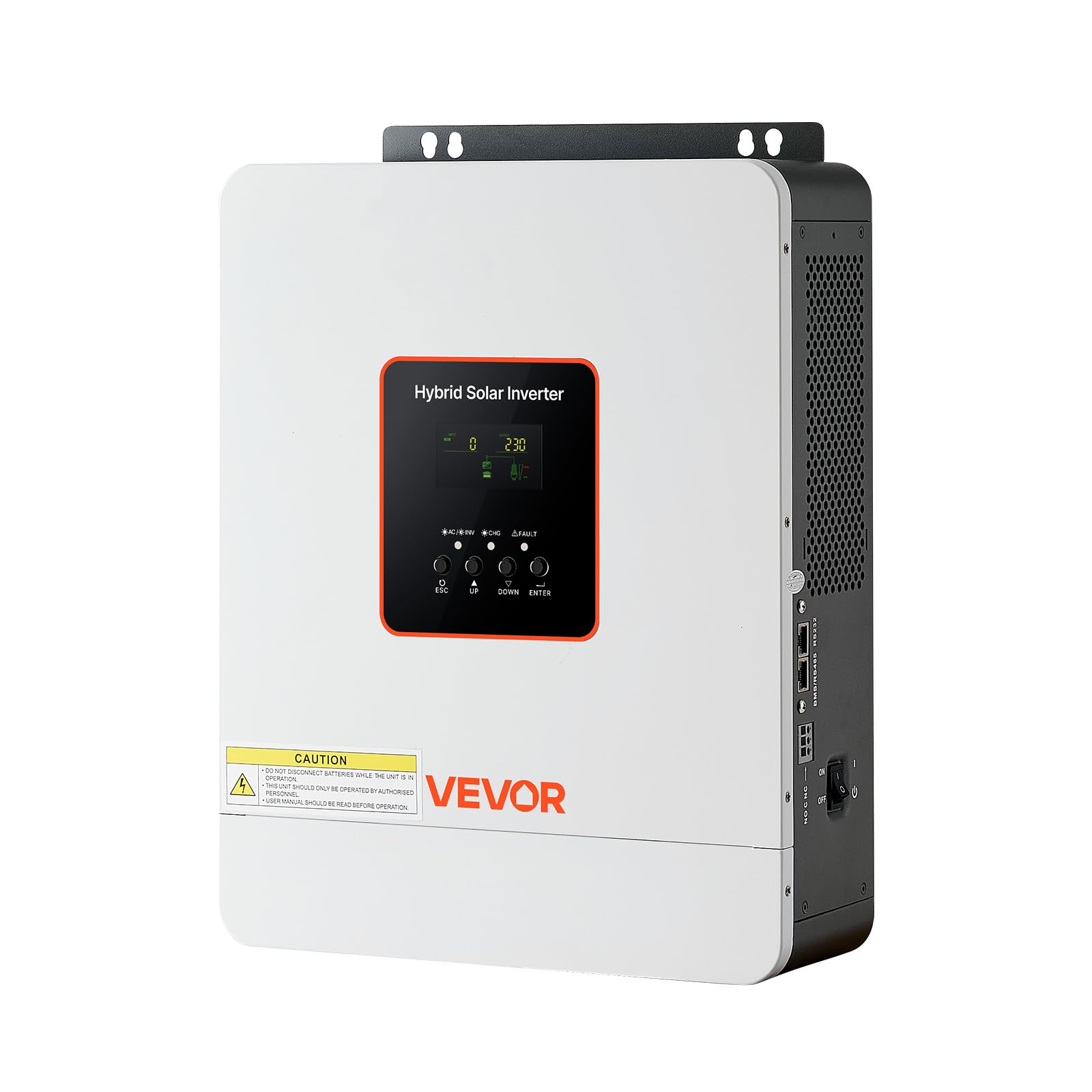
Front view of the VEVOR 3000W Hybrid Solar Inverter, showcasing its compact design and integrated display.
Key features include:
- 2-in-1 Hybrid Design: Combines inverter and MPPT controller for streamlined power management.
- Pure Sine Wave Output: Delivers clean, stable electricity suitable for sensitive electronics.
- High Conversion Efficiency: Advanced MPPT technology ensures up to 99% solar energy conversion.
- Wide Battery Compatibility: Supports 24V lithium and lead-acid battery systems.
- Comprehensive Protections: Built-in safeguards against over-temperature, over-current, over-voltage, under-voltage, short circuit, and overload.

The VEVOR 3000W Hybrid Solar Inverter connected and powering various household appliances like a TV and laptop, demonstrating its capability to keep devices running smoothly.
4. Setup and Installation
Proper installation is crucial for the safe and efficient operation of your hybrid solar inverter. Always ensure the inverter is turned OFF and all power sources are disconnected before making any connections. Refer to the detailed wiring diagrams provided in the complete user manual for specific connection instructions.
4.1 Key Connections
- AC Input: Connect the inverter to your grid power supply or a compatible generator.
- AC Output: Connect your household appliances or load center to these terminals.
- PV Input: Connect your solar panels to the PV input terminals, ensuring correct polarity (+ and -).
- Battery Connections: Connect your 24V battery bank to the positive (POS+) and negative (NEG-) terminals. Double-check polarity to avoid damage.
- Grounding: Connect the inverter to a reliable earth ground.

Close-up of the inverter's rear panel, showing terminals for AC input, AC output, PV input, and battery connections. Ensure all connections are secure and correctly polarized.
4.2 Battery Compatibility
This hybrid solar inverter is designed for 24V battery systems and supports various battery types, including:
- Lead-Acid Batteries (SLD, FLD, GEL, AGM)
- Lithium Batteries (LiFePO4)
- Custom battery types (configurable via settings)

The inverter is compatible with 24V battery systems, including lead-acid (SLD, FLD, GEL, AGM) and lithium (LI) batteries, offering flexible energy storage options.
5. Operating Instructions
The inverter features an intuitive LCD display and control buttons for monitoring system status and adjusting operational parameters. Familiarize yourself with the display and navigation before use.
5.1 LCD Display and Navigation
The LCD screen provides real-time information about your solar power system. Use the ESC, UP, DOWN, and ENTER buttons to navigate through menus and adjust settings.

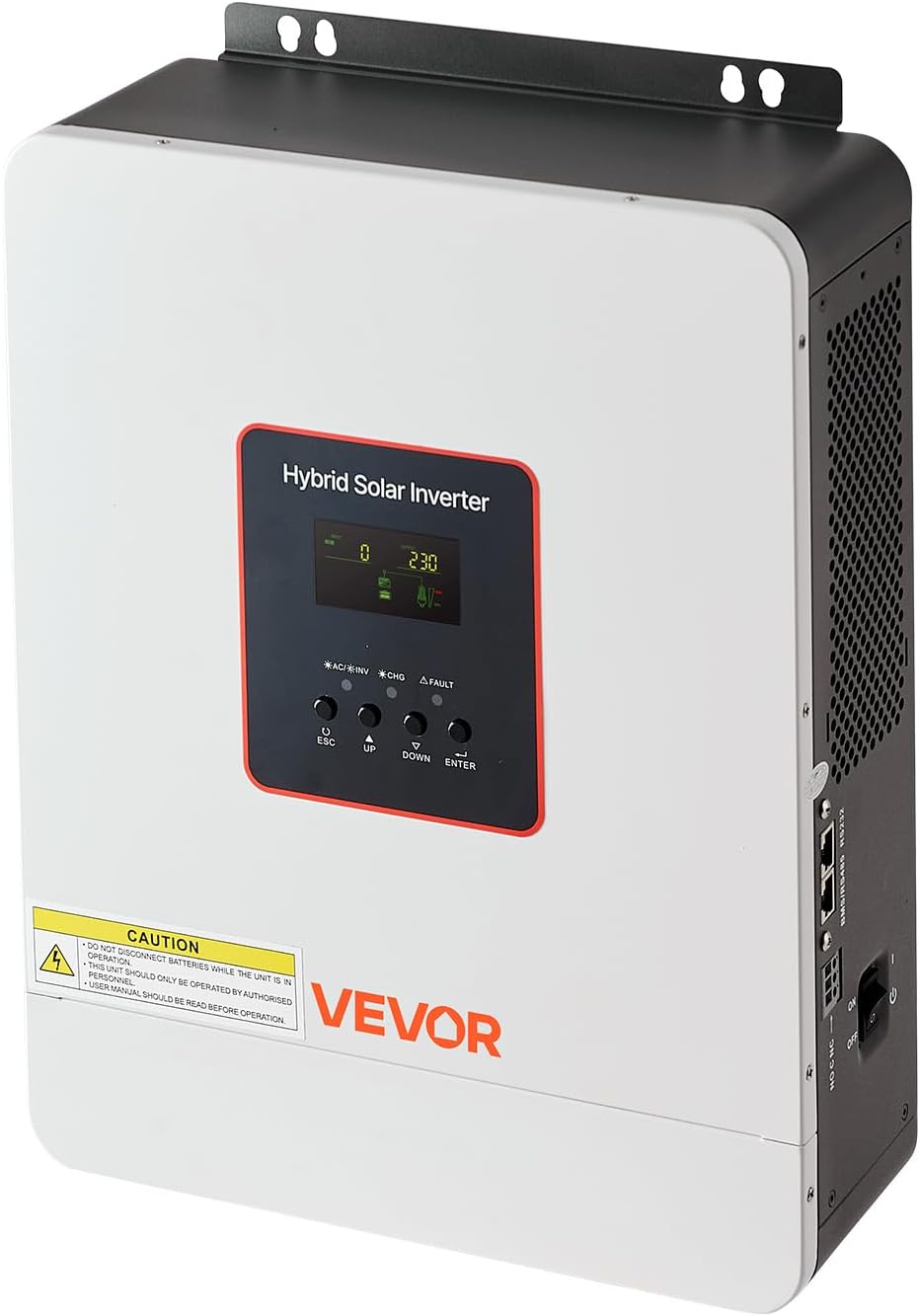
The LCD screen provides real-time data on input voltage, output voltage, battery charge, and power flow, allowing users to monitor system performance.
5.2 Displayed Information
- Input Information: Displays the current voltage and power being received from solar panels (PV) or the AC input (grid/generator).
- Output Information: Shows the AC output voltage, frequency, and the percentage of load currently being drawn from the inverter.
- Battery Information: Indicates the battery voltage, charge/discharge current, and state of charge.
- Fault Indication: Alerts for system errors, warnings, or protection activations. Refer to the manual's troubleshooting section for error codes.
- Charging/Discharging Priority: Allows configuration of power source priority (e.g., Solar first, Utility first, SBU mode).
6. Maintenance
Regular maintenance is essential to ensure the longevity, safety, and optimal performance of your VEVOR Hybrid Solar Inverter.
- Cleaning: Keep the inverter's exterior clean and free from dust and debris. Ensure that all ventilation openings are clear and unobstructed to allow for proper airflow and cooling. Use a dry, soft cloth for cleaning.
- Connections: Periodically inspect all electrical connections (AC input/output, PV input, battery terminals) for tightness, corrosion, or damage. Loose connections can lead to overheating and system malfunction.
- Battery Health: Monitor your battery bank's voltage and ensure it is within the recommended operating range. Follow the battery manufacturer's guidelines for maintenance and charging cycles.
- Environment: Ensure the operating environment remains within the specified temperature and humidity ranges. Extreme conditions can reduce the inverter's lifespan and efficiency.
- Inspection: Regularly check for any signs of physical damage, unusual noises, or odors. If any issues are detected, disconnect power immediately and consult the troubleshooting guide or VEVOR support.
7. Troubleshooting
If you encounter issues with your VEVOR Hybrid Solar Inverter, refer to the following common troubleshooting steps. For persistent problems or error codes not listed, please consult the full user manual or contact VEVOR customer support.
7.1 Common Issues and Solutions
- No Power Output:
- Check if the inverter's ON/OFF switch is in the 'ON' position.
- Verify that the AC input power supply is active and connected correctly.
- Ensure battery connections are secure and battery voltage is within the operational range.
- Check for any tripped circuit breakers or blown fuses in the system.
- Low Solar Charging:
- Ensure solar panels are clean and free from shading.
- Check all PV input connections for tightness and correct polarity.
- Verify that solar panel voltage and current are within the inverter's specifications.
- Overload Warning/Shutdown:
- Reduce the total connected load. The total wattage of appliances must not exceed the inverter's rated output power (3000W).
- Some appliances have high startup (surge) power; ensure the inverter's surge capacity is not exceeded.
- Over-Temperature Warning/Shutdown:
- Ensure the inverter has adequate ventilation and that cooling vents are not blocked.
- Check the ambient temperature; if it's too high, consider relocating the inverter or improving cooling.
- Battery Not Charging:
- Verify battery connections and ensure they are secure.
- Check solar panel input and AC input for proper voltage and current.
- Ensure battery type settings on the inverter match your installed battery type.
8. Specifications
Below are the technical specifications for the VEVOR 3000W Hybrid Solar Inverter (Model: GD3024JMH).
A visual representation of the inverter's dimensions and a summary of its technical specifications, including power output, battery compatibility, and operating conditions.
| Feature | Detail |
|---|---|
| Model Number | GD3024JMH |
| Inverter Output Power | 3000W |
| Output Waveform | Pure Sine Wave |
| Compatible Battery Voltage | 24V DC |
| MPPT Charge Controller | 24V, 80A |
| Material | Powder-Coated Sheet Metal |
| Compatible Battery Types | Lead-Acid/Lithium Battery |
| Output Voltage/Frequency | 230V AC, 50/60Hz |
| Operating Humidity | 20% to 95% RH (non-condensing) |
| Operating Temperature | 14 °F to 122 °F / -10 °C to 50 °C |
| Peak Efficiency | 93% |
| Noise Level | < 50 dB |
| Color | White |
| Net Weight | 14.81 lbs / 6.72 kg |
| Package Dimensions | 18.9 x 14.76 x 7.48 inches |
9. Warranty and Support
VEVOR products are manufactured to high-quality standards and come with a limited warranty. For specific warranty terms, technical support, or further assistance with your VEVOR 3000W Hybrid Solar Inverter, please visit the official VEVOR website (www.vevor.com/support) or contact their customer service department. Please retain your purchase receipt as proof of purchase for warranty validation.


