
1. Introduction
The GAN 16 Maglev Speed Cube is an advanced magnetic 3x3 puzzle designed for optimal performance. It features innovative magnetic positioning and a lightweight structure, offering precise control and smooth rotations for both competitive speedcubers and casual enthusiasts.

Image: The GAN 16 Maglev 3x3 Speed Cube, showcasing its vibrant colors and sleek design.
2. Product Features
- Omnidirectional Magnetic Positioning: Equipped with 88 magnets, the GAN 16 Maglev ensures precise alignment and responsive, fluid rotations. This advanced system provides consistent magnetic feedback for enhanced control.
- Ultralight Construction: Weighing only 62 grams, this speed cube is designed to reduce fatigue during extended use while maintaining rapid and controlled turns.
- Precision Numerical Adjustment: The cube offers precise numerical tuning for tension and magnetic response, allowing users to customize the feel to their personal preference.
- Enhanced Stability and Fluidity: An omnidirectional support structure, ultra-hollow design, and flexible internal space work together to minimize friction and prevent lock-ups, ensuring stable and smooth performance during fast solves.

Image: Diagram illustrating the omnidirectional core positioning system of the GAN 16 Maglev.

Image: Close-up view of the cube's internal omni-support structure, highlighting the combined mechanism for maximum support.

Image: Illustration of the ultra-hollow design, showing how it doubles support and halves friction.

Image: Diagram showing the flexible space between pieces, designed to prevent catches during turns.

Image: Visual representation of the 35° magnetic-enabled self-aligning feature, ensuring steady and swift movements.
3. Setup and Adjustment
The GAN 16 Maglev Speed Cube allows for extensive customization to match your solving style. Understanding its adjustment mechanisms is key to optimizing your experience.
3.1 Tension and Magnetic Response
The cube features a numerical tension system that allows you to fine-tune the tension and magnetic response. This system typically involves adjusting components within the center pieces.

Image: Detailed view of the numerical tension system, showing 12 levels of magnetic tension and 6 levels of center piece travel, offering 72 combinations.
3.2 Magnet Tuning
The GAN 16 Maglev offers full freedom in magnet tuning at each corner and edge. This allows for personalized magnet strength adjustments.

Image: Illustration of the magnet tuning options, including edge-foot magnet rods with detachable magnet repulsion force and corner-foot magnet rods with 3 notches for strength adjustment (Weak, Medium, Strong).
4. Operating Instructions
To operate your GAN 16 Maglev Speed Cube, simply hold it comfortably and begin turning the faces. The magnetic system will assist in aligning the layers, providing a smooth and precise solving experience. Experiment with different turning styles and finger tricks to find what works best for you.
5. Maintenance
Proper maintenance ensures the longevity and optimal performance of your speed cube.
5.1 Cleaning
Wipe the exterior of the cube with a soft, dry cloth to remove dust and fingerprints. Avoid using harsh chemicals or abrasive materials, as these can damage the plastic surfaces.
5.2 Lubrication
For continued smooth operation, occasional lubrication may be beneficial. Use a silicone-based cube lubricant specifically designed for speed cubes. Apply a small amount to the internal contact points and turn the cube to distribute it evenly. Over-lubrication can make the cube feel sluggish.
6. Troubleshooting
6.1 Cube Feels Loose or Too Tight
Adjust the numerical tension system as described in Section 3.1. Use the provided tuning tools to achieve your desired feel. A looser setting allows for faster turns but may be less stable, while a tighter setting offers more control but might feel slower.
6.2 Occasional Lock-ups or Catches
While the cube is designed to minimize lock-ups, aggressive turning or misaligned layers can still cause them. Ensure your turning is precise. If issues persist, check for any debris inside the cube or consider adjusting the tension slightly.
7. Specifications
| Feature | Detail |
|---|---|
| Product Dimensions (L x W x H) | 5.2 x 5.2 x 0.1 cm |
| Weight | 62 grams |
| Recommended Age | Adult (Advanced Skill Level) |
| Educational Value | Problem-solving skills, Spatial awareness, Logical thinking |
| Manufacturer Reference | GAN3x3 |
| Number of Pieces | 1 (cube) |
| Main Material | Polyethylene (PE) |
| Magnetic System | Omni-directional Positioning (88 magnets) |
| Tension System | Magnetic GES |
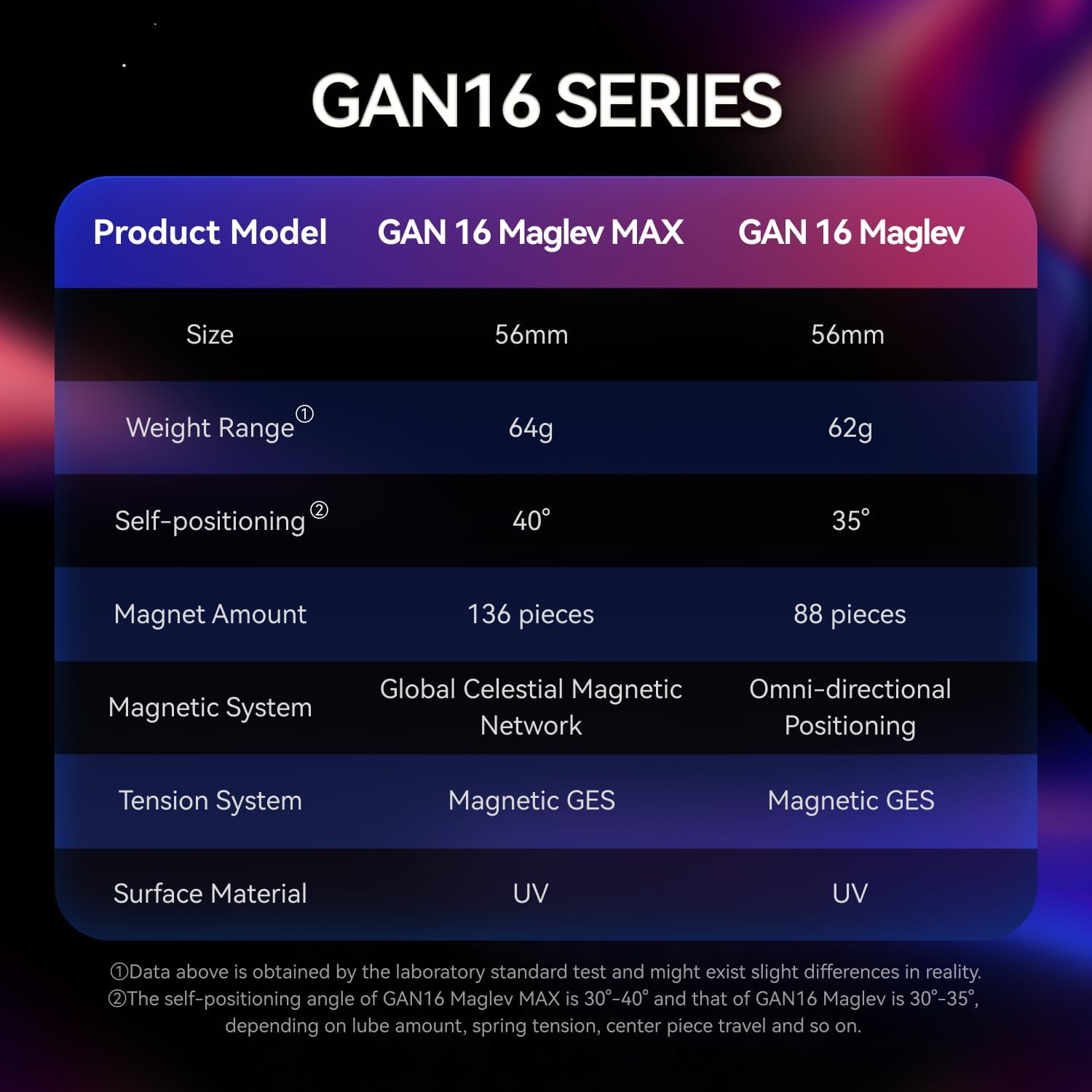
Image: Comparison table showing specifications for GAN 16 Maglev and GAN 16 Maglev MAX, highlighting size, weight, self-positioning, magnet count, magnetic system, tension system, and surface material.
8. What's in the Box
- 1x GAN 16 Maglev 3x3 Speed Cube
- Adjustment Tools (for tension and magnet tuning)
- Instruction Manual (this document)
9. Safety Information
Warning: Not suitable for children under 3 years old due to small parts which may present a choking hazard.
10. Warranty and Support
GAN Cube is a global leader in 3x3 speed cubes, committed to providing innovative products and reliable support. For any inquiries or assistance, please refer to the official GAN Cube store or contact customer service through your point of purchase.
While specific warranty details are not provided in this manual, GAN products are generally known for their quality. Please retain your proof of purchase for any potential warranty claims.


