1. Introduction
This manual provides essential information for the safe and efficient operation of your ECO-WORTHY 6KW Solar Off-Grid Split-Phase All-in-One (AIO) Inverter. Please read this manual thoroughly before installation and use. Keep it for future reference.
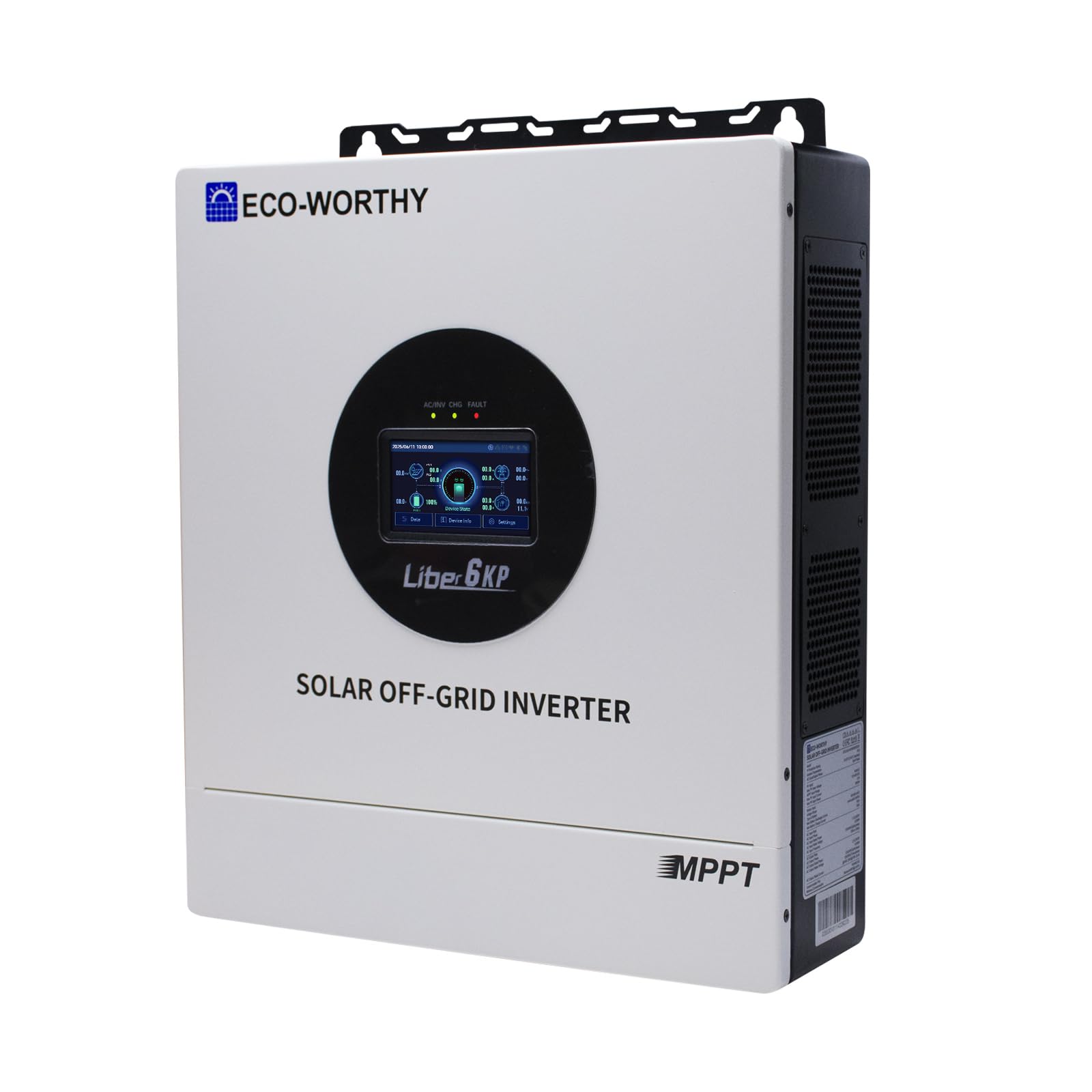
Image 1.1: Front view of the ECO-WORTHY 6KW Solar Off-Grid Split-Phase AIO Inverter.
2. Safety Information
Always observe the following safety precautions to reduce the risk of electric shock, fire, or injury.
- Qualified Personnel: Installation and maintenance must be performed by qualified personnel.
- Disconnect Power: Before performing any maintenance or wiring, ensure all power sources (solar, battery, AC input) are disconnected.
- Proper Grounding: The inverter must be properly grounded.
- Ventilation: Ensure adequate ventilation around the inverter to prevent overheating. Do not block ventilation openings.
- Environment: Install the inverter in a dry, cool, and well-ventilated area, away from flammable materials, corrosive gases, and excessive dust.
- Battery Safety: Work with batteries carefully. Wear eye protection and remove jewelry.
- Emergency Stop: Know how to quickly disconnect power in an emergency.

Image 2.1: Visual representation of the inverter's comprehensive protection features, including overvoltage, short-circuit, overtemperature, and backflow protection.
3. Product Overview
The ECO-WORTHY 6KW Solar Off-Grid Split-Phase AIO Inverter is a versatile unit designed for off-grid solar energy systems. It integrates a 6000W pure sine wave inverter, a 9000W MPPT solar charge controller, and a battery charger into a single device.
3.1 Key Features
- 6000W Split-Phase Output: Converts 48V DC to 240V AC, suitable for various household appliances.
- Integrated MPPT Controller: 9000W MPPT solar charge controller with a maximum PV open-circuit voltage of 500VDC and an operating range of 125VDC–425VDC.
- Smart Monitoring: Built-in WiFi module for remote monitoring and an LED capacitive touchscreen for local control.
- Multiple Operating Modes: Supports Grid Priority (UTL), Solar Priority (SOL), Battery Priority (SBU), and Solar-Battery-Grid (SUB) modes.
- Flexible Charging: Three charging modes: hybrid (solar and grid), limited solar, and pure solar.
- Comprehensive Protection: Includes overvoltage, short-circuit, overtemperature, and backflow protection.
- BMS Communication: Supports communication with Battery Management Systems for stable operation with server rack batteries.

Image 3.1: Overview of the inverter's 6000W pure sine wave output capability, MPPT controller, split-phase inverter, and battery charger functions.
3.2 What's in the Box
- 1 x ECO-WORTHY 6000W Off-Grid Inverter
4. Setup and Installation
Careful installation is crucial for the safe and reliable operation of the inverter. Follow these guidelines:
4.1 Mounting Location
- Mount the inverter vertically on a non-flammable surface.
- Ensure sufficient clearance (at least 20 cm) around the inverter for proper airflow.
- Avoid direct sunlight, high temperatures, and high humidity.
- Install at eye level for easy access to the display and controls.
4.2 Wiring Connections
Refer to the port diagram below for correct wiring. All connections must be secure and properly insulated.

Image 4.1: Detailed diagram showing all connection ports on the ECO-WORTHY 6KW inverter, including AC input, AC output, battery interface, photovoltaic interface, and communication ports.
- Battery Connection: Connect the 48V battery bank to the BATTERY INTERFACE (POSITIVE and NEGATIVE) terminals. Ensure correct polarity.
- PV Input Connection: Connect your solar panel array to the PHOTOVOLTAIC INTERFACE. Observe the maximum PV open-circuit voltage (500VDC) and MPPT operating range (125VDC–425VDC).
- AC Input Connection: Connect the grid or generator AC input (L1+N+L2+E) to the AC INPUT terminals.
- AC Output Connection: Connect your loads (L1+N+L2) to the AC OUTPUT terminals. This inverter provides split-phase 240V AC output.
- Grounding: Connect the inverter to a reliable earth ground.
- Communication Ports: Use CAN/RS485-2, RS485-1, and Parallel Communication ports for advanced monitoring or multi-unit setups.
4.3 Parallel Operation (Optional)
The inverter supports parallel operation of up to 6 units for increased power capacity. Refer to the dedicated parallel installation guide for detailed instructions.

Image 4.2: Illustration of multiple ECO-WORTHY inverters connected in parallel for flexible system expansion.
5. Operating Instructions
The inverter features an LED capacitive touchscreen and a built-in WiFi module for easy configuration and monitoring.
5.1 Initial Power-Up
- After all connections are secure, switch on the battery breaker.
- Switch on the PV array breaker (if applicable).
- Switch on the AC input breaker (if applicable).
- Turn on the inverter's power switch. The display will illuminate.
5.2 Touchscreen Control and Monitoring
The LED capacitive touchscreen allows you to configure system parameters and view real-time data. Error codes are displayed to assist in troubleshooting.

Image 5.1: Close-up of the inverter's smart touchscreen, highlighting its interactive control capabilities.
5.3 Output Modes
The inverter offers multiple output priority modes:
- UTL Mode (Grid Priority - Default): The load is primarily powered by the grid. Solar and battery act as backup.
- SOL Mode (Solar Priority): The load is primarily powered by solar energy. If solar power is insufficient, the grid supplies the load.
- SBU Mode (Battery Priority): The load is primarily powered by solar energy. When solar is unavailable, power is drawn from the battery.
- SUB Mode (Solar-Battery-Grid): The battery is primarily charged by solar power before supplying the load. If no solar power is available, the grid provides energy.
5.4 Charging Modes
The inverter supports three charging modes:
- Hybrid Charging (Solar and Grid - Default): Utilizes both solar and grid power to charge the battery.
- Limited Solar Charging: Prioritizes solar charging, with grid charging only when solar is insufficient.
- Pure Solar Charging: Only uses solar power to charge the battery.

Image 5.2: Diagram illustrating the various charging and discharge modes available for the inverter, including solar priority, grid priority, and hybrid options.
5.5 Remote Monitoring (WiFi/Bluetooth)
The built-in WiFi module allows for remote monitoring of the inverter's status and performance via a mobile application. Bluetooth connectivity is also available for local smart control.

Image 5.3: The inverter featuring built-in Bluetooth and WiFi for smart control and monitoring via a mobile application, with over 60 adjustable parameters.
5.6 Timed Charging and Discharging
The inverter supports timed charging and discharging functions, allowing users to optimize energy usage and savings by setting specific time slots for operation.

Image 5.4: Visual representation of the inverter's timed charging and discharging capabilities, offering precise time control and smart energy saving options.
6. Maintenance
Regular maintenance ensures the longevity and optimal performance of your inverter.
- Cleaning: Periodically clean the inverter's exterior and ventilation openings to prevent dust accumulation. Use a dry, soft cloth.
- Connections Check: Annually inspect all electrical connections for tightness and signs of corrosion.
- Environmental Check: Ensure the installation environment remains within specified temperature and humidity ranges.
- Firmware Updates: Check the manufacturer's website or app for available firmware updates to ensure optimal performance and new features.
7. Troubleshooting
The inverter's touchscreen displays error codes to help identify and resolve issues. Consult the specific error code list in the full product manual for detailed solutions.
7.1 Common Issues and Solutions
- No Power Output: Check battery connections, DC input voltage, and AC output breaker. Verify the inverter is turned on.
- No Solar Charging: Check PV array connections, PV voltage, and ensure solar panels are receiving adequate sunlight. Verify MPPT operating range.
- Overload Warning: Reduce the connected load. Ensure the total wattage of appliances does not exceed the inverter's rated output.
- Overheating: Ensure proper ventilation. Clean any dust from the cooling fins.
- Error Code Displayed: Note the specific error code and refer to the comprehensive troubleshooting guide in the complete product manual or contact support.
8. Specifications
Detailed technical specifications for the ECO-WORTHY 6KW Solar Off-Grid Split-Phase AIO Inverter.

Image 8.1: A visual summary of the inverter's key specifications, including output power, battery type, and photovoltaic input details.
| Specification | Value |
|---|---|
| Model Name | 6000W all in one AIO pure sine wave inverter |
| Rated Output Power | 6000 watts |
| Maximum Peak Power | 12,000W |
| Rated Output Voltage | 240V AC (Single-phase/Split-phase) |
| Rated Frequency | 50/60Hz |
| Output Waveform | Pure Sine Wave |
| Battery Type | Lithium-ion battery / Lead-acid battery / User-defined |
| Rated Battery Voltage | 48V |
| Battery Voltage Range | 40-60V |
| Maximum Photovoltaic Charging Current | 120A |
| Maximum AC Charging Current | 100A |
| Maximum Hybrid Charging Current | 120A |
| Maximum PV Input Power | 9000W |
| Maximum PV Open-Circuit Voltage | 500V |
| MPPT Operating Voltage Range | 125 - 425V |
| Product Dimensions | 18.58 x 16.22 x 5.12 inches |
| Item Weight | 40.8 pounds |
| Manufacturer | ECO-WORTHY |
9. Warranty and Support
9.1 Warranty Information
For detailed warranty terms and conditions, please refer to the official ECO-WORTHY website or contact customer service. Keep your purchase receipt as proof of purchase.
9.2 Customer Support
If you encounter any issues or have questions regarding your ECO-WORTHY inverter, please contact our support team:
- Email: customer.service@eco-worthy.com
- Website: www.eco-worthy.com
- Seller: ECO-WORTHY US


