
1. Introduction
This manual provides detailed instructions for the Walfront LM35 Temperature Sensor Module. It is designed for electronics enthusiasts, students, engineers, and technicians involved in DIY projects, learning, and development. The module offers precise analog temperature measurement and is compatible with various microcontrollers.
2. Product Overview
The Walfront LM35 Temperature Sensor Module is a dedicated temperature sensing unit built on a PCB. It provides an analog output signal directly proportional to the Celsius temperature. Its compact design includes four mounting holes for easy integration into projects.
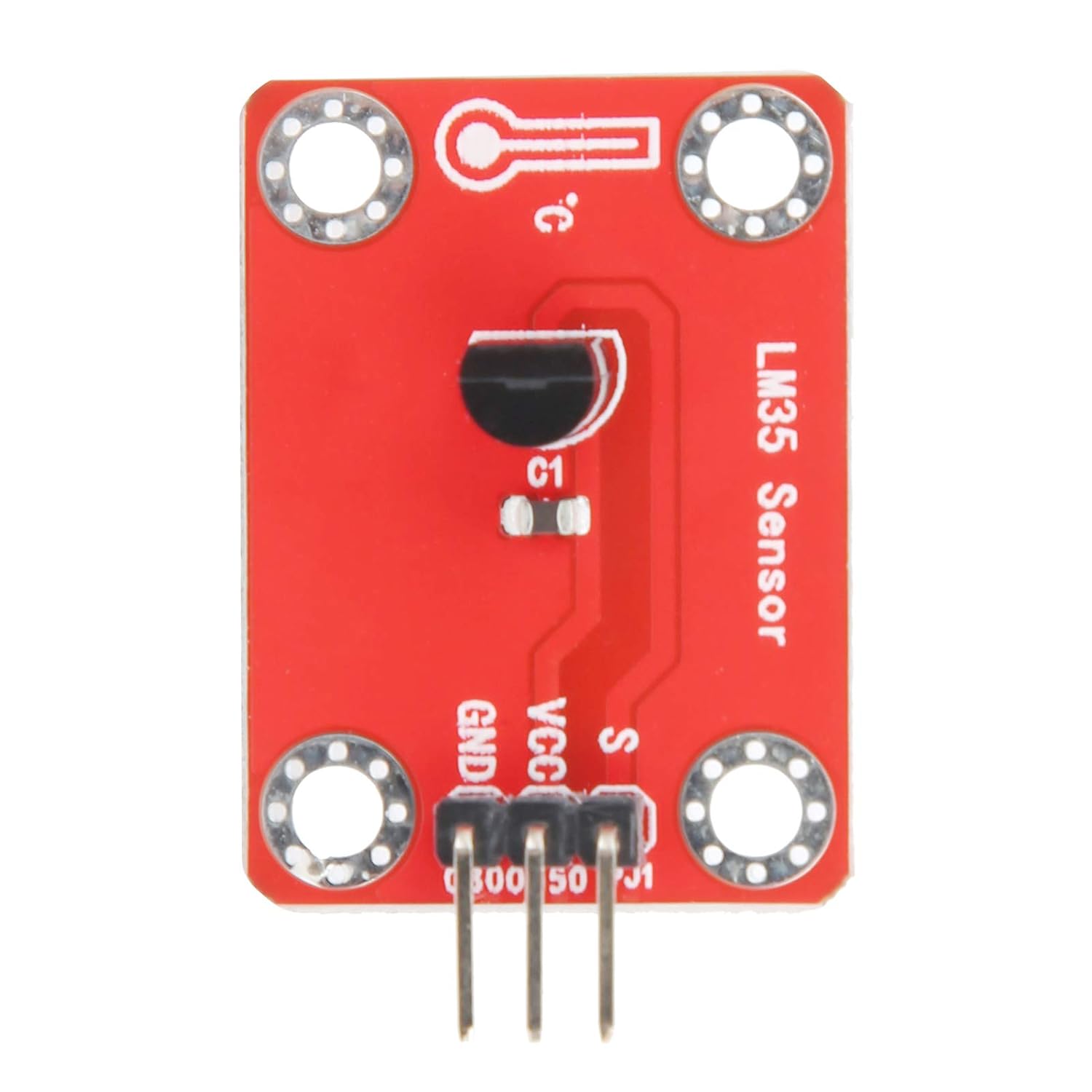
Figure 2.1: Top view of the Walfront LM35 Temperature Sensor Module, showing the LM35 sensor, C1 capacitor, and the 3-pin header (S, VCC, GND).
Key Features:
- Precise Linear Output: Delivers an analog output with a linear relationship to Celsius temperature. Output starts at 0V for 0°C and increases by 10mV for every 1°C rise.
- High Compatibility: Fully compatible with single-chip microcontrollers and integrates seamlessly with sensor expansion boards via its connection port.
- Easy Installation: Equipped with four positioning holes for effortless and secure fixing to other devices or project boards.
- Reliable Performance: Designed for high reliability and long-term stability, ensuring consistent performance in various environments.
- Versatile Application: Suitable for educational purposes, prototyping, and integration into various electronic projects.
3. Specifications
| Parameter | Value |
|---|---|
| Item Type | Temperature Sensor Module |
| Material | PCB |
| Working Voltage | 3.3V - 5V DC |
| Interface | 3-PIN (S, VCC, GND) |
| Output Signal | Analog Signal (10mV/°C) |
| Dimensions (Approx.) | 1.97 x 1.57 x 0.39 inches |
| Weight (Approx.) | 0.11 ounces |
4. Setup Instructions
Follow these steps to set up your Walfront LM35 Temperature Sensor Module:
- Identify Pins: The module has three pins:
- S (Signal): Analog output pin.
- VCC: Power supply input (3.3V - 5V DC).
- GND: Ground connection.

Figure 4.1: Close-up view of the module showing the S, VCC, and GND pin labels.
- Connect Power: Connect the VCC pin to a 3.3V or 5V DC power source on your microcontroller or development board. Connect the GND pin to the ground of your power source and microcontroller.
- Connect Signal: Connect the S (Signal) pin to an analog input pin on your microcontroller (e.g., A0 on an Arduino).
- Mounting (Optional): Use the four mounting holes to securely attach the module to your project enclosure or breadboard using appropriate screws or standoffs.
5. Operating Instructions
Once the module is connected, you can read temperature data using your microcontroller. The LM35 sensor provides an output voltage that is linearly proportional to the Celsius temperature.
Temperature Calculation:
The LM35 output is 10mV per degree Celsius. To convert the analog reading from your microcontroller to temperature in Celsius:
- Read Analog Value: Read the analog value from the connected analog input pin. This value will typically range from 0 to 1023 for a 10-bit ADC.
- Convert to Voltage: Convert the analog reading to voltage using the reference voltage of your microcontroller's ADC.
Voltage (V) = (Analog Reading / ADC Resolution) * Reference Voltage
Example for Arduino (5V reference, 10-bit ADC): Voltage (V) = (Analog Reading / 1024) * 5.0
- Calculate Temperature: Convert the voltage to Celsius temperature.
Temperature (°C) = Voltage (V) * 100
(Since 10mV = 0.01V per °C, then 1V = 100°C)
Example (Conceptual Arduino Code Snippet):
const int LM35_PIN = A0; // Analog pin connected to LM35 signal
void setup() {
  Serial.begin(9600);
}
void loop() {
  int analogValue = analogRead(LM35_PIN);
  float voltage = (analogValue / 1024.0) * 5.0; // Assuming 5V reference
  float temperatureC = voltage * 100.0;
  Serial.print("Temperature: ");
  Serial.print(temperatureC);
  Serial.println(" °C");
  delay(1000);
}
6. Maintenance
The Walfront LM35 Temperature Sensor Module is designed for long-term stability and requires minimal maintenance. To ensure optimal performance:
- Keep Clean: Ensure the module and sensor element are free from dust, dirt, and moisture. Use a soft, dry cloth for cleaning if necessary.
- Avoid Physical Stress: Do not apply excessive force or bend the pins, as this can damage the module.
- Proper Storage: When not in use, store the module in a dry, anti-static environment to prevent damage from static discharge or environmental factors.
- Power Supply: Always use a stable and regulated power supply within the specified working voltage range (3.3V-5V DC).
7. Troubleshooting
| Problem | Possible Cause | Solution |
|---|---|---|
| No temperature reading or incorrect values. |
|
|
| Temperature reading is always 0 or maximum value. |
|
|
| Module not powering on. |
|
|
8. Support and Contact
For further assistance, technical support, or inquiries regarding the Walfront LM35 Temperature Sensor Module, please refer to the official Walfront support channels or contact your retailer.
You may also find additional resources and community support through online electronics forums and microcontroller development communities.
