
1. Introduction and Product Overview
This manual provides essential information for the safe and effective operation, installation, and maintenance of your VEVOR Electric Boat Winch P2000-4. Please read it thoroughly before use and retain it for future reference.
The VEVOR Electric Boat Winch is designed for towing boats up to 2000 lbs. It features a 12V DC 300W motor, offering both power-in and power-out capabilities, along with a freewheel operation. Control is available via a wired remote and a manual hand crank for versatility.

Figure 1.1: The VEVOR Electric Boat Winch mounted on a trailer, demonstrating its pulling capability for boats up to 2000 lbs and 18 ft in length.
Key Features:
- Strong Pulling Power: Equipped with a 0.4HP (12V) copper motor, delivering up to 2000 lbs pulling force for boats up to 18 ft.
- Durable Rope: Features a 0.2 inch polyethylene rope, 30 ft in length, with a 2030 kg tensile strength.
- Dual Control Modes: Supports both electric operation via a 20 ft wired remote control and manual operation with a hand crank.
- Fast Line Retrieval: Offers retrieval speeds of 4 ft/min on inner layers and 8 ft/min on outer layers.
- Sturdy Build: Constructed with an impact-resistant ABS housing and a cast iron interior for durability and resistance to corrosion and shock.

Figure 1.2: Detail of the high-strength polyethylene synthetic rope, highlighting its 30 ft length, 1/5 inch diameter, and 2030 kgs maximum breaking strength.
2. Safety Information
Always prioritize safety when operating the winch. Failure to follow these instructions may result in injury or damage to equipment.
- Read and understand all instructions before operating the winch.
- Wear appropriate personal protective equipment, including gloves and eye protection.
- Ensure the winch is securely mounted to a stable surface capable of withstanding the maximum pulling force.
- Do not exceed the rated pulling capacity of 2000 lbs.
- Keep hands and clothing clear of the rope, drum, and fairlead during operation.
- Inspect the rope for wear, fraying, or damage before each use. Replace damaged rope immediately.
- Ensure all electrical connections are secure and free from corrosion.
- Do not operate the winch if the power cable or remote control is damaged.
- Avoid prolonged continuous operation to prevent overheating. Allow the motor to cool down between heavy pulls.
- Keep children and bystanders away from the winch during operation.
- Never use the winch for lifting people or as a hoist.
- Disconnect power when the winch is not in use or during maintenance.
3. Package Contents
Verify that all components are present and undamaged upon unpacking. If any items are missing or damaged, contact customer support.
- 1 x Electric Boat Winch
- 1 x Wired Remote Control
- 1 x Hand Crank
- 1 x Mounting Plate
- 1 x Battery Lead
- 1 x Control Switch
- 1 x User Manual (this document)
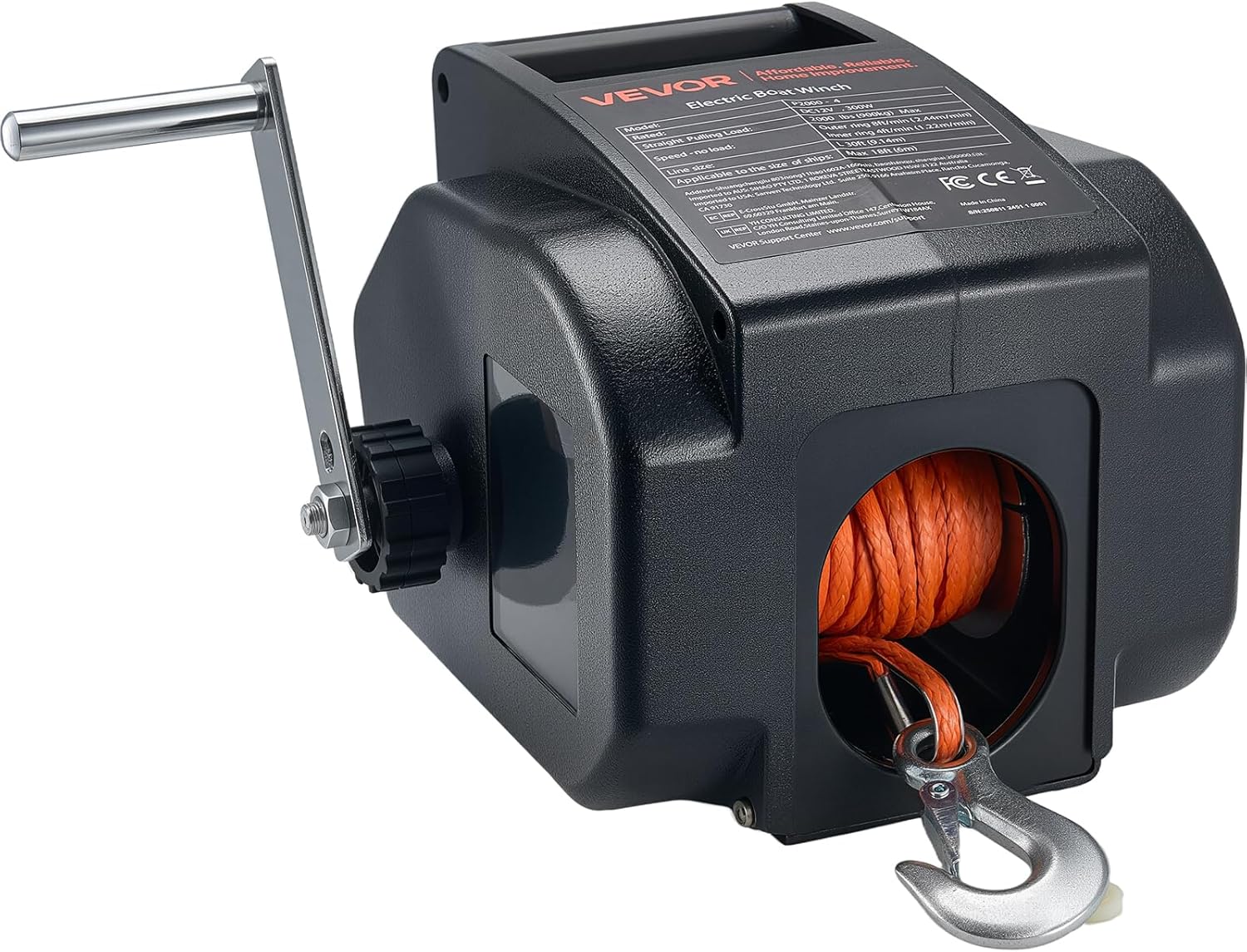
Figure 3.1: The VEVOR Electric Boat Winch and its included accessories, such as the wired remote, hand crank, and battery lead.
4. Specifications
Detailed technical specifications for the VEVOR Electric Boat Winch P2000-4.
| Feature | Specification |
|---|---|
| Item Model Number | P2000-4 |
| Max Pulling Load | 2000 lbs / 900 kg |
| Voltage | DC 12V |
| Rated Power | 0.4 HP / 300 W |
| Suitable Boat Size | Up to 18 ft / 6 m |
| Control Type | Wired Remote Control |
| Net Weight | 18.52 lbs / 8.4 kg |
| Main Material | Steel (Internal), ABS Plastic (Housing) |
| Product Dimensions | 9.65 x 10.08 x 7.72 inches / 245 x 256 x 196 mm |
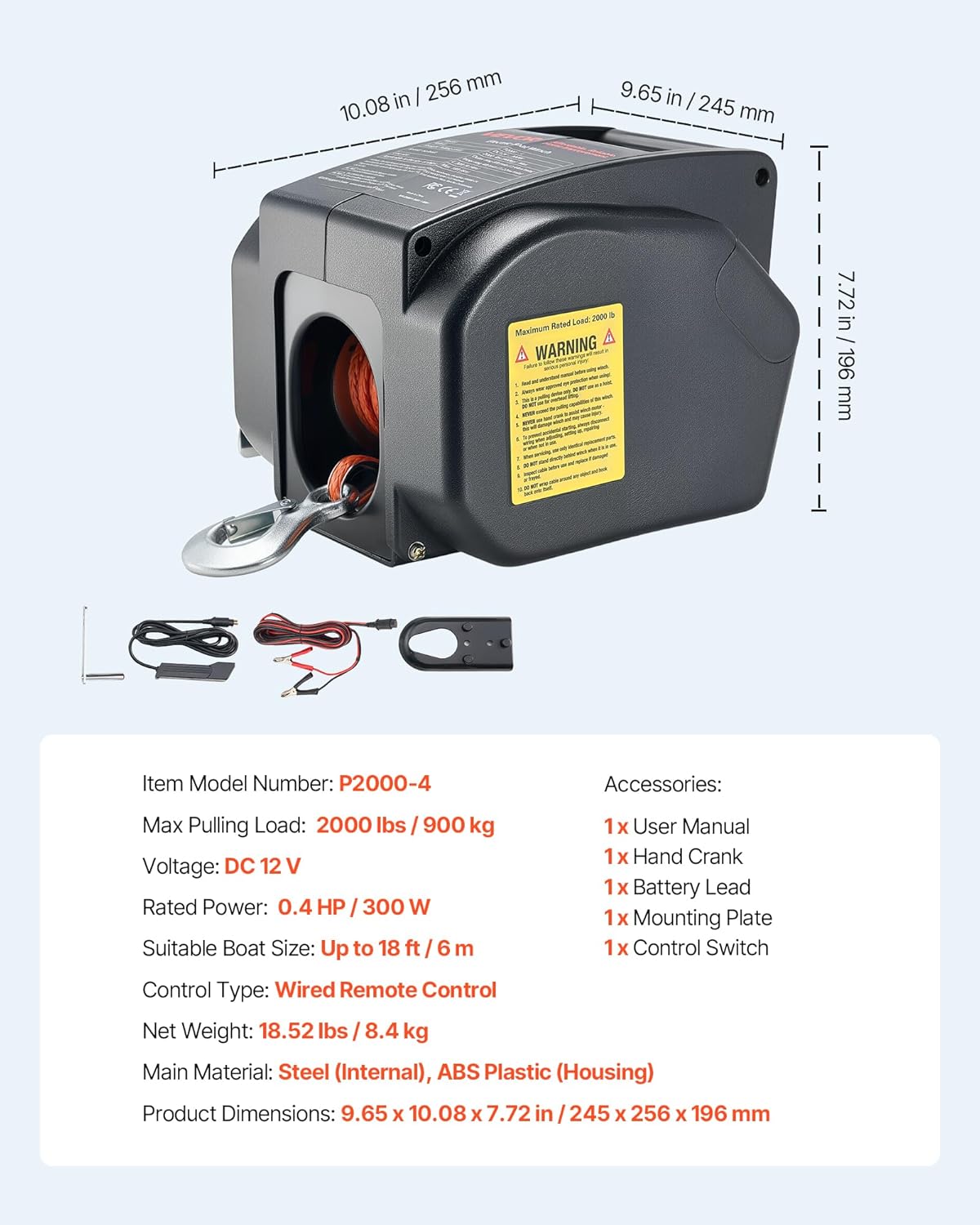
Figure 4.1: Dimensional drawing and a summary of the technical specifications for the winch.
5. Setup and Installation
Proper installation is crucial for the safe and efficient operation of your winch. Ensure the mounting surface is strong enough to support the winch's maximum pulling force.
- Mounting Location: Choose a mounting location on your boat trailer that provides a clear, unobstructed path for the rope to the boat's bow eye. The mounting surface must be flat and structurally sound.
- Secure Mounting: Use the provided mounting plate and appropriate hardware (not always included, check package contents) to securely fasten the winch to the trailer. Ensure all bolts are tightened to the manufacturer's specifications.
- Electrical Connection: Connect the winch to a 12V DC power source (e.g., a boat battery) using the provided battery lead.
- Connect the red wire to the positive (+) terminal of the battery.
- Connect the black wire to the negative (-) terminal of the battery.
- Ensure connections are clean, tight, and protected from corrosion.
- Control Switch Connection: Connect the wired remote control to the designated port on the winch.
- Rope Inspection: Before first use, ensure the rope is properly wound on the drum and free from kinks or damage.

Figure 5.1: The winch correctly installed on a boat trailer, demonstrating proper alignment for boat retrieval.
6. Operating Instructions
The VEVOR Electric Boat Winch offers both electric and manual operation modes.
6.1 Electric Operation (Wired Remote Control)
- Connect Remote: Ensure the wired remote control is securely plugged into the winch.
- Engage Clutch: If the winch is in freewheel mode, engage the clutch to connect the drum to the motor.
- Power-In: Press and hold the "IN" button on the remote to retrieve the rope and pull the boat onto the trailer.
- Power-Out: Press and hold the "OUT" button on the remote to release the rope and launch the boat.
- Monitor Operation: Observe the rope and boat movement carefully. Release the button immediately if any obstruction or issue occurs.
6.2 Manual Operation (Hand Crank)
The hand crank is useful for fine adjustments, when power is unavailable, or for unloading the rope without power.
- Attach Hand Crank: Insert the hand crank into the designated port on the winch.
- Wind/Unwind: Rotate the hand crank clockwise to retrieve the rope (power-in) or counter-clockwise to release the rope (power-out).
- Freewheel Mode: To quickly unwind the rope without power, disengage the clutch (if applicable to your model) and pull the rope manually. Re-engage the clutch before using electric or manual cranking for pulling.

Figure 6.1: The dual control options: manual hand crank for easy line retrieval when unloaded, and the wired remote control with a 20 ft power cord for convenient long-distance use.
6.3 Dual-Speed Rope Retrieval
The winch is designed for efficient rope retrieval with varying speeds depending on the drum layer:
- Inner Drum: Approximately 4 ft/min, suitable for pulling boats stuck in mud or sand, requiring more torque.
- Outer Drum: Approximately 8 ft/min, for quick line retrieval and higher efficiency when less pulling force is required.

Figure 6.2: Explanation of the winch's dual-speed retrieval system, adapting to different towing requirements.
7. Maintenance
Regular maintenance ensures the longevity and reliable performance of your VEVOR Electric Boat Winch.
- Rope Inspection: Regularly inspect the polyethylene rope for signs of wear, cuts, fraying, or kinks. Replace the rope if any damage is found.
- Electrical Connections: Check all electrical connections for tightness and corrosion. Clean terminals as needed.
- Housing and Components: Keep the winch housing clean. Wipe down with a damp cloth after use, especially after exposure to saltwater, to prevent corrosion.
- Lubrication: Consult the manufacturer's guidelines for any recommended lubrication points. Generally, internal gears are pre-lubricated and sealed.
- Storage: When not in use for extended periods, store the winch in a dry, protected area.
8. Troubleshooting
This section addresses common issues you might encounter with your electric boat winch.
| Problem | Possible Cause | Solution |
|---|---|---|
| Winch does not operate (electric mode) | No power, loose electrical connections, faulty remote, motor overheating. | Check battery connections and charge. Ensure remote is fully plugged in. Allow motor to cool if recently used heavily. |
| Winch operates slowly or with reduced power | Low battery voltage, overloaded winch, corroded connections. | Charge battery. Ensure load is within rated capacity. Clean battery and winch terminals. |
| Rope is tangled or unevenly wound | Improper winding during previous use. | Unwind the rope completely and re-wind it evenly under light tension. |
| Winch makes unusual noises | Internal damage, foreign object, lack of lubrication. | Stop operation immediately. Inspect for obstructions. If noise persists, contact customer support. |
9. Warranty and Customer Support
VEVOR products are designed for durability and performance. For specific warranty details, please refer to the warranty card included with your product or visit the official VEVOR website.
If you encounter any issues or have questions regarding your VEVOR Electric Boat Winch P2000-4, please contact VEVOR customer support for assistance. Have your model number (P2000-4) and purchase information ready when contacting support.
Online Support: www.vevor.com/support


