
1. Introduction
The Douk Audio BSA600 V2.0 is a 230W bridgeable stereo/mono subwoofer power amplifier designed to enhance tactile bass experiences. It delivers powerful low-frequency output, allowing users to feel explosions, rumbles, and music as tangible vibrations, adding realism to home theater, gaming, and simulation setups.

Image 1.1: Douk Audio BSA600 V2.0 Bass Shaker Amplifier.
2. What's in the Box
Please check the package contents upon unboxing to ensure all items are present:
- 1 × Douk Audio BSA600 V2.0 Amplifier
- 1 × Wired Remote Controller (5m/16.4ft cable)
- 1 × Type-C Cable (for remote)
- 1 × Power Cord
- 1 Set × Mounting Brackets
- 2 × Double-sided Adhesive Pads

Image 2.1: Contents of the BSA600 V2.0 package.
3. Product Overview
3.1 Front Panel Controls
The front panel provides access to essential controls and indicators:
- Mono/Stereo Select Switch: Toggles between mono (bridged) and stereo output modes.
- Auto/On Switch: Selects between manual power on/off and signal-sensing auto-on mode.
- Power Indicator: Illuminates when the amplifier is powered on.
- Remote Interface: Connects the wired remote controller.
- Display Screen: Shows the current volume level.
- VOL (Volume) Knob: Adjusts the overall output volume.
- FREQ (Frequency) Knob: Adjusts the low-pass filter cutoff frequency from 50Hz to 200Hz.
- BAL (Balance) Knob: Adjusts the balance between left and right channels in stereo mode, or output levels for dual shakers.
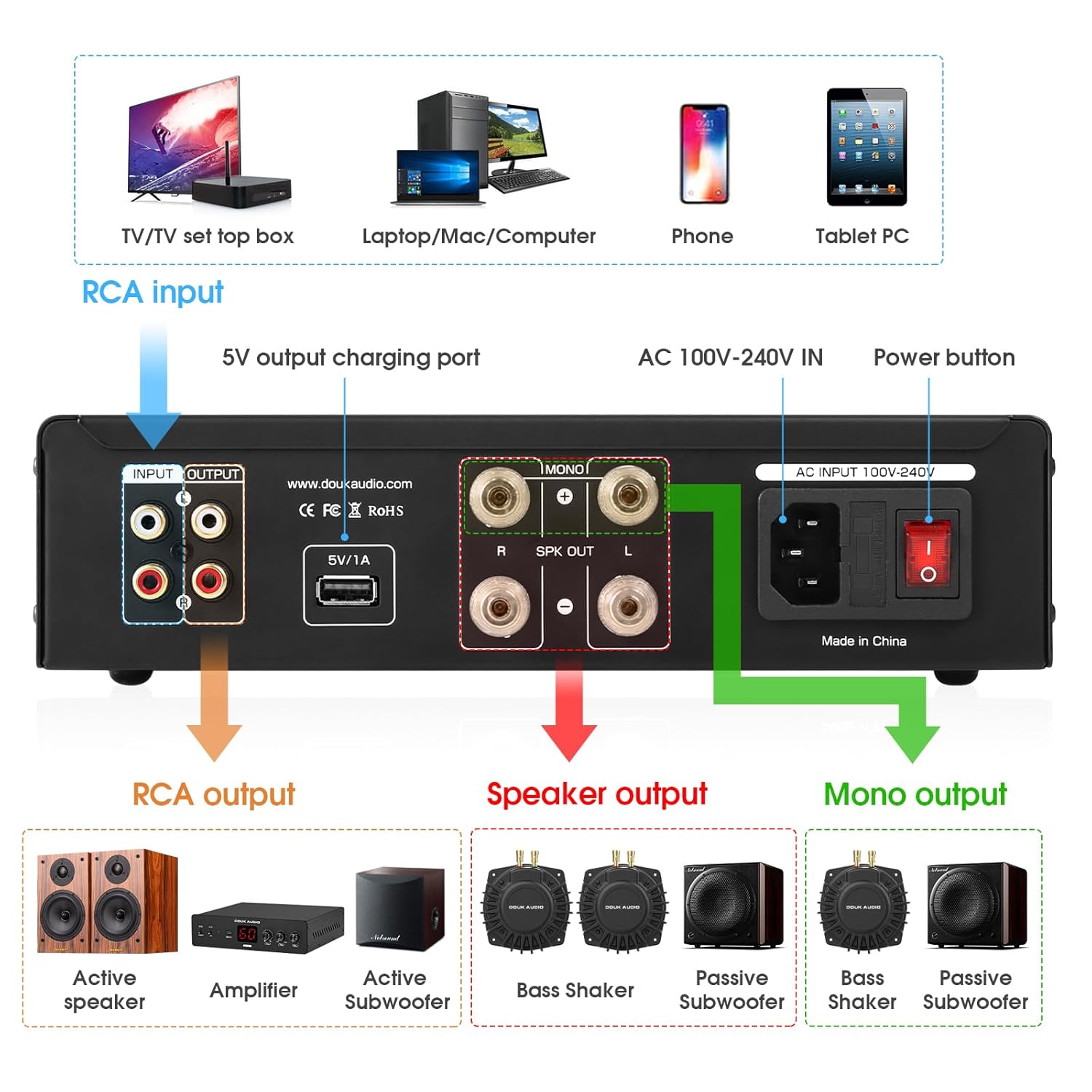
Image 3.1: Front panel layout with controls.
3.2 Rear Panel Connections
The rear panel houses all input and output connections:
- RCA Input (L/R): Connects to your audio source (e.g., AV receiver, sound card).
- RCA Output (L/R): For daisy-chaining multiple amplifiers or connecting to other audio equipment.
- 5V/1A USB Charging Port: Provides power for small accessories (e.g., LED lights, cooling fans).
- AC 100V-240V IN: Power input for the amplifier.
- Power Button: Main power switch for the unit.
- Speaker Output (L/R): Connects to passive bass shakers or subwoofers in stereo mode.
- Mono Output (Bridged): Connects to a single passive bass shaker or subwoofer in bridged mono mode for maximum power.
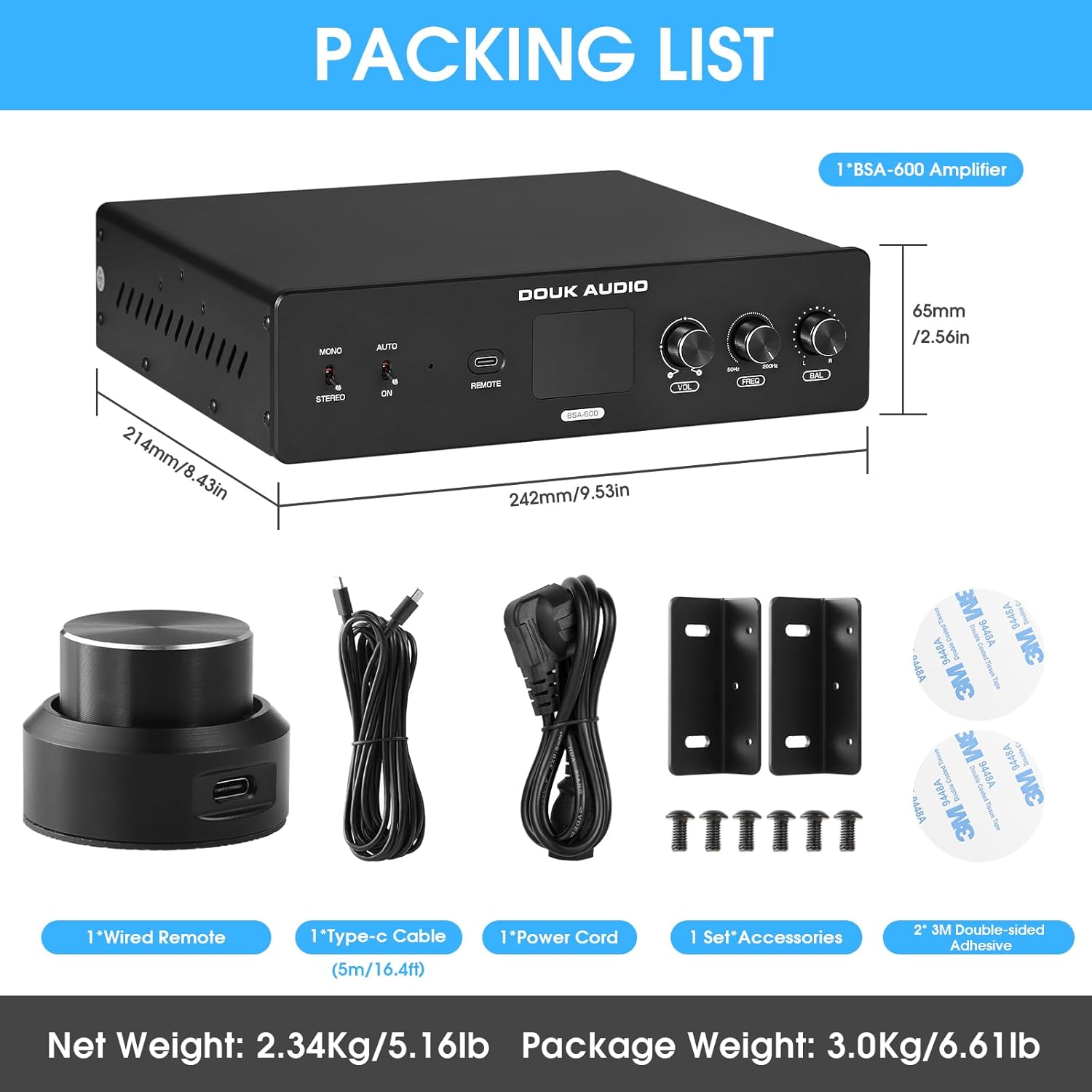
Image 3.2: Rear panel connections.
3.3 Internal Components
The BSA600 V2.0 utilizes a high-performance TPA3255 chip for efficient and powerful audio processing.

Image 3.3: TPA3255 high-performance audio chip.
4. Setup
4.1 Placement and Mounting
The compact design of the BSA600 V2.0 allows for flexible installation. Use the included mounting brackets and adhesive pads to secure the amplifier:
- Under a couch or chair.
- Attached to a gaming chair or sim racing rig.
- Within an AV rack or cabinet.

Image 4.1: Example of amplifier mounting under furniture.
4.2 Audio Connections
Follow these steps to connect your audio system:
- Connect Audio Source: Use RCA cables to connect the audio output of your source device (e.g., AV receiver, PC sound card) to the RCA Input (L/R) on the amplifier's rear panel.
- Connect Bass Shakers/Subwoofers:
- For stereo operation (two bass shakers/subwoofers), connect each to the respective Speaker Output (L/R) terminals.
- For mono (bridged) operation (a single, larger bass shaker/subwoofer), connect it to the Mono Output (Bridged) terminals. Ensure the amplifier is set to Mono mode via the front panel switch.
- Daisy-Chaining (Optional): If connecting multiple amplifiers, use RCA cables from the RCA Output (L/R) of the first amplifier to the RCA Input of the next.
- Connect Power: Plug the included power cord into the AC 100V-240V IN port and then into a suitable power outlet.
- Connect Wired Remote: Plug the wired remote controller into the REMOTE interface on the front panel.
- USB Accessory (Optional): Connect any small 5V/1A USB-powered accessories to the 5V/1A USB Charging Port.

Image 4.2: Connection diagram for audio sources and outputs.
Important: Always ensure the amplifier is powered off before making any connections to prevent damage to the unit or connected devices.
5. Operating Instructions
5.1 Powering On/Off and Modes
The amplifier offers three power modes:
- Manual On/Off: Set the Auto/On switch to "ON". Use the main power button on the rear panel or the wired remote to turn the unit on or off.
- Signal-Sensing Auto-On: Set the Auto/On switch to "AUTO". The amplifier will automatically power on when an audio signal is detected and enter standby after 10 minutes of no signal.
- Triggered Control: This mode is typically used in integrated home theater systems where a trigger signal from a receiver or processor controls the amplifier's power state.

Image 5.1: Power and stereo/mono mode switches.
5.2 Using the Wired Remote Controller
The included wired remote provides convenient control from your listening position:
- Short Press: Turns the amplifier on or mutes the audio.
- Long Press: Turns the amplifier off.
- Rotate: Adjusts the volume level.

Image 5.2: Wired remote controller for volume and power.
5.3 Adjusting Audio Settings
Use the front panel knobs to fine-tune your bass experience:
- VOL (Volume): Rotate to increase or decrease the output volume. The current level is shown on the display.
- FREQ (Crossover Frequency): Rotate to set the low-pass filter cutoff frequency. This ensures only deep bass frequencies are sent to your shakers or subwoofers (range: 50Hz-200Hz).
- BAL (Balance): In stereo mode, adjust to balance the output between left and right channels. When using dual shakers, this helps match their output levels.

Image 5.3: Front panel adjustment knobs.
5.4 Product Demonstration Video
Video 5.4: A demonstration of the Douk Audio Bass Shaker Amplifier in use with a BS1 Tactile Transducer, showcasing its functionality and effect.
6. Maintenance
To ensure the longevity and optimal performance of your Douk Audio BSA600 V2.0 amplifier, follow these maintenance guidelines:
- Cleaning: Use a soft, dry cloth to clean the exterior of the amplifier. Avoid using liquid cleaners, aerosols, or solvents, as they may damage the finish or internal components.
- Ventilation: Ensure the amplifier has adequate ventilation. Do not block the ventilation holes. Avoid placing the unit in enclosed spaces without airflow, as this can lead to overheating.
- Environment: Keep the amplifier away from direct sunlight, heat sources, excessive dust, moisture, and strong electromagnetic fields.
- Power Off When Not in Use: If the amplifier will not be used for an extended period, it is recommended to power it off and unplug it from the wall outlet.
7. Troubleshooting
If you encounter issues with your BSA600 V2.0 amplifier, refer to the following common troubleshooting steps:
- No Power:
- Check if the power cord is securely connected to both the amplifier and the wall outlet.
- Ensure the main power button on the rear panel is in the "ON" position.
- Verify the wall outlet is functional by plugging in another device.
- No Sound/Vibration:
- Confirm all audio input and output cables are correctly and securely connected.
- Check the volume level on the amplifier and your audio source.
- Ensure the amplifier is not muted (check the wired remote).
- Verify the Mono/Stereo switch is set correctly for your speaker configuration.
- If using "AUTO" power mode, ensure an audio signal is present.
- Distorted Sound/Weak Vibration:
- Reduce the volume level on both the amplifier and the audio source to prevent clipping.
- Check speaker wire connections for proper polarity and secure contact.
- Adjust the FREQ (crossover frequency) knob to ensure appropriate frequencies are being sent to your shakers/subwoofers.
- Ensure the impedance of your connected speakers/shakers matches the amplifier's specifications (2Ω for mono, 4Ω for stereo).
- Remote Control Not Responding:
- Ensure the remote cable is securely plugged into the front panel interface.
- Check for any physical damage to the remote or its cable.
If the issue persists after attempting these steps, please refer to the Support section for further assistance.
8. Specifications
| Feature | Specification |
|---|---|
| Model | SUC-BSA-600-US (BSA600 V2.0) |
| Output Power (Stereo) | 115W × 2 (4Ω) |
| Output Power (Mono/Bridged) | 230W × 1 (2Ω) |
| Voltage | AC 100-240V |
| Number of Channels | 2 |
| Item Dimensions (L×W×H) | 9.53 x 8.43 x 2.56 inches (242 x 214 x 65 mm) |
| Item Weight | 5.2 Pounds (2.34 kg) |
| Material Type | Aluminum |
| Crossover Frequency Range | 50Hz - 200Hz (Low-Pass Filter) |
| USB Power Output | 5V/1A |
| Safety Certification | CE |
9. Warranty
The Douk Audio BSA600 V2.0 Bass Shaker Amplifier comes with an 18-Month Limited Warranty from the date of purchase. This warranty covers manufacturing defects and malfunctions under normal use. Please retain your proof of purchase for warranty claims.
Optional extended protection plans may be available for purchase separately. Refer to your retailer for details on additional protection options.
10. Support
For technical assistance, troubleshooting, or warranty inquiries regarding your Douk Audio BSA600 V2.0 amplifier, please contact Douk Audio Direct through the retailer's platform or visit the official Douk Audio website for contact information.
Online Resources:
- Douk Audio Official Store: Visit Store