
PowerSmart 4400W + Inverter
PowerSmart 4400-Watt Portable Inverter Generator User Manual
Model: 4400W + Inverter
1. Introduction
This manual provides essential information for the safe and efficient operation, maintenance, and troubleshooting of your PowerSmart 4400-Watt Portable Inverter Generator. Designed for versatility, this generator delivers 4400 starting watts and 3600 running watts of clean power, making it suitable for home use, emergency backup, RVs, and outdoor adventures. Please read this manual thoroughly before operating the generator to ensure proper use and longevity.
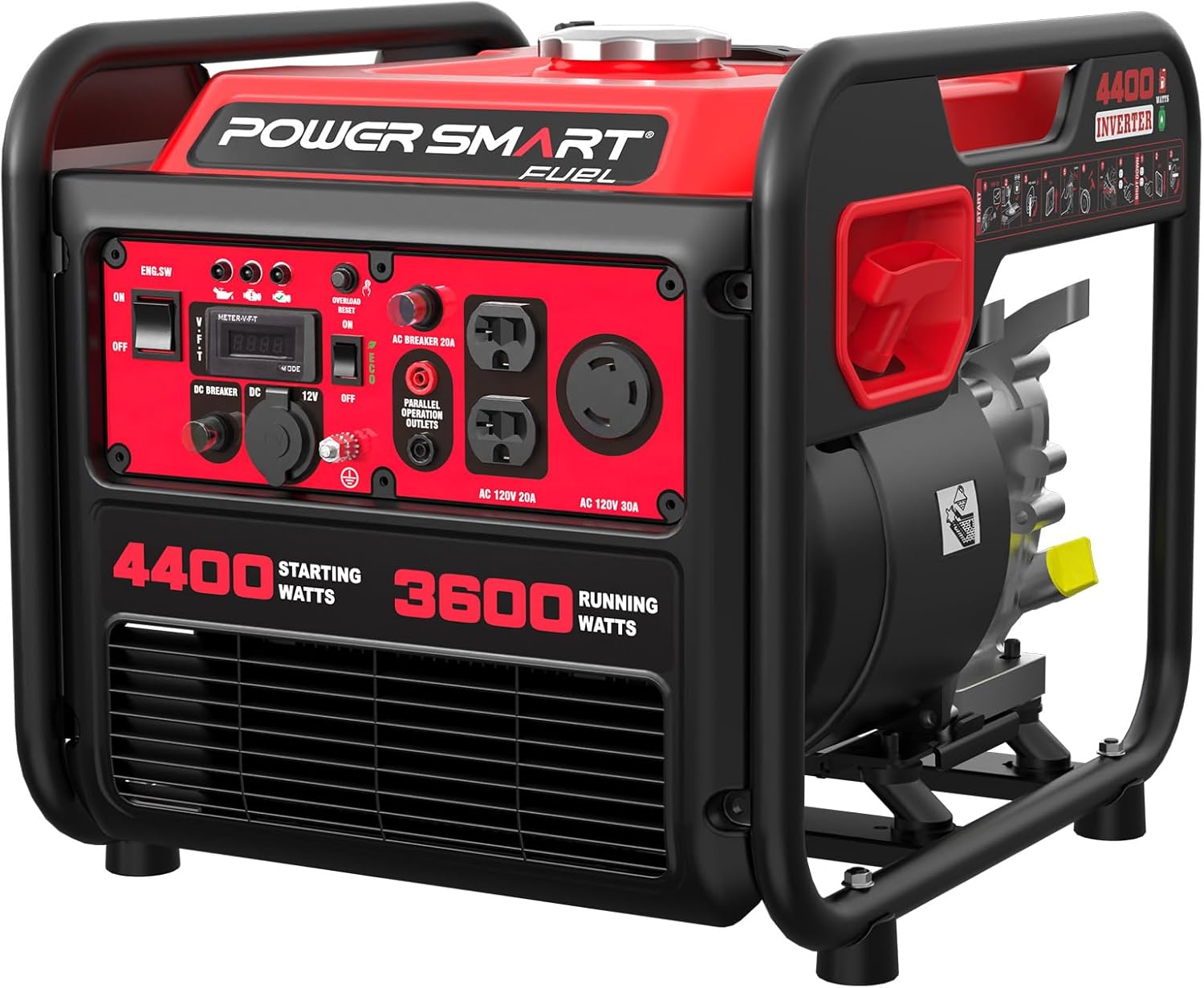
Figure 1.1: PowerSmart 4400-Watt Portable Generator, showcasing its compact design and control panel.
2. Safety Information
Your safety and the safety of others are paramount. Always follow these safety precautions when operating the generator.
2.1 Carbon Monoxide Hazard
- Generators produce carbon monoxide (CO), an odorless, colorless, and poisonous gas.
- NEVER operate the generator indoors, in garages, sheds, or any enclosed or partially enclosed areas.
- Always operate the generator outdoors in a well-ventilated area, far away from windows, doors, and vents.
- Install battery-operated carbon monoxide alarms in your home or RV.
2.2 Fire Hazard
- Fuel is highly flammable. Store fuel in approved containers in a well-ventilated area away from ignition sources.
- Do not refuel the generator while it is running or hot. Allow it to cool down completely.
- Avoid spilling fuel. If spilled, wipe it up immediately and ensure the area is dry before starting the generator.
2.3 Electrical Shock Hazard
- Do not operate the generator in wet conditions (rain, snow, wet ground).
- Ensure all electrical connections are secure and in good condition.
- Use only grounded extension cords and appliances.
- Never connect the generator directly to your home's electrical system without a proper transfer switch installed by a qualified electrician.
3. Product Overview
The PowerSmart 4400-Watt Portable Inverter Generator is designed for reliable power delivery with advanced features for user convenience and safety.
3.1 Key Features
- Power Output: 4400 starting watts and 3600 running watts.
- Clean Power: Inverter technology provides less than 3% Total Harmonic Distortion (THD), safe for sensitive electronics.
- Quiet Operation: Operates at 59 dBA at 25% load (from 23 feet), and 76 dBA at full load (from 23 feet).
- Outlets: Two 120V 15A receptacles, one 120V 30A receptacle (RV ready), and one 12V DC outlet.
- Parallel Capable: Allows connection of two identical generators for increased power output.
- Eco Mode: Optimizes engine speed based on load, improving fuel efficiency and reducing noise.
- Safety Features: Low oil shutdown and overload reset.

Figure 3.1: Power output and available receptacles.

Figure 3.2: Generator operating in a quiet outdoor environment.

Figure 3.3: Parallel operation capability for increased power.
3.2 Control Panel
Familiarize yourself with the control panel components before operation.

Figure 3.4: Detailed view of the control panel.
- ENG.SW (Engine Switch): ON/OFF switch for the engine.
- Indicator Lights: Low oil alarm (Yellow), Overload indicator (Red), Running indicator (Green).
- Meter (V-F-T): Digital display for Voltage, Frequency, and Run time.
- DC Breaker: Protects the 12V DC outlet from overload.
- DC 12V Port: 12-volt direct current output.
- ECO Energy-Saving Switch: Activates Eco Mode for fuel efficiency.
- Overload Reset: Button to reset the generator after an overload condition.
- AC Breaker 20A: Protects the 120V 20A outlets.
- Parallel Operation Outlets: Ports for connecting two generators in parallel.
- AC 120V 20A Receptacles: Standard household outlets.
- AC 120V 30A Receptacle: RV-ready outlet.
4. Setup
Before first use, perform the following setup steps:
- Unpacking: Carefully remove the generator from its packaging. Inspect for any shipping damage.
- Add Engine Oil: The generator is shipped without engine oil. Place the generator on a level surface. Remove the oil fill cap/dipstick. Slowly add approximately 0.42 quarts (0.4 L) of 10W-30 engine oil (not included) until it reaches the upper mark on the dipstick. Do not overfill. Securely replace the oil fill cap.
- Add Fuel: Use fresh, unleaded gasoline with an octane rating of 87 or higher. Ensure the generator is off and cool. Open the fuel cap and carefully pour fuel into the tank, avoiding overfilling. The fuel tank capacity is approximately 1.06 gallons (4 liters). Securely close the fuel cap.
- Grounding: For safety, ensure the generator is properly grounded. Connect a grounding wire from the generator's grounding terminal to a suitable ground source.
5. Operating
Follow these steps for starting and operating your generator.
5.1 Starting the Generator
- Ensure the generator is on a level surface outdoors and away from any combustible materials.
- Turn the fuel valve to the ON position.
- Set the engine switch (ENG.SW) to the ON position.
- If the engine is cold, pull the choke lever to the CHOKE position. If warm, leave it in the RUN position.
- Firmly pull the recoil starter handle until the engine starts.
- Once the engine starts, slowly push the choke lever back to the RUN position.
- Allow the generator to run for a few minutes to warm up before connecting any electrical loads.
5.2 Connecting Electrical Loads
- Ensure the total wattage of connected appliances does not exceed the generator's running wattage (3600W).
- Plug in your appliances or extension cords into the appropriate receptacles.
- For sensitive electronics, ensure the Eco Mode is engaged for stable power output.

Figure 5.1: Guide to typical power requirements for common devices.
5.3 Stopping the Generator
- Disconnect all electrical loads from the generator.
- Allow the generator to run for a few minutes without load to cool down.
- Turn the engine switch (ENG.SW) to the OFF position.
- Turn the fuel valve to the OFF position.
6. Maintenance
Regular maintenance ensures optimal performance and extends the life of your generator.
6.1 Maintenance Schedule
| Item | Every Use | Every 50 Hrs / Monthly | Every 100 Hrs / 6 Months | Every 300 Hrs / Annually |
|---|---|---|---|---|
| Check Engine Oil Level | ✓ | |||
| Change Engine Oil | ✓ (First 20 hrs) | ✓ | ||
| Clean Air Filter | ✓ | |||
| Check Spark Plug | ✓ | |||
| Clean Fuel Filter | ✓ |
6.2 Oil Change Procedure
- Run the engine for a few minutes to warm the oil, then shut it off.
- Place a drain pan under the oil drain plug.
- Remove the oil fill cap/dipstick and the oil drain plug.
- Allow all oil to drain completely.
- Replace the oil drain plug and tighten securely.
- Add new 10W-30 engine oil (approx. 0.42 quarts) to the proper level.
- Replace the oil fill cap/dipstick.
7. Troubleshooting
This section provides solutions to common operational issues.
| Problem | Possible Cause | Solution |
|---|---|---|
| Engine will not start | No fuel Low oil level Engine switch OFF Choke not set correctly Spark plug issue | Add fresh fuel Add engine oil Turn engine switch to ON Adjust choke Check/clean/replace spark plug |
| No power output | Overload Circuit breaker tripped Loose connections | Reduce load, press Overload Reset Reset AC/DC breaker Check all connections |
| Engine runs rough | Stale fuel Dirty air filter Spark plug fouled | Drain old fuel, add fresh fuel Clean/replace air filter Clean/replace spark plug |
| Overload indicator on | Excessive load Short circuit in appliance | Reduce total wattage of connected devices Check appliance for faults |
8. Specifications
Detailed technical specifications for the PowerSmart 4400-Watt Portable Inverter Generator.
| Specification | Value |
|---|---|
| Brand | PowerSmart |
| Model | 4400W + Inverter |
| Starting Wattage | 4400 watts |
| Running Wattage | 3600 watts |
| Fuel Type | Gasoline |
| Voltage | 120 Volts |
| Item Weight | 57 Pounds |
| Product Dimensions (L x W x H) | 19.3" x 16.9" x 16.7" |
| Noise Level (25% load) | 59 dBA (from 23 feet) |
| Run Time (50% load) | 5.1 hours |
| Included Components | Wrench |

Figure 8.1: Generator dimensions and weight.
9. Warranty and Support
The PowerSmart 4400-Watt Portable Inverter Generator comes with a 2-Year Warranty from the date of purchase. This warranty covers defects in materials and workmanship under normal use.
For warranty claims, technical support, or replacement parts, please contact PowerSmart customer service. Keep your proof of purchase for warranty validation.
For the most up-to-date support information, please visit the official PowerSmart website or refer to the contact details provided with your product packaging.
Related documents4400W + Inverter


Ask a question about this manual
Ask about setup, troubleshooting, compatibility, parts, safety, or missing instructions. Manuals+ will review the question and use this page’s manual context to help answer it.