
1. Introduction
This manual provides essential information for the installation, operation, and maintenance of your GIGABYTE GeForce RTX 5060 WINDFORCE MAX OC 8G Graphics Card. This high-performance graphics card is powered by the NVIDIA Blackwell architecture and DLSS 4, featuring 8GB of 128-bit GDDR7 memory and a PCIe 5.0 interface. It incorporates the WINDFORCE cooling system, a Hawk fan, server-grade thermal conductive gel, and a reinforced structure for optimal performance and durability. Please read this manual thoroughly before installation and use.
2. Safety Information
- Always disconnect the power supply from your computer before installing or removing any hardware components.
- Wear an anti-static wrist strap or frequently touch a grounded metal object to prevent electrostatic discharge (ESD) damage to the graphics card and other components.
- Handle the graphics card by its edges to avoid touching sensitive components.
- Ensure proper ventilation within your computer case to prevent overheating.
- Do not attempt to repair the graphics card yourself. Refer to qualified service personnel for assistance.
3. Package Contents
Verify that all items are present in your package:
- GIGABYTE GeForce RTX 5060 WINDFORCE MAX OC 8G Graphics Card
- Instruction Manual
Note: Additional accessories may vary by region or retailer.
4. Setup (Installation)
4.1 Hardware Installation
Before proceeding, ensure your system meets the minimum requirements, including a 450W power supply and a compatible PCI Express graphics slot.
- Prepare Your System: Turn off your computer and disconnect the power cable from the wall outlet. Open your computer case.
- Locate PCI Express Slot: Identify an available PCI Express 5.0 x8 slot on your motherboard.
- Remove Slot Covers: Remove the metal slot covers from the back of your computer case corresponding to the graphics card's size.
- Install Graphics Card: Carefully align the graphics card with the PCI Express slot and press it firmly until it is securely seated. Ensure the retention clip on the motherboard clicks into place.
- Secure Graphics Card: Fasten the graphics card to the computer case with screws.
- Connect Power: Connect the required 1x 8-pin PCIe power connector from your power supply to the graphics card.
- Close Case: Close your computer case and reconnect the power cable.

Figure 1: Front view of the GIGABYTE GeForce RTX 5060 WINDFORCE MAX OC 8G Graphics Card.

Figure 2: Side view of the GIGABYTE GeForce RTX 5060 WINDFORCE MAX OC 8G Graphics Card, showing the heatsink and power connector.
4.2 Driver Installation
After hardware installation, you need to install the latest drivers for optimal performance.
- Power On: Turn on your computer.
- Download Drivers: Visit the official GIGABYTE website (www.gigabyte.com) or NVIDIA website (www.nvidia.com) to download the latest drivers for your GeForce RTX 5060 graphics card.
- Install Drivers: Follow the on-screen instructions to install the drivers. Restart your computer if prompted.
4.3 Visual Overview and Unboxing
Watch this official GIGABYTE video for a visual overview of the RTX 50 Series graphics cards and an unboxing experience.
Video 1: GIGABYTE GeForce RTX 50 Series - Official Trailer. This video provides a general overview of the RTX 50 series, highlighting key features and design elements.
Video 2: Gigabyte RTX 5060 8gb OC unboxing review by 'Remember This Tech'. This video demonstrates the unboxing process and initial impressions of the Gigabyte RTX 5060 graphics card, including its physical appearance and included accessories.
5. Operating
5.1 Connecting Displays
The GIGABYTE GeForce RTX 5060 graphics card supports multiple display outputs for a versatile setup.
- DisplayPort: Connect up to three DisplayPort 2.1 compatible monitors using DisplayPort cables.
- HDMI: Connect one HDMI 2.1 compatible monitor or TV using an HDMI cable.
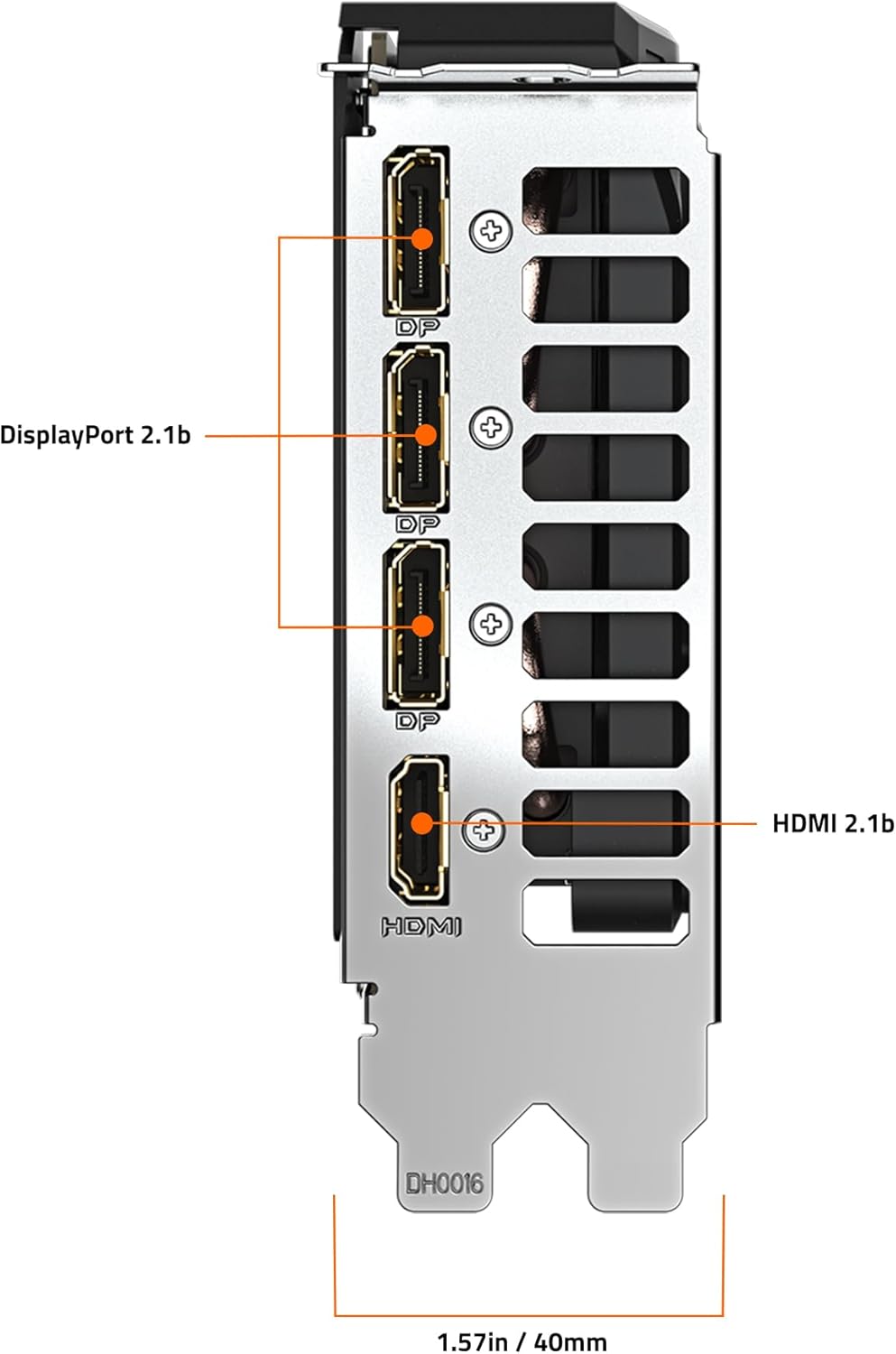
Figure 3: Rear view of the GIGABYTE GeForce RTX 5060 WINDFORCE MAX OC 8G Graphics Card, highlighting the DisplayPort and HDMI output connectors.
5.2 Software Utilities
Utilize GIGABYTE and NVIDIA software for enhanced control and customization:
- GIGABYTE Control Center: Download from the GIGABYTE website to monitor GPU status, adjust fan speeds, and customize RGB lighting (if applicable).
- NVIDIA Control Panel: Access advanced display settings, manage 3D settings, and configure features like DLSS and Ray Tracing.
6. Maintenance
6.1 Cleaning
Regular cleaning helps maintain optimal performance and extends the lifespan of your graphics card.
- Power Off: Always power off your computer and disconnect it from the power source before cleaning.
- Dust Removal: Use compressed air to gently blow dust from the fans, heatsink fins, and other components. Hold the fans in place to prevent over-spinning.
- Surface Cleaning: Use a soft, lint-free cloth lightly dampened with isopropyl alcohol to clean the exterior surfaces of the card. Avoid harsh chemicals.
6.2 Driver Updates
Keep your graphics drivers updated to ensure compatibility with the latest games and applications, and to benefit from performance improvements and bug fixes.
- Periodically check the GIGABYTE or NVIDIA website for new driver releases.
- Follow the provided instructions for driver installation.
7. Troubleshooting
If you encounter issues with your graphics card, refer to the following common problems and solutions:
| Problem | Possible Cause | Solution |
|---|---|---|
| No display on monitor | Incorrect cable connection, loose card, power issue, driver problem. | Ensure display cables are securely connected. Re-seat the graphics card. Verify power connectors are attached. Reinstall or update drivers. |
| Low performance in games/applications | Outdated drivers, incorrect settings, insufficient power. | Update graphics drivers. Adjust in-game graphics settings. Ensure adequate power supply. Check for background applications consuming resources. |
| Overheating or loud fan noise | Dust accumulation, poor case airflow, high load. | Clean fans and heatsink. Improve case airflow. Monitor temperatures with GIGABYTE Control Center. Adjust fan curves if necessary. |
| System instability or crashes | Driver conflicts, overheating, faulty hardware. | Perform a clean driver installation. Monitor temperatures. Check other system components. |
8. Specifications
| Feature | Detail |
|---|---|
| Graphics Processing Unit | NVIDIA GeForce RTX 5060 (Blackwell architecture) |
| Video Memory | 8GB GDDR7 |
| Memory Interface | 128-bit |
| Memory Speed | 28000 MHz |
| GPU Clock Speed | 2512 MHz (Boost Clock) |
| PCI Express | PCIe 5.0 x8 |
| Cooling System | WINDFORCE cooling system with Hawk fan |
| Video Output Interface | 3x DisplayPort 2.1, 1x HDMI 2.1 |
| Max Screen Resolution | 3840x2160 |
| Power Connector | 1x 8-pin |
| Recommended PSU | 450W or higher |
| Dimensions (LxWxH) | 7.83 x 4.57 x 1.57 inches (199 x 116 x 40 mm) |
| Item Weight | 1.1 pounds |
| Key Features | DLSS 4, AI Cores, 4th Gen Ray Tracing Cores, Reinforced structure, Server-grade Thermal conductive gel |
9. Warranty and Support
GIGABYTE products are covered by a limited warranty. For detailed warranty information, technical support, and service inquiries, please visit the official GIGABYTE support website:
GIGABYTE Support: https://www.gigabyte.com/Support
Please retain your proof of purchase for warranty claims.


