1. Introduction
This manual provides detailed instructions for the safe and effective operation, maintenance, and troubleshooting of your Slikwave 850W HVLP Paint Sprayer, Model CN7000. This electric paint sprayer is designed for applying various coatings, including solvent-based and water-based paints, oils, stains, varnishes, and wood preservatives. It is suitable for projects such as painting fences, sheds, walls, and garden furniture.
2. Safety Information
Always observe basic safety precautions when using electrical appliances to reduce the risk of fire, electric shock, and personal injury. Read all instructions carefully before operation.
- Wear appropriate personal protective equipment (PPE), including safety glasses, gloves, and a respirator, especially when spraying paints or chemicals.
- Ensure the work area is well-ventilated to prevent the accumulation of hazardous fumes.
- Keep children and bystanders away from the operating area.
- Do not operate the sprayer near open flames, pilot lights, or other ignition sources.
- Always disconnect the power supply before cleaning, adjusting, or performing maintenance on the sprayer.
- Do not immerse the motor unit in water or other liquids.
- Use only manufacturer-recommended accessories and replacement parts.
- Ensure the paint being used is compatible with the sprayer and follow the paint manufacturer's safety guidelines.
3. Package Contents
Verify that all items listed below are present in your package:
- 1x Slikwave Paint Sprayer (Model CN7000)
- 4x Nozzles (0.8mm, 1.2mm, 1.8mm, 2.5mm)
- 2x Paint Filters
- 1x Viscosity Cup
- 1x Nozzle Cleaning Needle
- 1x Cleaning Brush
- 1x User Manual
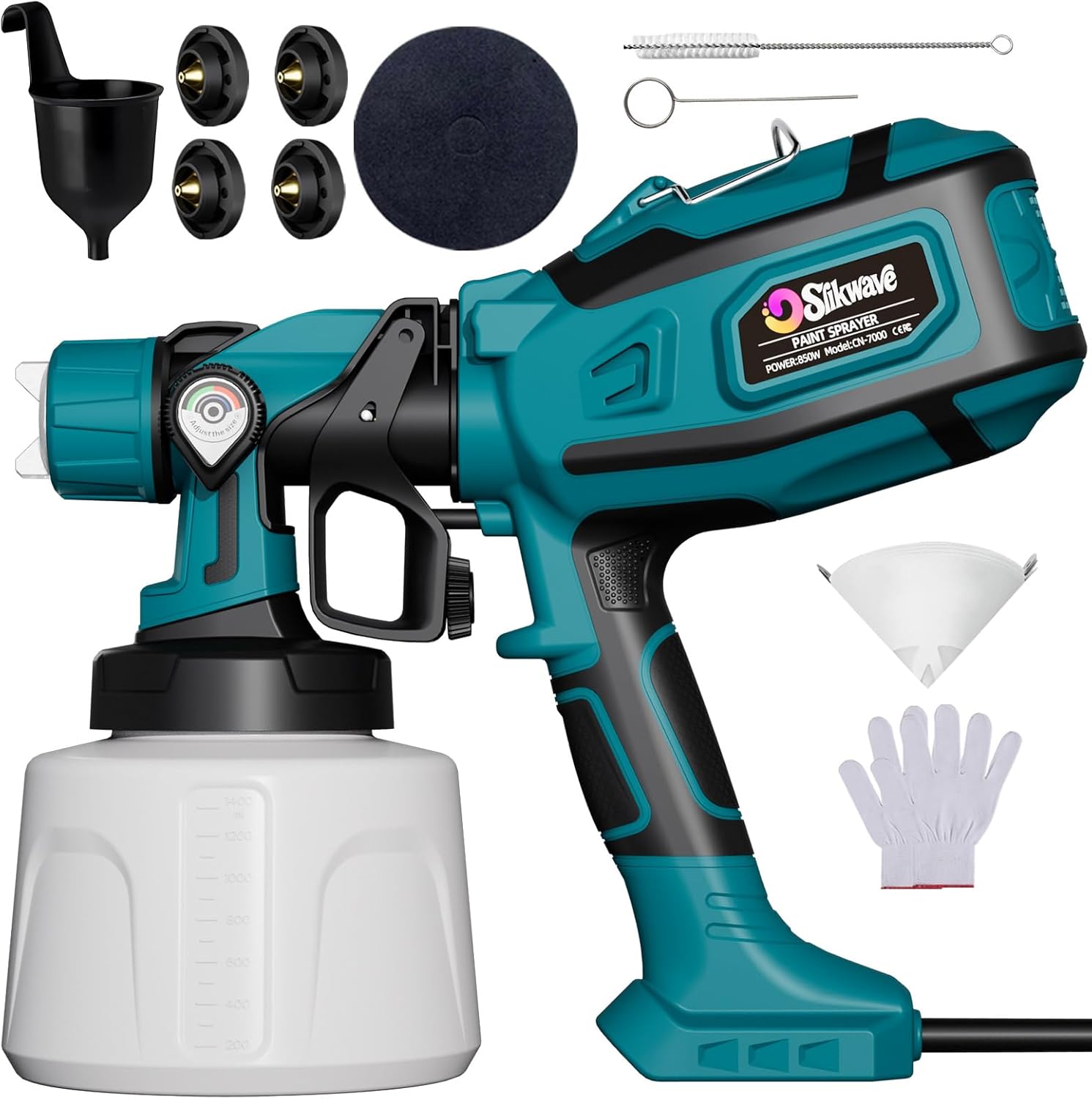
4. Product Overview
The Slikwave CN7000 paint sprayer features an 850W motor designed for efficient paint atomization. It includes a 1400ml detachable container, multiple nozzle sizes, and adjustable spray patterns for various applications.
Key Features:
- 850W Motor: Provides consistent power for smooth and even paint application.
- 1400ml Container: Large capacity reduces the frequency of refills during projects.
- Adjustable Nozzles: Four nozzle sizes (0.8mm, 1.2mm, 1.8mm, 2.5mm) allow for different paint viscosities and project requirements.
- Multiple Spray Patterns: Offers circular, horizontal, and vertical spray patterns for versatile coverage.
- Flow Control: Adjustable material flow for precise application.
- Detachable Design: Components are designed for easy disassembly and cleaning.


5. Setup
5.1 Paint Preparation and Viscosity Test
Proper paint preparation is crucial for optimal spraying results. Most paints require thinning before use. Use the included viscosity cup to test the paint's consistency.
- Stir the paint thoroughly.
- Fill the viscosity cup with paint.
- Measure the time it takes for the paint to completely drain from the cup. Refer to the paint manufacturer's recommendations for ideal viscosity. The maximum spray viscosity for this unit is 120 din-s.
- If the paint is too thick, thin it with the appropriate thinner (not water, unless specified by the paint manufacturer) and re-test until the desired viscosity is achieved.
- Use the included paint filters to remove any impurities from the paint before pouring it into the container.

5.2 Assembly
- Ensure the sprayer is unplugged from the power source.
- Attach the paint container to the spray gun body by twisting it securely until it clicks into place.
- Select the appropriate nozzle size for your paint and project. The 0.8mm nozzle is suitable for thin materials (10-20 Din-s), 1.2mm for medium (30-40 Din-s), 1.8mm for thicker materials (50-70 Din-s), and 2.5mm for very thick materials (80-120 Din-s).
- Insert the chosen nozzle into the nozzle cap and secure it onto the spray gun.
- Adjust the suction tube (straw) inside the paint container. For spraying downwards, point the end of the suction tube towards the front of the gun. For spraying upwards or overhead, point the end of the suction tube towards the back of the gun. This helps minimize paint refills.


6. Operating Instructions
6.1 Adjusting Spray Patterns
The sprayer offers three adjustable spray patterns:
- Circular (45°): Ideal for small areas, corners, and edges.
- Horizontal (90°): Suitable for vertical surfaces, providing a wide horizontal spray.
- Vertical (180°): Suitable for horizontal surfaces, providing a wide vertical spray.
Rotate the air cap ears to change between horizontal and vertical patterns. For a circular pattern, align the air cap ears diagonally.


6.2 Adjusting Material Flow
The material flow can be adjusted using the flow control knob located on the trigger. Turn the knob to increase or decrease the paint output. Always test the spray pattern and flow on a scrap piece of material before applying to your project surface.
6.3 Spraying Technique
- Hold the sprayer approximately 6-12 inches (15-30 cm) from the surface, depending on the desired coverage and paint type.
- Move the sprayer in smooth, even strokes, overlapping each pass by about 50%.
- Maintain a consistent speed and distance from the surface to ensure an even finish.
- Release the trigger at the end of each stroke to avoid paint buildup.


7. Maintenance
Thorough cleaning after each use is essential to maintain the sprayer's performance and extend its lifespan.
7.1 Cleaning Procedure
- Disconnect Power: Always unplug the sprayer from the power outlet before cleaning.
- Empty Container: Empty any remaining paint from the container back into its original can.
- Disassemble: Detach the paint container, nozzle, and air cap assembly from the motor unit.
- Clean Components: Wash all disassembled parts (container, suction tube, nozzle, air cap) with the appropriate cleaning solution for the type of paint used (e.g., water for water-based paints, mineral spirits for oil-based paints).
- Use Cleaning Tools: Use the included cleaning brush to scrub the container and other parts. Use the cleaning needle to clear any blockages in the nozzle and air cap holes.
- Rinse and Dry: Rinse all parts thoroughly with clean water and allow them to dry completely before reassembly or storage.
- Wipe Motor Unit: Wipe the exterior of the motor unit with a damp cloth. Do not immerse the motor unit in liquid.

8. Troubleshooting
Refer to the table below for common issues and their solutions.
| Problem | Possible Cause | Solution |
|---|---|---|
| No spray or weak spray |
|
|
| Uneven spray pattern |
|
|
| Paint drips or runs |
|
|
| Sprayer not turning on |
|
|
9. Specifications
| Feature | Detail |
|---|---|
| Brand | Slikwave |
| Model Name | Electric Paint Sprayer (CN7000) |
| Power Source | AC |
| Motor Power | 850W |
| Tank Volume | 1400 Milliliters |
| Nozzle Sizes | 0.8mm, 1.2mm, 1.8mm, 2.5mm |
| Max Spray Viscosity | 120 din-s |
| Material | Brass, Copper, Plastic |
| Product Dimensions | 5.7"W x 9.6"H |
| Item Weight | 3.65 pounds |
| UPC | 772864443957 |
10. Warranty and Support
For any questions or assistance with your Slikwave paint sprayer, please contact Slikwave customer support. Support is typically available within 18 hours.
Specific warranty details are not provided in this manual. Please refer to your purchase documentation or contact Slikwave customer service for warranty information.