Introduction
The Wolf Guard HD12-CG is a versatile 4-in-1 detector designed to enhance home safety by continuously monitoring for carbon monoxide (CO) and various combustible gases. This device also provides real-time temperature and humidity readings, all displayed on a clear, high-resolution LCD screen. Its plug-and-play design ensures easy installation and continuous operation without the need for additional batteries.
Setup Instructions
1. Unboxing and Initial Inspection
Carefully remove the detector from its packaging. Ensure all components, including the detector unit and USB charging cable, are present and undamaged. The device includes a lithium polymer battery for backup power.
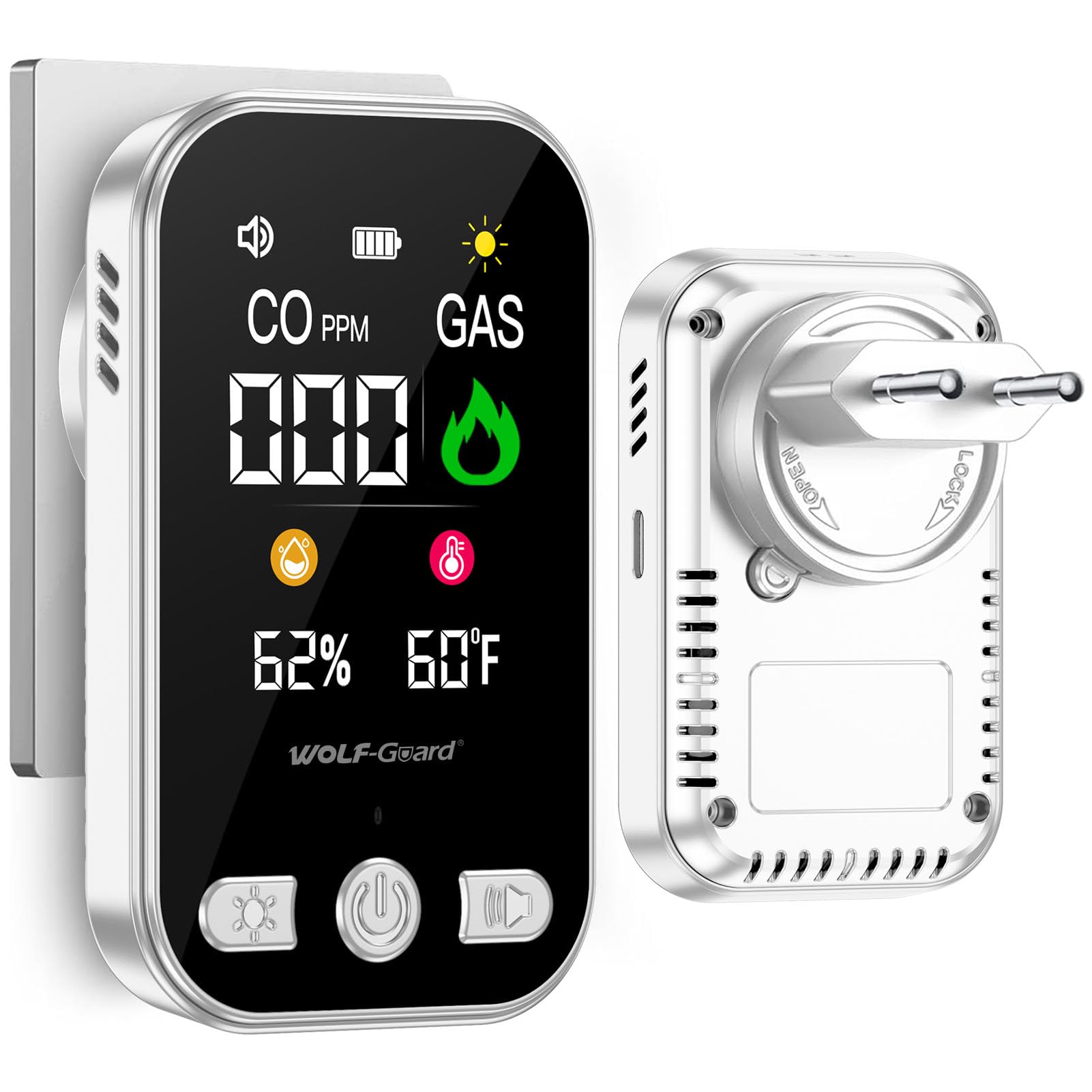
Image: The Wolf Guard HD12-CG detector, showing its compact design and integrated plug for direct wall outlet insertion.
2. Plugging In the Device
Plug the detector directly into a standard household power outlet. The device is designed for continuous operation when plugged in. No additional battery installation is required as it contains an internal rechargeable battery for backup.

Image: The detector plugged into a wall outlet, displaying its screen. This shows the device ready for operation.
3. Initial Self-Test and Warm-up
Upon plugging in, the device will initiate a self-test and warm-up period. During this time, the display may show a countdown or flashing indicators. This process typically takes approximately 180 seconds to ensure the sensors are calibrated and ready for accurate detection. Do not unplug the device during this period.
Video: A demonstration of plugging in a gas detector and its initial warm-up sequence, showing the device performing a self-check before active monitoring begins.
Operating Instructions
1. Understanding the Display
The HD12-CG features a 2.1-inch high-resolution color LCD screen that displays real-time information:
- CO Concentration (ppm): Shows the level of carbon monoxide detected.
- Gas Concentration (LEL): Indicates the level of combustible gases.
- Temperature: Displays the ambient air temperature.
- Humidity: Shows the ambient air humidity percentage.
- Power Indicator: A green light indicates normal operation, while a red light signals an alarm or sensor malfunction.

Image: A detailed view of the detector's LCD screen, highlighting the various real-time readings for CO, gas, temperature, and humidity.
2. Alarm Functionality
The device is equipped with high-precision sensors that detect CO and combustible gases every 2 seconds. If the concentration of either gas exceeds 50 ppm, a loud audible alarm will sound immediately, accompanied by a visual alert on the screen.
Video: A demonstration of the detector's alarm function when exposed to gas, showing the audible and visual alerts.
3. Self-Test Feature
To manually test the device, short press the 'Self-Test' button. This will activate a brief test sequence to confirm the alarm and sensors are functioning correctly.
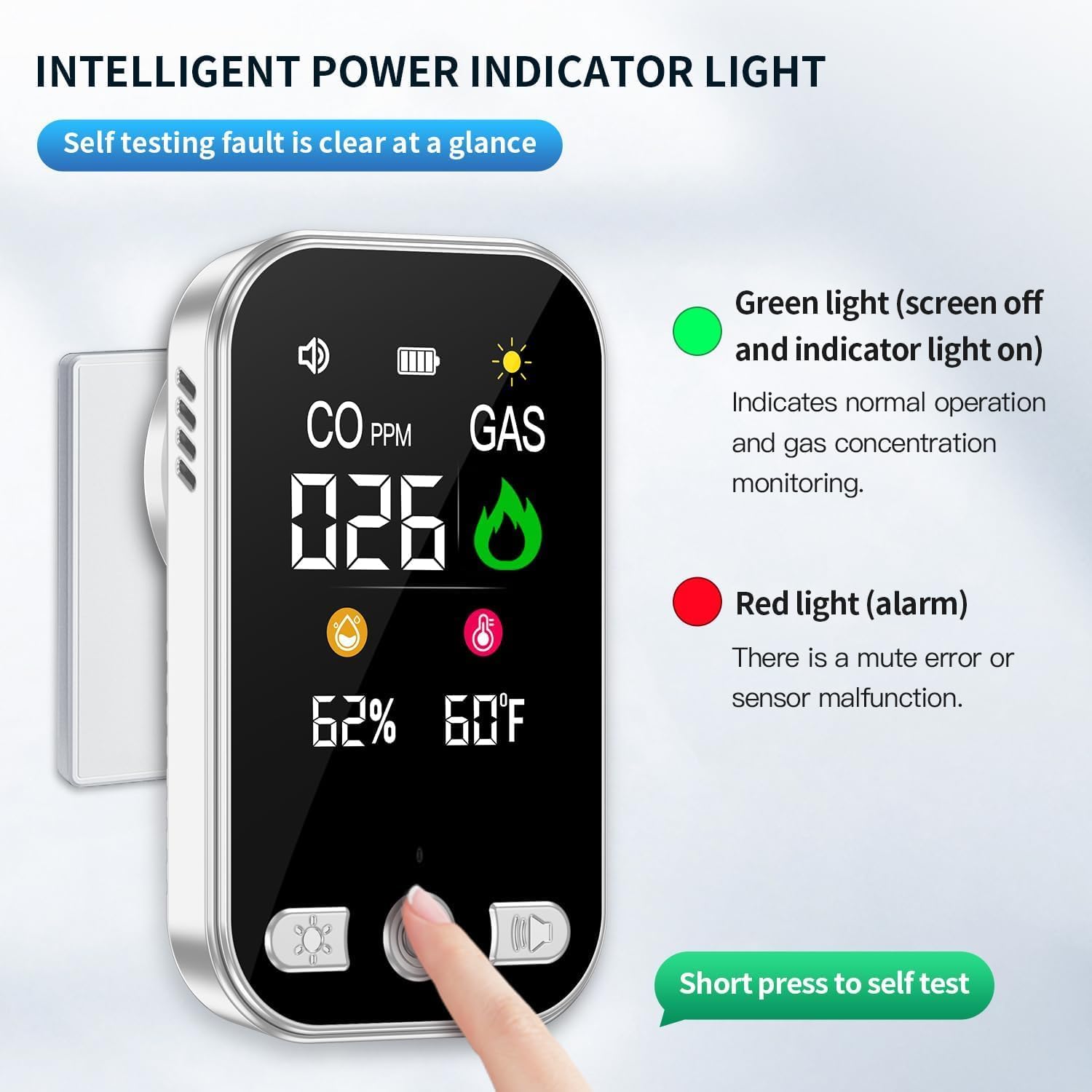
Image: The detector's display showing the intelligent power indicator light (green for normal, red for alarm/malfunction) and the 'Self-Test' button.
4. Screen Orientation
The device features an automatic screen rotation function, allowing the display to adjust its orientation based on how the detector is plugged into the outlet (vertically or horizontally).

Image: Illustration demonstrating the detector's screen automatically rotating to maintain readability whether plugged in vertically or horizontally.
Maintenance
1. Cleaning
Regularly wipe the device with a soft, dry cloth to remove dust. Do not use harsh chemicals or abrasive cleaners, as these can damage the sensors or the device's casing.
2. Sensor Lifespan
The internal sensors have an approximate lifespan of 5 years. After this period, consider replacing the device to ensure continued accuracy and safety.
3. Battery Care
The device includes an internal rechargeable lithium polymer battery. While designed for continuous plug-in operation, ensure the device remains connected to power for optimal performance and to keep the backup battery charged.
Troubleshooting
1. Device Not Powering On
- Ensure the device is securely plugged into a functional power outlet.
- Check if the power outlet itself is working by plugging in another appliance.
2. False Alarms
- Verify there are no actual gas leaks or sources of carbon monoxide in the area.
- Avoid placing the detector near sources of strong fumes, steam, or excessive dust, which might trigger a false alarm.
3. Display Issues
- If the display is dim or unresponsive, ensure the device is receiving power.
- Perform a self-test to check device functionality.
4. Persistent Alarm or Malfunction Indicator
If the device continuously alarms without an apparent cause or displays a malfunction indicator (red light), contact customer support for assistance. Do not attempt to repair the device yourself.
Specifications
| Manufacturer | Shenzhen Huidu Technology Co., Ltd. |
| Product Dimensions | 3.5 x 5 x 8 cm |
| Weight | 150 grams |
| Model Number | HD12 |
| Color | White |
| Material | ABS |
| Power Source | Battery Powered (Lithium Polymer, included) / Plug-in |
| Voltage | 5 Volts |
| Components Included | USB charging cable, battery |
| Sensor Lifespan | Approx. 5 years |
Safety Information
This device is designed to detect carbon monoxide and combustible gases. It is crucial to understand the hazards associated with these gases:
Carbon Monoxide (CO) Hazard
Carbon monoxide is a colorless, odorless, and toxic gas. Mild poisoning can cause headaches, dizziness, palpitations, nausea, vomiting, limb weakness, and brief fainting. Moderate poisoning may lead to coma or collapse. High concentrations can cause varying degrees of poisoning symptoms, endangering the brain, heart, liver, kidneys, lungs, and other human tissues, potentially leading to electrocution-like death.
Combustible Gas Hazard
Natural gas is a colorless, odorless, non-toxic, and non-corrosive gas. Methane poses no harm to the human body, but it is a suffocating agent. When natural gas leaks, it can emit toxic carbon monoxide, causing dizziness. In severe cases, it can lead to poisoning and death. If the concentration of natural gas in the air reaches 10%, there is a risk of suffocation.
Placement Guide
Proper placement of the detector is essential for effective monitoring. Consider installing detectors in bedrooms, dining rooms, kitchens, living rooms, basements, and garages to ensure comprehensive coverage against harmful gases.

Image: A floor plan illustrating optimal locations for carbon monoxide, smoke, and combustible gas detectors throughout a home.
Warranty and Support
For warranty information, technical support, or any inquiries regarding your Wolf Guard HD12-CG detector, please refer to the contact details provided in the product packaging or visit the official Wolf Guard website. Keep your purchase receipt for warranty claims.


