
1. Introduction to the HP 50g
The HP 50g graphing calculator is a versatile tool designed for a wide range of mathematical and scientific applications. It supports two primary calculating modes: Reverse Polish Notation (RPN) and Algebraic (ALG). This manual provides detailed guidance on utilizing both modes, along with the calculator's extensive features for various computational tasks.
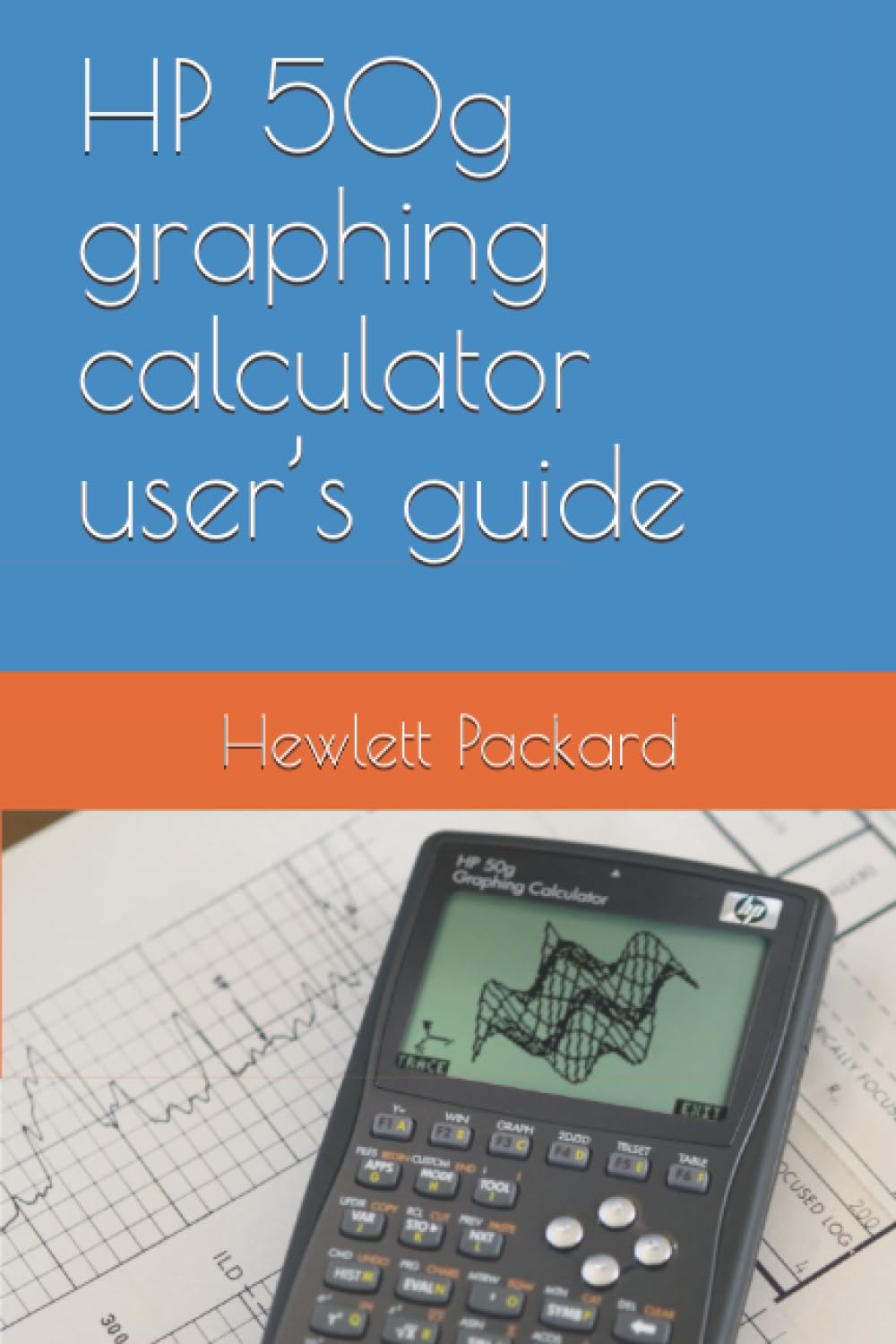
Figure 1.1: Front view of the HP 50g Graphing Calculator, showcasing its display and keypad.
2. Operating Modes: RPN and Algebraic
The HP 50g offers two distinct operating modes to suit different user preferences and calculation methodologies:
2.1 Reverse Polish Notation (RPN) Mode
RPN mode is designed for efficient calculations. In this mode, operands are entered first, followed by the operator. The calculator uses a "stack" to manage numbers. For example, to calculate 2 + 3:
- Enter '2'.
- Enter '3'.
- Press the '+' operator key.
The result will be displayed on the stack.
2.2 Algebraic (ALG) Mode
ALG mode mimics traditional paper-and-pencil arithmetic. Expressions are entered in the order they are written. For example, to calculate 2 + 3:
- Press the '2' key.
- Press the '+' key.
- Press the '3' key.
- Press the ENTER key to compute the result.
This guide provides examples for both RPN and ALG modes throughout its sections.
3. Key Features and Applications
The HP 50g is equipped with a comprehensive set of functions and capabilities:
- Number Calculations: Supports real and complex number calculations.
- Data Structures: Operations with lists, vectors, and matrices.
- Graphing: Detailed examples of graph applications with high-speed graphics for complex figures.
- Programming: Basic programming, graphics programming, and string manipulation.
- Advanced Mathematics: Advanced calculus, multivariate calculus, and differential equations (including Laplace transform and Fourier series).
- Statistics: Probability and statistic applications.
- Computer Algebraic System (CAS): A powerful CAS allows selection of different modes, such as complex vs. real numbers, or exact (symbolic) vs. approximate (numerical) mode.
- Display: Adjustable display to provide textbook-type expressions for matrices, vectors, fractions, summations, derivatives, and integrals.
4. Connectivity and Data Exchange
The HP 50g offers multiple options for connecting with other devices and managing data:
- Infrared Port: For wireless data exchange with compatible calculators.
- RS232 Port: For serial communication with other calculators or computers.
- USB Port and Cable: Provided for fast and efficient exchange of programs and data with computers.
- Flash Memory Card Port: Facilitates storage and exchange of data with other users, enhancing the calculator's versatility.
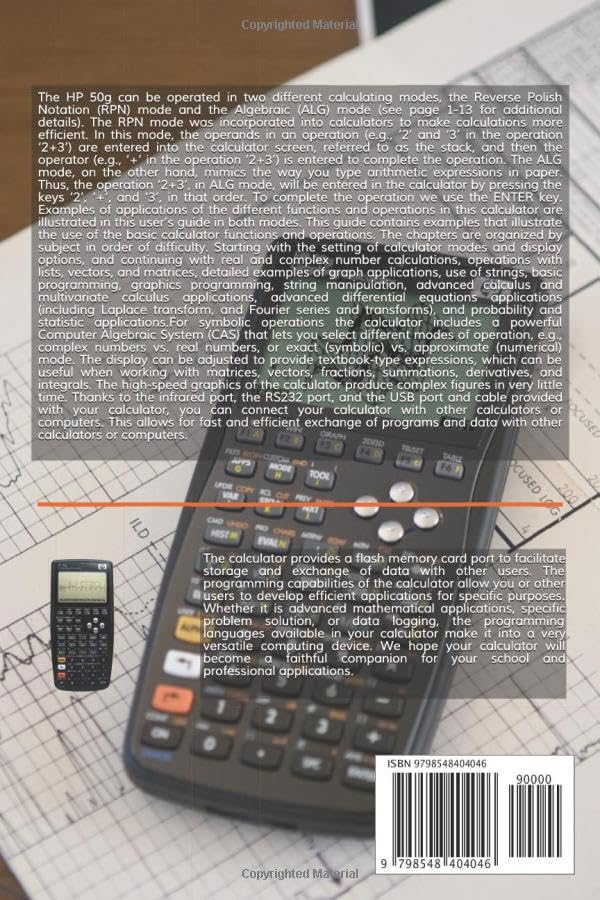
Figure 4.1: Back view of the HP 50g Graphing Calculator, highlighting the various connectivity ports and the flash memory card slot.
5. Setup and Initial Use
5.1 Battery Installation
To power your HP 50g, install four AAA batteries into the battery compartment located on the back of the calculator. Ensure correct polarity as indicated inside the compartment. Close the battery cover securely.
5.2 Powering On and Initial Settings
Press the ON key to turn on the calculator. Upon first use, you may be prompted to set the language, time, and date. Follow the on-screen instructions. You can adjust calculator modes (RPN/ALG) and display options via the MODE menu.
6. Maintenance and Care
- Cleaning: Use a soft, dry cloth to clean the calculator's exterior. Do not use liquid cleaners or abrasive materials.
- Storage: Store the calculator in a cool, dry place away from direct sunlight and extreme temperatures. If storing for extended periods, remove the batteries to prevent leakage.
- Protection: Use a protective case to prevent scratches and damage to the screen and keys.
7. Troubleshooting
7.1 Calculator Does Not Turn On
- Check if batteries are correctly installed and not depleted. Replace if necessary.
- Ensure the battery cover is securely closed.
7.2 Display Issues
- Adjust display contrast settings (refer to the MODE menu).
- If the screen is blank or frozen, try a soft reset by pressing the ON key and the C key simultaneously.
7.3 Calculation Errors
- Verify that the calculator is in the correct operating mode (RPN or ALG) for your input style.
- Check unit settings (e.g., degrees vs. radians) for trigonometric functions.
- Ensure correct syntax for complex expressions.
8. Specifications
| ASIN | B0F9SCTBRV |
| Publisher | Independently published |
| Publication Date | May 23, 2025 |
| Language | English |
| Print Length | 794 pages |
| ISBN-13 | 979-8548404046 |
| Item Weight | 2.86 pounds |
| Dimensions | 6 x 1.79 x 9 inches |
9. Warranty and Support
For warranty information and technical support, please refer to the official HP website or contact HP customer service. Keep your purchase receipt as proof of purchase for warranty claims.
This manual is intended as a guide. For the most up-to-date information and additional resources, please visit the manufacturer's support pages.


