
1. Product Overview
This manual provides essential information for the installation, maintenance, and troubleshooting of your AMECA Gas Furnace Flame Sensor Rod, Model 161. This component is a critical safety device designed to detect the presence of a flame in your gas furnace's burner assembly. If a flame is not detected, the sensor signals the gas valve to close, preventing uncombusted gas from accumulating, which is a significant safety hazard.
The AMECA Flame Sensor Rod is compatible with various York and Coleman gas furnace models, including but not limited to: 025-30788-700, S1-02530788700, G9T08016UPC13C, G9T10014UPC13A, G9T10014UPC13B, G9T10014UPC13C, G9T10020DHC13A, G9T10020DHC13B, and many others listed in the product description.
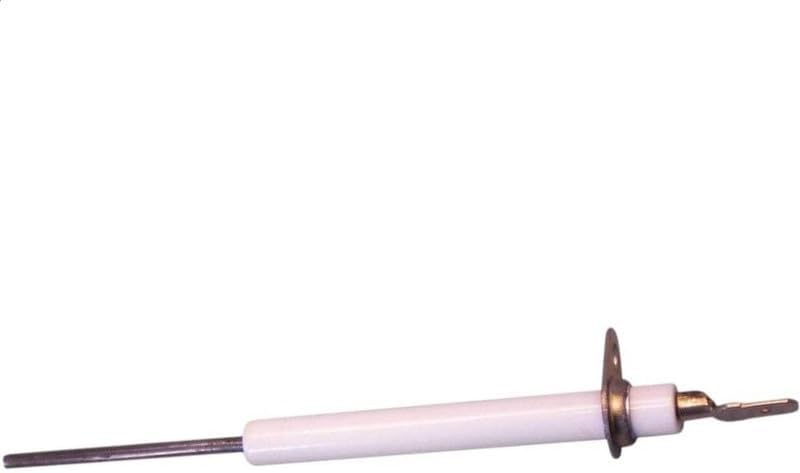
Figure 1: AMECA Gas Furnace Flame Sensor Rod. This image displays the flame sensor rod, characterized by its white ceramic insulator and a metallic sensing rod extending from one end, with a spade connector at the other end for electrical connection.
2. Safety Information
WARNING: Installation and servicing of heating equipment can be hazardous due to gas and electrical components. This task should only be performed by qualified service personnel. Failure to follow these instructions could result in property damage, personal injury, or death.
- Always disconnect all electrical power to the furnace before servicing.
- Turn off the gas supply to the furnace before servicing.
- Ensure proper grounding of the furnace and all electrical components.
- Verify that all gas connections are leak-free after any service involving gas lines.
- Wear appropriate personal protective equipment (PPE) such as gloves and eye protection.
3. Installation Instructions
3.1 Pre-Installation Steps
- Disconnect Power: Locate the main electrical disconnect switch for your furnace and turn it OFF. Verify power is off using a voltage tester.
- Turn Off Gas Supply: Close the manual gas shut-off valve located on the gas line leading to the furnace.
- Access Furnace: Open the furnace access panel(s) to expose the burner assembly and controls.
- Locate Flame Sensor: Identify the existing flame sensor. It is typically a single metallic rod with a ceramic insulator, positioned in the path of the burner flame.
3.2 Removal of Old Flame Sensor
- Disconnect Wire: Carefully disconnect the electrical wire from the spade terminal of the old flame sensor.
- Unscrew Sensor: Using an appropriate wrench or nut driver, loosen and remove the screw or nut that secures the flame sensor to the burner assembly.
- Remove Sensor: Gently pull the old flame sensor out of its mounting bracket.
3.3 Installation of New Flame Sensor
- Insert New Sensor: Insert the new AMECA flame sensor into the mounting bracket, ensuring it is oriented correctly and positioned to be in the flame path.
- Secure Sensor: Fasten the sensor securely with the screw or nut removed earlier. Do not overtighten.
- Connect Wire: Reconnect the electrical wire to the spade terminal of the new flame sensor. Ensure a snug connection.
3.4 Post-Installation Checks
- Close Panels: Replace all furnace access panels.
- Restore Gas: Open the manual gas shut-off valve.
- Restore Power: Turn the main electrical disconnect switch for the furnace back ON.
- Test Operation: Set your thermostat to call for heat and observe the furnace's ignition sequence to ensure proper operation. The burners should ignite, and the flame should be sustained.
4. Operating Principles
The flame sensor operates on the principle of flame rectification. When the furnace calls for heat, the igniter heats up and ignites the gas. Once the flame is established, it creates a conductive path for a small electrical current (microamps) to flow through the flame sensor rod to the furnace's control board. This current signals the control board that a flame is present, allowing the gas valve to remain open and the furnace to continue its heating cycle.
If the flame sensor does not detect a flame (e.g., due to a dirty sensor, a faulty sensor, or an actual flame failure), the control board will shut off the gas supply to prevent a dangerous accumulation of uncombusted gas. This safety mechanism is crucial for preventing explosions and carbon monoxide poisoning.
5. Maintenance
Regular maintenance of your flame sensor is vital for the reliable and safe operation of your furnace. Soot and carbon buildup on the sensor rod can insulate it, preventing it from detecting the flame correctly.
5.1 Cleaning the Flame Sensor
- Safety First: Always follow the safety precautions outlined in Section 2 before beginning any maintenance. Disconnect power and turn off the gas supply.
- Remove Sensor: Follow the steps in Section 3.2 to carefully remove the flame sensor from the furnace.
- Clean Rod: Gently clean the metallic rod portion of the sensor using a fine-grit sandpaper (e.g., 180-220 grit) or a piece of fine steel wool. The goal is to remove any carbon buildup or oxidation without damaging the rod. Do not use harsh chemicals or abrasive cleaners that could leave a residue.
- Inspect: Inspect the ceramic insulator for cracks or damage. If the ceramic is cracked, the sensor should be replaced.
- Reinstall: Reinstall the cleaned flame sensor by following the steps in Section 3.3 and 3.4.
It is recommended to inspect and clean the flame sensor annually, preferably before the heating season begins.
6. Troubleshooting
If your furnace is experiencing issues related to ignition or short cycling, the flame sensor may be a contributing factor. Always ensure safety precautions are followed before attempting any troubleshooting.
| Symptom | Possible Cause | Solution |
|---|---|---|
| Furnace ignites, runs for a few seconds, then shuts off (short cycling). | Dirty or faulty flame sensor not detecting flame. | Clean the flame sensor (refer to Section 5.1). If the problem persists, replace the sensor. |
| Furnace attempts to ignite but fails, then locks out. | No flame detected by sensor, or no flame established. | Check for gas supply. Ensure igniter is working. Clean or replace flame sensor. Consult furnace manual for specific error codes. |
| Furnace runs continuously without shutting off. | Less likely a flame sensor issue, but could indicate a short circuit. | Check wiring for shorts. Consult a qualified technician. |
For complex issues or if you are unsure about any step, it is highly recommended to contact a qualified HVAC technician.
7. Specifications
- Brand: AMECA
- Model Number: 161
- Part Number: 161
- Compatibility: Direct replacement for York and Coleman part numbers 025-30788-700, S1-02530788700, and various furnace models including those starting with 6MG, DGAD, DGAE, DGAF, DGU, FG9A, FG9B, FG9C, FG9D, G9D, G9T series.
- Function: Flame Rectification Sensor
- Material: Ceramic insulator, metallic sensing rod
8. Warranty and Support
This AMECA product is manufactured to high-quality standards. For specific warranty information, please refer to the terms provided at the time of purchase or contact your retailer. If you have questions regarding compatibility, installation, or troubleshooting that are not covered in this manual, please contact the seller or a qualified HVAC professional for assistance.
For further assistance, you may also refer to the official documentation for your specific York or Coleman furnace model.