1. Introduction
This manual provides instructions for the installation, operation, and maintenance of your CAMECHO Android 15 car stereo head unit. Please read this manual thoroughly before installation and use to ensure proper function and safety.
2. Applicable Car Models
This head unit is designed for specific vehicle models. Ensure your vehicle matches the compatibility list below:
- Dodge Journey: 2012-2020 models
- Fiat Freemont: 2011-2019 models
Note: After installation, the original CD player (if any) will no longer function.

Figure 2.1: Compatible vehicle dashboards and installation comparison. The image illustrates the head unit's fitment in a Dodge Journey, showing the original dashboard, the new head unit installed, and indicating that the original CD player is not supported while an original roof monitor is.
3. Setup and Installation
3.1. What's in the Box (Packing List)
Verify that all components are present before beginning installation:
- 1 x Android Head Unit
- 1 x AHD Backup Camera
- 1 x External Microphone
- 1 x Canbus Decoder
- 1 x GPS Antenna
- 1 x Radio Antenna
- 1 x Power Cable
- 1 x RCA Cable
- 1 x Rear Camera Input Cable
- 2 x USB Cable
- 1 x Original USB Cable
- 1 x Rear Camera Adapter Cable
- 1 x Installation Tool
- 1 x Instruction Manual

Figure 3.1: Contents of the package and unit dimensions. This image details the physical size of the head unit and lists all included accessories with their corresponding labels.
3.2. Wiring and Connections
Follow these steps for proper wiring and connection of the head unit:
- Power Cable: Connect the main power harness to the vehicle's wiring.
- RCA Cable: Connect for audio/video output to external amplifiers or monitors.
- USB Cables: Connect the provided USB cables for data transfer and charging.
- Camera Input: Connect the rear camera input cable.
- Radio Antenna: Connect the vehicle's radio antenna.
- GPS Antenna: Connect the GPS antenna and mount it in a location with a clear view of the sky.
3.3. CANBUS Connection
The CANBUS decoder is essential for retaining steering wheel controls and other vehicle-specific functions.
- Ensure the CANBUS box is correctly connected to the wiring harness.
- Plug the 8-pin cable into the connector on the head unit. Failure to do so will result in non-functional steering wheel controls.

Figure 3.2: CANBUS wiring diagram. This image provides visual guidance for connecting the CANBUS decoder and the 8-pin cable, along with instructions for configuring steering wheel controls in the settings menu.
Steering Wheel Control Configuration:
After connecting the CANBUS, you must set the protocol correctly for steering wheel controls to work. Navigate to: Settings > Factory Mode > Password: 8888 > 1 Vehicle > Automotive type. Choose Raise - Dodge - 2014 Journey (High-End) for your car.
3.4. Reversing Camera Installation
The reversing input must be plugged in even if a reversing camera is not used.
- Connect the positive pole of the camera's power supply to the car's reversing light positive.
- Connect the negative pole of the camera's power supply to the car's reversing light negative.
- The reversing trigger is controlled by the stereo; no separate connection is required for the trigger wire.

Figure 3.3: Reversing camera wiring. This diagram provides a visual guide for connecting the AHD backup camera, including power connections and the input to the head unit. It also highlights the importance of connecting the white plug for wireless signals.
Troubleshooting Camera Display:
If the camera still does not work, adjust the backup camera resolution through: Settings > Factory Mode > Password: 8888 > 3 Camera.
3.5. Original Backup Camera Connection (If Applicable)
If your vehicle has an original backup camera, connect the yellow AV connector ("CAM Video In") of the power cable to the Reversing Input cable.

Figure 3.4: Original backup camera connection. This diagram shows the specific wiring for integrating an existing vehicle backup camera with the new head unit, emphasizing the yellow AV connector and the white plug.
4. Operating Instructions
4.1. Basic Operation
- Power On/Off: Press and hold the power button on the unit or use the vehicle's ignition.
- Touch Screen: Navigate the interface by tapping, swiping, and pinching on the 9-inch touch screen.
- Volume Control: Adjust audio volume using the physical buttons or on-screen controls.
4.2. Wireless Apple CarPlay & Android Auto
Connect your smartphone wirelessly for seamless integration of navigation, music, calls, and messages.
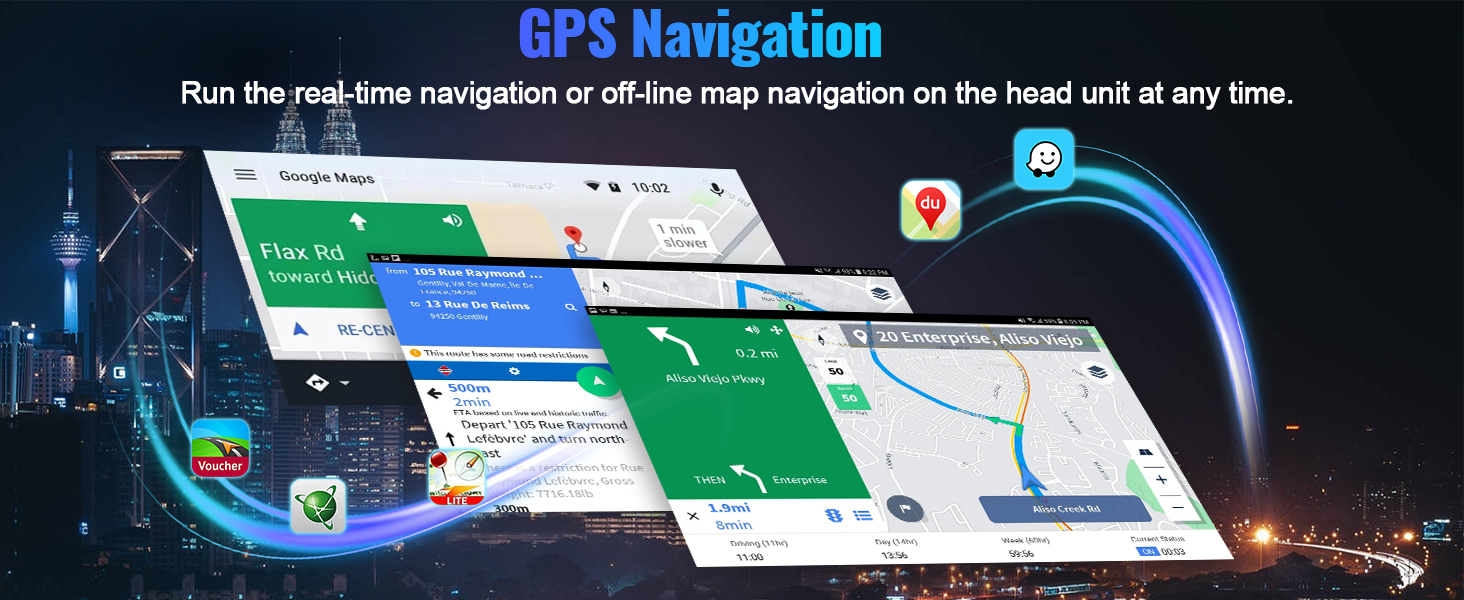
Figure 4.1: Wireless Apple CarPlay and Android Auto interface. This image displays the user interface for both CarPlay and Android Auto, highlighting their core functionalities like phone calls, music playback, and navigation.
Connection Steps:
Wireless Apple CarPlay
- Click the "ApplePlay" app on the head unit.
- Turn on Bluetooth on your iPhone and select the car radio's Bluetooth name.
- Allow access to Contacts and Favorite Sync.
- Wait briefly for CarPlay mode to activate.
Wireless Android Auto
- Click the "Android Auto" app on the head unit.
- Turn on Bluetooth on your Android phone.
- Select the car radio's Bluetooth name and pair.
- Wait briefly for Android Auto mode to activate.

Figure 4.2: Wireless CarPlay and Android Auto connection guide. This image provides a visual summary of the steps required to connect both Apple CarPlay and Android Auto wirelessly to the head unit.
4.3. GPS Navigation & WiFi Connection
The unit includes a built-in GPS module for navigation and supports WiFi for online services.
- GPS Navigation: Utilize pre-installed or downloaded navigation apps for online and offline routing.
- WiFi Connection: Connect to a mobile hotspot or available WiFi networks to access online content, download apps, and stream media.

Figure 4.3: GPS Navigation and WiFi functionality. This image illustrates the navigation interface and the availability of WiFi connectivity for various online services.
4.4. Bluetooth 5.0 & FM RDS Radio
Enjoy hands-free communication and a wide range of radio stations.
- Bluetooth 5.0: Pair your phone for hands-free calls and wireless audio streaming from apps like Spotify or Pandora.
- FM RDS Radio: Tune into FM/RDS radio with 18-station presets for live broadcasting and station information.

Figure 4.4: Bluetooth and FM RDS Radio interfaces. This image shows the on-screen controls for Bluetooth calls and the FM radio tuner with RDS information.
4.5. AHD Backup Camera
Enhance parking safety with the included AHD rear view camera.
- The camera provides a clear image on the touchscreen, even in low-light conditions, thanks to its stronger night vision effect.
- IP67 waterproof rating ensures durability in various weather conditions.

Figure 4.5: Backup camera display and steering wheel controls. This image illustrates the clear view provided by the AHD camera and the integration of steering wheel controls for safe driving.
4.6. Steering Wheel Control
Retain your vehicle's factory steering wheel control functionality for convenience and safety.
- Control volume, track skipping, and answer/end calls directly from your steering wheel.
- Ensure CANBUS is correctly configured as described in Section 3.3.
4.7. 16-Band Equalizer (EQ)
Customize your audio experience with the built-in 16-band equalizer.
- Adjust sound frequencies to achieve desired bass, midrange, and treble levels.
- Multiple preset EQ modes are available for various music genres.

Figure 4.6: 16-Band Equalizer interface. This image displays the detailed audio customization options available through the equalizer, including frequency adjustments and sound field controls.
4.8. Home Page App Customization
Personalize your head unit's home screen by arranging and selecting your preferred applications.
- Drag and drop app icons to rearrange them.
- Choose which apps are displayed on the home page for quick access.

Figure 4.7: Home page app customization. This image demonstrates how users can personalize their home screen by selecting and rearranging application icons.
4.9. Split Screen Functionality
Run two applications simultaneously on the screen for enhanced multitasking.
- For example, use navigation on one side while controlling music on the other.

Figure 4.8: Split screen in action. This image illustrates the ability to display two applications concurrently, such as navigation and a music player.
4.10. Mirror Link
Cast your smartphone's screen to the car stereo touchscreen.
- This function is supported wirelessly only.

Figure 4.9: Mirror Link functionality. This image demonstrates the wireless mirroring of a smartphone screen onto the car stereo display.
5. Maintenance
To ensure the longevity and optimal performance of your CAMECHO car stereo, follow these maintenance guidelines:
- Cleaning: Use a soft, dry cloth to clean the screen and exterior. Avoid abrasive cleaners or solvents.
- Software Updates: Periodically check for and install software updates to improve performance and add new features. These are typically available via WiFi connection.
- Temperature: Avoid exposing the unit to extreme temperatures, both hot and cold, for extended periods.
- Connections: Ensure all cables and connections remain secure. Loose connections can lead to intermittent issues.
6. Troubleshooting
If you encounter issues with your car stereo, refer to the following common problems and solutions:
| Problem | Possible Cause | Solution |
|---|---|---|
| Unit does not power on | Loose power connection, blown fuse, vehicle ignition issue. | Check power cable connections. Inspect vehicle fuses. Ensure vehicle ignition is on. |
| No sound | Volume too low, incorrect audio source, speaker wiring issue. | Increase volume. Select correct audio source. Check speaker connections. |
| Steering wheel controls not working | CANBUS not connected or incorrectly configured. | Verify CANBUS connection (Section 3.3). Configure CANBUS protocol in Factory Settings. |
| Backup camera not displaying | Camera wiring issue, incorrect camera resolution setting. | Check camera power and video input connections (Section 3.4). Adjust camera resolution in Factory Settings (Section 3.4). |
| GPS signal weak or lost | GPS antenna obstructed or improperly placed. | Ensure GPS antenna has a clear view of the sky. Check antenna connection. |
| Wireless CarPlay/Android Auto not connecting | Bluetooth not enabled, incorrect pairing, phone compatibility. | Ensure phone Bluetooth is on and paired. Follow connection steps (Section 4.2). Restart phone and head unit. |
If the problem persists after attempting these solutions, please contact customer support.
7. Specifications
| Feature | Detail |
|---|---|
| Operating System | Android 15 |
| RAM / ROM | 4GB RAM / 64GB ROM |
| Screen Size | 9 inches |
| Display Resolution | 1280*720 |
| Connectivity | Wireless Apple CarPlay, Wireless Android Auto, Bluetooth 5.0, WiFi, GPS |
| Radio Tuner | FM RDS with 18 presets |
| Equalizer | 16-band EQ |
| Backup Camera | AHD with IP67 waterproof, enhanced night vision |
| Video Playback | Supports 1080P video |
| USB Ports | Dual USB ports |
| Output Power | 180 Watts |
| Product Dimensions | 10.4 x 10.4 x 17.3 inches |
| Item Weight | 3.53 pounds |
8. Warranty and Support
8.1. Warranty Information
This product comes with a standard manufacturer's warranty. Please refer to the warranty card included in your package for specific terms and conditions. Keep your proof of purchase for warranty claims.
8.2. Customer Support
For technical assistance, troubleshooting, or any questions regarding your CAMECHO car stereo, please contact our customer support team.
Email: CAMECHOVIP@126.com

Figure 8.1: Customer Support Contact. This image provides the email address for customer assistance.


