
NJTY T3
NJTY Digital Multimeter & TDS Meter User Manual
Model: T3
1. Introduction
This manual provides detailed instructions for the safe and effective use of your NJTY Digital Multimeter and TDS Meter. This all-in-one precision tool is designed for both electrical diagnostics and water quality testing, offering comprehensive measurement capabilities for AC/DC voltage, resistance, continuity, Non-Contact Voltage (NCV), Total Dissolved Solids (TDS), Electrical Conductivity (EC), and temperature.
Please read this manual thoroughly before operation to ensure proper usage and to prevent damage to the device or personal injury. Keep this manual for future reference.
2. Safety Information
Always adhere to basic safety precautions when using electrical testing equipment and handling water samples. Failure to follow these guidelines may result in electric shock, fire, or damage to the device.
- Electrical Safety:
- Do not exceed the maximum input values specified for each measurement range.
- Exercise extreme caution when working with live circuits. High voltages can be dangerous.
- Ensure test leads are in good condition, without cracks or damaged insulation.
- Do not use the multimeter if it appears damaged or is not operating properly.
- Always disconnect power to the circuit before measuring resistance or continuity.
- Water Testing Safety:
- Do not immerse the entire TDS meter in water; only the probe section should be submerged.
- Keep the device clean and dry when not in use.
- Avoid dropping or subjecting the device to severe impact.
3. Package Contents
Verify that all items are present and in good condition upon opening the package:
- NJTY Digital Multimeter (Model T3)
- NJTY TDS & EC Meter
- Test Leads (Red and Black)
- User Manual (this document)
- Type-C Charging Cable (for TDS Meter)
4. Product Overview
Familiarize yourself with the components of both the Digital Multimeter and the TDS Meter.
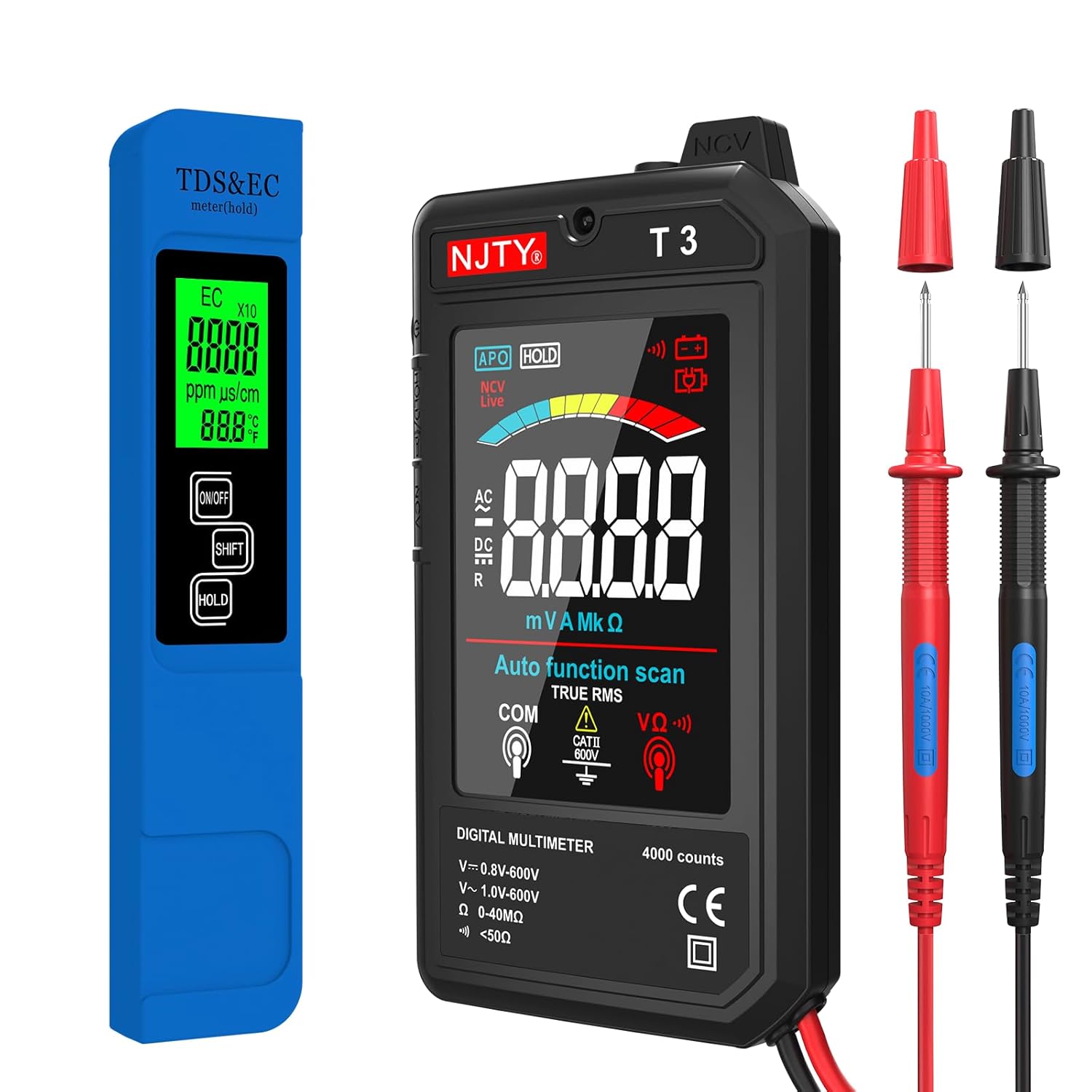
Figure 4.1: Overview of the NJTY Digital Multimeter, TDS Meter, and included test leads.
4.1 Digital Multimeter (Model T3)

Figure 4.2: Key features and functions of the Digital Multimeter.
- Display: 3.19-inch color LCD display for clear readings.
- Function Buttons: Power, HOLD, NCV/Live.
- Input Jacks: For connecting test leads (COM, VΩ).
- NCV Sensor: For non-contact voltage detection.
- Flashlight: Integrated LED light for illuminating dark work areas.
4.2 TDS & EC Meter

Figure 4.3: The TDS Meter highlighting its 4-in-1 measurement capabilities.
- Display: Backlit LCD screen for easy readability.
- Buttons: ON/OFF, SHIFT (mode selection), HOLD.
- Probe: High-sensitivity titanium alloy probe for accurate water testing.
- Type-C Charging Port: For convenient recharging.
5. Setup
5.1 Digital Multimeter Setup
- Insert the red test lead into the VΩ input jack.
- Insert the black test lead into the COM (common) input jack.
- Ensure connections are firm before use.
5.2 TDS & EC Meter Setup
- Before first use, or if the battery is low, connect the Type-C charging cable to the meter and a suitable USB power source. The charging indicator will show status.
- Once charged, press the ON/OFF button to power on the device.
6. Operating Instructions
6.1 Operating the Digital Multimeter
The multimeter features an auto-function scan, simplifying operation by automatically identifying the measurement type.
- Power On/Off: Press the power button on the side to turn the multimeter on or off.
- Measuring AC/DC Voltage:

Figure 6.1: Examples of AC and DC voltage measurement using the multimeter.
- Connect the test leads to the circuit in parallel for voltage measurement.
- The multimeter will automatically detect AC or DC voltage and display the reading.
- Ensure the voltage is within the specified range (0-600V).
- Measuring Resistance/Continuity:
- Ensure the circuit is de-energized before connecting the test leads.
- Connect the test leads across the component to measure resistance.
- For continuity, if the resistance is below 50Ω, the buzzer will sound, indicating continuity.
- Non-Contact Voltage (NCV) Detection:

Figure 6.2: NCV function indicating voltage presence without direct contact.
- Press the NCV/Live button.
- Place the NCV sensor (top of the multimeter) near the wire or outlet.
- The device will beep and the NCV indicator will light up if voltage is detected, with increasing frequency/intensity as you get closer to the source.
- Flashlight and Backlight:

Figure 6.3: The integrated flashlight for improved visibility in low-light conditions.
- Press the flashlight button (usually integrated with the power button or a separate button) to turn on the LED flashlight.
- The display backlight automatically activates when the device is on.
- Data Hold: Press the HOLD button to freeze the current reading on the display. Press again to release.
- Automatic Shutdown: The multimeter will automatically power off after a period of inactivity to conserve battery life.
6.2 Operating the TDS & EC Meter
This meter provides quick and accurate measurements for water quality.

Figure 6.4: Common applications for the TDS & EC Meter.
- Power On/Off: Press the ON/OFF button to turn the meter on or off.
- Taking a Measurement:
- Immerse the probe section of the meter into the water sample (do not immerse the entire device).
- Wait for the reading to stabilize on the display. The meter will automatically measure TDS, EC, and temperature.
- Switching Modes (TDS/EC/Temperature):

Figure 6.5: Switching between different measurement modes on the TDS Meter.
- Press the SHIFT button to cycle through the different display modes: TDS (ppm), EC (µs/cm), Temperature (°C), and Temperature (°F).
- Data Hold: Press the HOLD button to freeze the current reading on the display. Press again to release.
- Automatic Shutdown: The TDS meter will automatically power off after a period of inactivity to conserve battery life.
7. Maintenance
7.1 Cleaning
- Digital Multimeter: Wipe the exterior with a clean, damp cloth. Do not use abrasive cleaners or solvents.
- TDS & EC Meter: After each use, rinse the probe section with distilled water to prevent mineral buildup. Gently wipe the probe dry with a soft cloth.
7.2 Storage
- Store both devices in a cool, dry place, away from direct sunlight and extreme temperatures.
- Keep out of reach of children.
7.3 Battery Care (TDS Meter)
- Recharge the TDS meter when the battery indicator shows low power.
- Avoid completely draining the battery for extended periods to prolong its lifespan.
8. Troubleshooting
If you encounter issues with your device, refer to the following common problems and solutions:
| Problem | Possible Cause | Solution |
|---|---|---|
| Multimeter/TDS Meter does not turn on. | Low or depleted battery (TDS Meter); device off. | Charge the TDS Meter. Ensure the power button is pressed firmly. |
| Inaccurate readings on Multimeter. | Incorrect connection; test leads damaged; exceeding range. | Check test lead connections. Inspect leads for damage. Ensure measurement is within device limits. |
| Inaccurate readings on TDS Meter. | Dirty probe; air bubbles on probe; calibration needed (rarely). | Clean the probe with distilled water. Gently shake the meter to remove air bubbles. |
| NCV function not detecting voltage. | Not close enough to source; NCV function not activated. | Ensure the NCV sensor is very close to the live wire. Press the NCV/Live button to activate. |
9. Specifications
9.1 Digital Multimeter (Model T3)
- Display: 4000 Counts, 3.19-inch Color LCD
- AC Voltage Range: 0.8V - 600V
- DC Voltage Range: 1.0V - 600V
- Resistance Range: 0 - 40 MΩ
- Continuity: Buzzer alert for < 50Ω
- Features: Auto Function Scan, NCV (Non-Contact Voltage) Detection, Data Hold, Flashlight, Backlight, Automatic Shutdown
- Safety Rating: CATII 600V (implied from image)
9.2 TDS & EC Meter
- Functions: 4-in-1 (TDS, EC, Temperature in °C/°F)
- TDS Range: 0 - 9999 ppm
- EC Range: 0 - 9999 µs/cm
- Temperature Range: 0.1 - 80.0°C (32.0 - 176.0°F)
- Accuracy: ±0.5°F (for temperature)
- Probe: High-sensitivity Titanium Alloy
- Power Source: Rechargeable Battery (Type-C charging port)
- Features: Backlit Screen, Data Hold, Automatic Shutdown
10. Warranty and Support
For information regarding warranty coverage, technical support, or service, please refer to the warranty card included with your purchase or contact the manufacturer/seller directly through their official channels. Keep your purchase receipt as proof of purchase.
Ask a question about this manual
Ask about setup, troubleshooting, compatibility, parts, safety, or missing instructions. Manuals+ will review the question and use this page’s manual context to help answer it.