
NEIKO 02253A
NEIKO 02253A Come Along Winch Instruction Manual
Model: 02253A | Brand: NEIKO
1. Product Overview
The NEIKO 02253A Heavy Duty Manual Come Along Cable Puller is engineered for robust pulling applications. This manual winch boasts a 3-ton (6,000 lbs) pulling capacity and a maximum horizontal load capacity of 7,500 pounds, making it ideal for construction, home, farm, ranch, fencing, and automotive use. Its portable design allows for easy transport and use in various situations.
Key features include:
- Heavy-Duty Steel Construction: Ensures durability and long-lasting performance.
- Zinc-Plated Components: Hooks and gears are zinc-plated for corrosion and rust resistance, extending product life.
- Dual Gears: Provides evenly distributed force for smooth and consistent pulling action.
- 9.8 Ft (3 Meters) Cable: A 5mm thick cable offers ample length for various tasks.
- Two Latching Hooks: Equipped with safety latches to prevent accidental disengagement.
- Ergonomic Lever Arm: Long industrial hand ratchet handle with a PVC-coated grip for comfortable and efficient operation.

Figure 1: NEIKO 02253A Come Along Winch. This image shows the complete assembly of the winch, including the handle, cable, and hooks, ready for use.
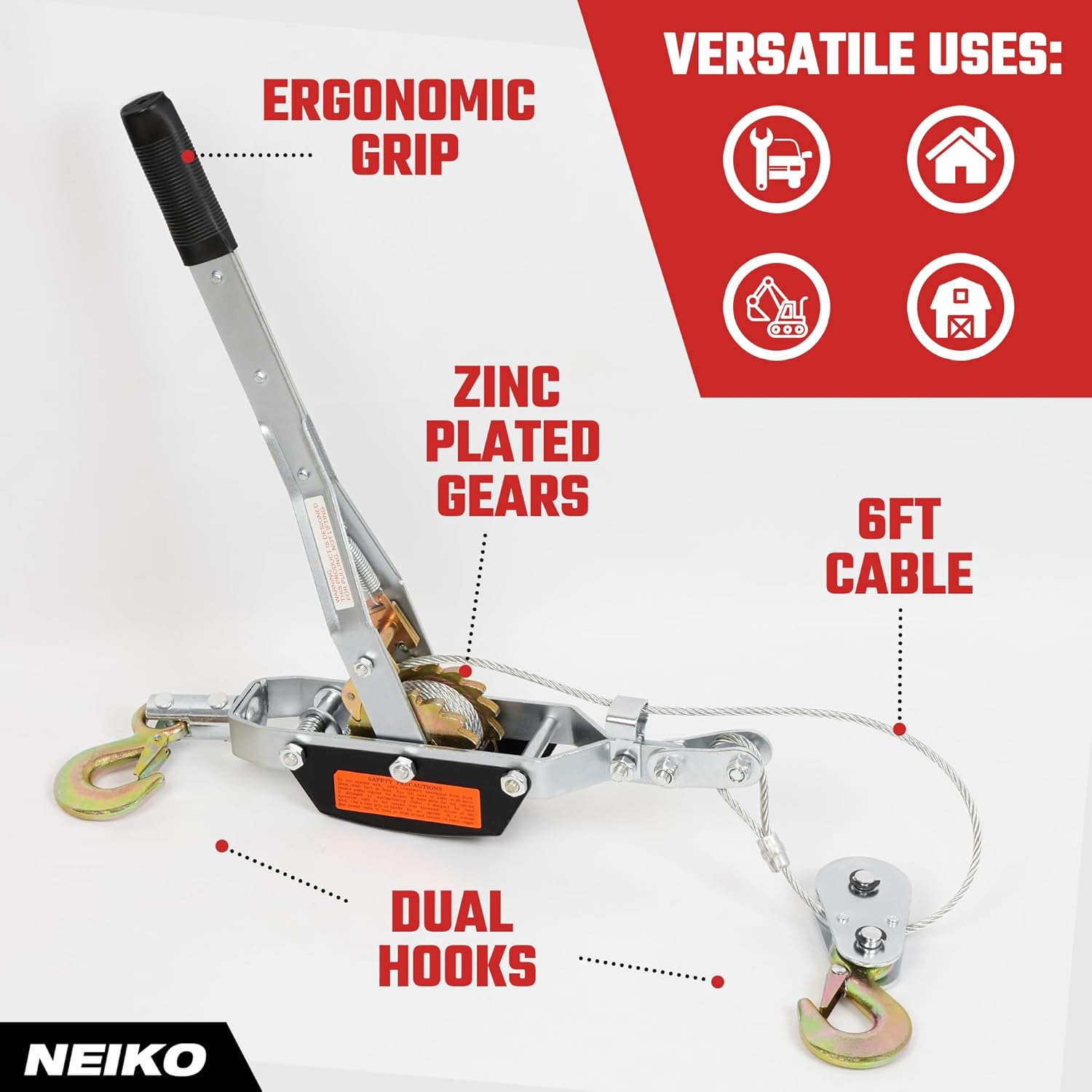
Figure 2: Key Components of the NEIKO 02253A Winch. This diagram highlights the ergonomic grip, zinc-plated gears, 9.8 ft cable, and dual hooks, along with various versatile uses.
2. Safety Information
WARNING: Failure to follow these safety instructions may result in serious injury or property damage.
- Always wear appropriate personal protective equipment (PPE), including gloves and eye protection.
- Never exceed the rated pulling capacity of 3 tons (6,000 lbs) or the maximum horizontal load capacity of 7,500 lbs.
- Inspect the winch, cable, and hooks for damage or wear before each use. Do not use if any components are damaged.
- Ensure all hooks are securely latched to prevent accidental disengagement during operation.
- Keep hands and body clear of the cable and moving parts during operation.
- Ensure the load is stable and properly secured before applying tension.
- Avoid sudden jerking motions; apply tension smoothly and gradually.
- Do not use the winch for lifting people or for overhead lifting applications where failure could result in injury.
- Be aware of your surroundings and potential hazards, such as unstable ground or obstacles.
- Store the winch in a dry, secure location away from children and unauthorized users.

Figure 3: Secure and Corrosion-Resistant Hooks. This image highlights the zinc-plated hooks with safety latches, designed for secure fastening and resistance to corrosion and rust.
3. Setup
Before operating the winch, ensure the area is clear and safe. Follow these steps for proper setup:
- Inspect the Winch: Thoroughly check the cable, hooks, gears, and handle for any signs of damage, fraying, bends, or excessive wear. Do not proceed if damage is found.
- Identify Anchor Point: Select a strong, stable anchor point for the winch. This could be a tree, a heavy vehicle, a structural beam, or a dedicated anchor point. Ensure the anchor point can withstand the intended pulling force.
- Attach Winch to Anchor: Securely attach one of the winch's hooks to the chosen anchor point. Ensure the safety latch is fully closed and engaged.
- Position the Load: Position the object to be pulled so that it is aligned with the winch and the anchor point.
- Attach Winch to Load: Extend the cable and attach the other hook to the load. Use a suitable attachment point on the load that can withstand the pulling force without deforming or breaking. Ensure the safety latch is fully closed.
- Clear the Area: Ensure all bystanders are at a safe distance and out of the line of tension.
4. Operating Instructions
Once the winch is properly set up and all safety precautions are observed, you can begin operation:
- Engage Ratchet Mechanism: The winch features a ratcheting mechanism. Ensure the pawl (locking lever) is engaged to allow the cable to be pulled in one direction.
- Apply Tension: Grasp the ergonomic handle firmly. Begin to pump the handle up and down in a smooth, controlled motion. Each pump will draw the cable in, applying tension and moving the load.
- Monitor Load and Winch: Continuously observe the load, the cable, and the winch for any signs of stress, slippage, or unexpected movement. If the load is not moving as expected or if you hear unusual noises, stop immediately and re-evaluate the setup.
- Release Tension (if needed): To release tension, carefully disengage the pawl. This should be done slowly and with extreme caution, especially under heavy load, to prevent uncontrolled release of tension. Always maintain a firm grip on the handle.
- Complete the Pull: Continue pumping the handle until the load reaches its desired position.
- Secure the Load: Once the load is in place, secure it by other means before releasing tension from the winch.
- Disengage and Store: After the task is complete and the load is secured, release all tension from the winch, unhook it from the load and anchor point, and prepare it for storage.

Figure 4: Winch in Operation. This image demonstrates the ease of use of the long industrial hand ratcheting mechanism, allowing for one-handed operation to pull heavy loads, such as a vehicle.
5. Maintenance
Regular maintenance ensures the longevity and safe operation of your NEIKO Come Along Winch:
- Cleaning: After each use, clean the winch to remove dirt, mud, and debris. Use a damp cloth and mild detergent if necessary. Avoid harsh chemicals that could damage the finish or components.
- Lubrication: Periodically apply a light coat of general-purpose lubricant to the moving parts, especially the gears and pawl mechanism, to ensure smooth operation and prevent rust.
- Cable Inspection: Regularly inspect the steel cable for kinks, frays, broken strands, corrosion, or any other signs of damage. A damaged cable must be replaced immediately by a qualified professional.
- Hook Inspection: Check the hooks for deformation, cracks, or wear. Ensure the safety latches operate freely and securely close. Replace damaged hooks.
- Storage: Store the winch in a clean, dry environment, preferably indoors, to protect it from moisture and extreme temperatures. Coil the cable neatly to prevent tangling and kinking.
6. Troubleshooting
If you encounter issues with your NEIKO Come Along Winch, consider the following:
- Winch Not Pulling:
- Check if the pawl is fully engaged in the ratcheting mechanism.
- Ensure the load is not stuck or too heavy for the winch's capacity.
- Verify that the hooks are securely attached to both the anchor and the load.
- Cable Jamming/Binding:
- Inspect the cable for kinks or damage.
- Ensure the cable is spooling evenly onto the drum.
- Check for any foreign objects obstructing the cable path.
- Handle Slipping:
- Ensure the pawl is properly engaged.
- The load might exceed the winch's capacity.
- Lubricate the gears and pawl mechanism if they appear stiff or sticky.
- Hooks Not Latching:
- Clean any debris from the latch mechanism.
- Inspect the latch for damage or bending. Replace if necessary.
If problems persist or if you suspect internal damage, discontinue use and contact customer support.
7. Specifications
| Attribute | Detail |
|---|---|
| Model Number | 02253A |
| Pulling Capacity | 3 Ton (6,000 lbs) |
| Max Horizontal Load Capacity | 7,500 lbs |
| Cable Length | 9.8 Ft (3 Meters) |
| Cable Diameter | 5mm |
| Number of Hooks | 2 (with safety latches) |
| Item Weight | 3.83 kg |
| Manufacturer | Ridgerock Tools, Inc. |
| Country of Origin | China |
8. Warranty and Support
For warranty information or technical support regarding your NEIKO 02253A Come Along Winch, please refer to the product packaging or contact NEIKO customer service directly. Keep your purchase receipt as proof of purchase for any warranty claims.
For general inquiries or assistance, please visit the official NEIKO website or contact their customer support line.