
1. Introduction
This manual provides detailed instructions for the operation and maintenance of your OnRetul V500 OBD2 Scanner Diagnostic Tool. The V500 is designed to assist in diagnosing vehicle issues by reading and clearing diagnostic trouble codes (DTCs), monitoring live data streams, and performing various system tests. It is compatible with most vehicles manufactured since 1996 that support OBD2 protocols.
Please read this manual thoroughly before using the device to ensure proper and safe operation.
2. Safety Information
- Always perform automotive repairs in a safe environment.
- Wear appropriate eye protection and protective clothing.
- Do not operate the tool while driving.
- Keep the tool away from moisture, oil, and extreme temperatures.
- Ensure the vehicle's ignition is off before connecting or disconnecting the scanner.
- Refer to your vehicle's service manual for specific diagnostic procedures and safety precautions.
3. Package Contents
The OnRetul V500 OBD2 Scanner package typically includes:
- OnRetul V500 OBD2 Diagnostic Tool
- User Manual (this document)
4. Product Overview
The OnRetul V500 features a compact design with a color display and intuitive button layout for easy navigation.

Figure 4.1: Front view of the OnRetul V500 OBD2 Scanner Diagnostic Tool, showing the color display and control buttons.
4.1 Device Components

Figure 4.2: OnRetul V500 OBD2 Scanner showing the display, control buttons (DTC, EXIT, OK, Up, Down, Left, Right), and the universal OBD interface cable.
- Display Screen: 2.8-inch high-definition color screen for displaying diagnostic information.
- DTC Button: Shortcut key to access Diagnostic Trouble Codes.
- EXIT Button: Returns to the previous menu or exits the current function.
- OK Button: Confirms selections or enters a menu.
- Navigation Buttons (Up, Down, Left, Right): Used to scroll through menus and select options.
- OBD-II Connector: Standard 16-pin connector for connecting to the vehicle's OBD-II port.
5. Setup and Connection
- Locate the OBD-II Port: The OBD-II port is typically located under the dashboard on the driver's side of the vehicle. Refer to your vehicle's manual if you cannot locate it.
- Turn Off Ignition: Ensure the vehicle's ignition is in the OFF position.
- Connect the Scanner: Plug the V500's OBD-II connector firmly into the vehicle's OBD-II port.
- Turn On Ignition: Turn the vehicle's ignition to the ON position (engine off). The scanner will power on automatically.
- Establish Communication: The scanner will attempt to establish communication with the vehicle's onboard computer. This may take a few moments.
6. Operating Instructions
The OnRetul V500 offers several diagnostic functions accessible from the main menu. Use the navigation buttons to select an option and the OK button to confirm.
6.1 Read Codes
This function retrieves Diagnostic Trouble Codes (DTCs) from the vehicle's engine control unit (ECU). These codes indicate specific issues detected by the vehicle's diagnostic system.
- From the main menu, select "OBD/EOBD" or "Read Codes".
- The scanner will display any stored DTCs. Each code will have a corresponding description.
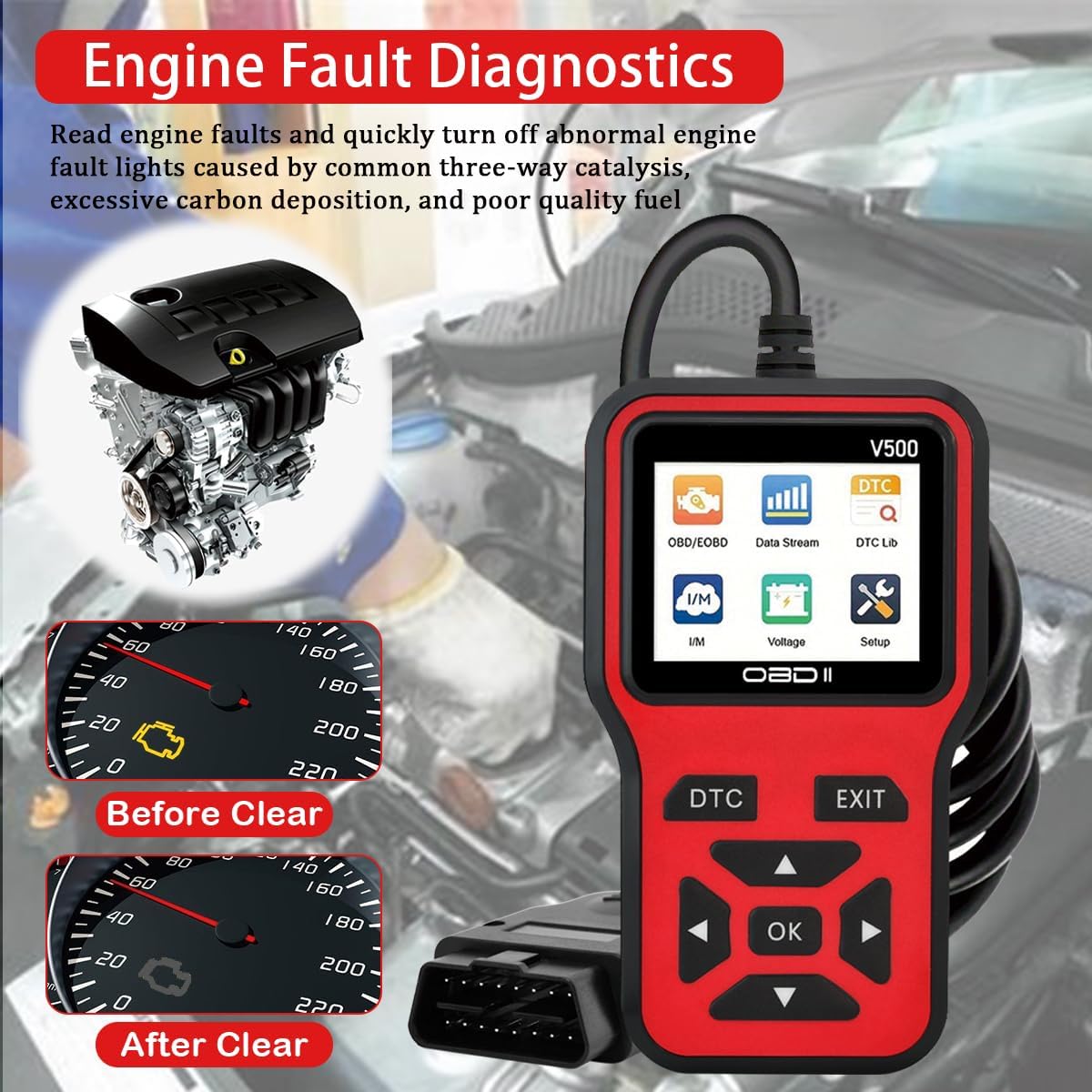
Figure 6.1: Example of engine fault diagnostics, illustrating how the scanner identifies issues and can clear the check engine light.
6.2 Erase Codes (Clear Check Engine Light)
This function clears all Diagnostic Trouble Codes from the vehicle's ECU and turns off the Check Engine Light (MIL).
- After reading codes, select "Erase Codes" or "Clear DTCs" from the menu.
- Confirm the action when prompted.
- Note: Clearing codes does not fix the underlying problem. If the fault is not resolved, the Check Engine Light will illuminate again.
6.3 Data Stream (Live Data)
View real-time operational parameters from the vehicle's sensors and systems. This can help identify intermittent faults or monitor system performance.
- Select "Data Stream" from the main menu.
- Choose the specific parameters you wish to monitor (e.g., engine RPM, coolant temperature, O2 sensor readings).
- The data will be displayed numerically or graphically.

Figure 6.2: Live data stream display on the V500, showing real-time curves for various engine parameters like coolant temperature, load value, RPM, and vehicle speed.
6.4 I/M Readiness
This function checks the status of the vehicle's emission-related monitoring systems to determine if they are ready for an emissions test.
- Select "I/M Readiness" from the main menu.
- The scanner will display the status of various monitors (e.g., EVAP system, O2 sensor, catalytic converter) as "OK" or "INC" (Incomplete).
6.5 DTC Lookup
Allows you to manually enter a DTC and view its generic description.
- Select "DTC Lib" or "DTC Lookup" from the main menu.
- Enter the desired DTC using the navigation buttons.
- Press OK to view the description.
6.6 Battery Test (Voltage)
Measures the vehicle's battery voltage in real-time.
- Select "Voltage" or "Battery Test" from the main menu.
- The current battery voltage will be displayed.

Figure 6.3: The V500 displaying battery voltage during a battery test, showing a reading of 11.7V.
6.7 Other Functions
The V500 also supports additional functions including:
- View Freeze Frame: Displays a snapshot of vehicle operating conditions at the moment a fault code was set.
- O2 Sensor Test: Retrieves O2 sensor monitor test results.
- EVAP System Test: Initiates a test of the Evaporative Emission Control System.
- Vehicle Info: Retrieves the vehicle identification number (VIN), calibration ID, and calibration verification number (CVN).
- On-Board Monitor Test: Retrieves results for on-board diagnostic monitoring tests for specific components/systems.
7. Supported Vehicles and Protocols
The OnRetul V500 is compatible with most OBD2 compliant vehicles.
- American Manufacturers: Vehicles produced since 1996.
- Japanese Manufacturers: Vehicles produced since 2002.
- European Manufacturers: Vehicles produced since 2008.
7.1 Supported Protocols

Figure 7.1: The V500 displaying a list of supported languages and OBD2 communication protocols.
The tool supports the following OBD2 protocols:
- SAE J1850 PWM (41.6 Kbaud)
- SAE J1850 VPW (10.4 Kbaud)
- ISO9141-2 (5 baud init, 10.4 Kbaud)
- ISO14230-4 KWP (5 baud init, 10.4 Kbaud)
- ISO14230-4 KWP (fast init, 10.4 Kbaud)
- ISO15765-4 CAN (11bit ID, 500 Kbaud)
- ISO15765-4 CAN (29bit ID, 500 Kbaud)
- ISO15765-4 CAN (11bit ID, 250 Kbaud)
- ISO15765-4 CAN (29bit ID, 250 Kbaud)
8. Maintenance
- Cleaning: Use a soft, dry cloth to clean the tool. Do not use abrasive cleaners or solvents.
- Storage: Store the tool in a dry, cool environment, away from direct sunlight and extreme temperatures.
- Cable Care: Avoid bending or twisting the OBD-II cable excessively to prevent damage.
9. Troubleshooting
| Problem | Possible Cause | Solution |
|---|---|---|
| Scanner does not power on. |
|
|
| "Link Error" or "Communication Error" message. |
|
|
| Cannot clear codes. |
|
|
10. Specifications
- Model: V500
- Display: 2.8-inch Color Screen
- Operating Voltage: 9-16V (from vehicle OBD-II port)
- Operating Temperature: 0°C to 60°C (32°F to 140°F)
- Storage Temperature: -20°C to 70°C (-4°F to 158°F)
- Dimensions: Approximately 6 x 1 x 3.4 inches (15.24 x 2.54 x 8.64 cm)
- Weight: Approximately 8.1 ounces (230 grams)
- Supported Protocols: J1850 PWM, J1850 VPW, ISO9141-2, ISO14230-4 KWP (5 baud init, fast init), ISO15765-4 CAN (11bit ID, 29bit ID, 500 Kbaud, 250 Kbaud)
11. Customer Support
If you encounter any issues or have questions regarding your OnRetul V500 OBD2 Scanner, please contact our customer service team. We aim to respond to all inquiries within 24 hours.
Contact information can typically be found on the product packaging or the retailer's website where the product was purchased.